miaomap.com · Breed atlas042 / JBL
Japanese Bobtail Longhair
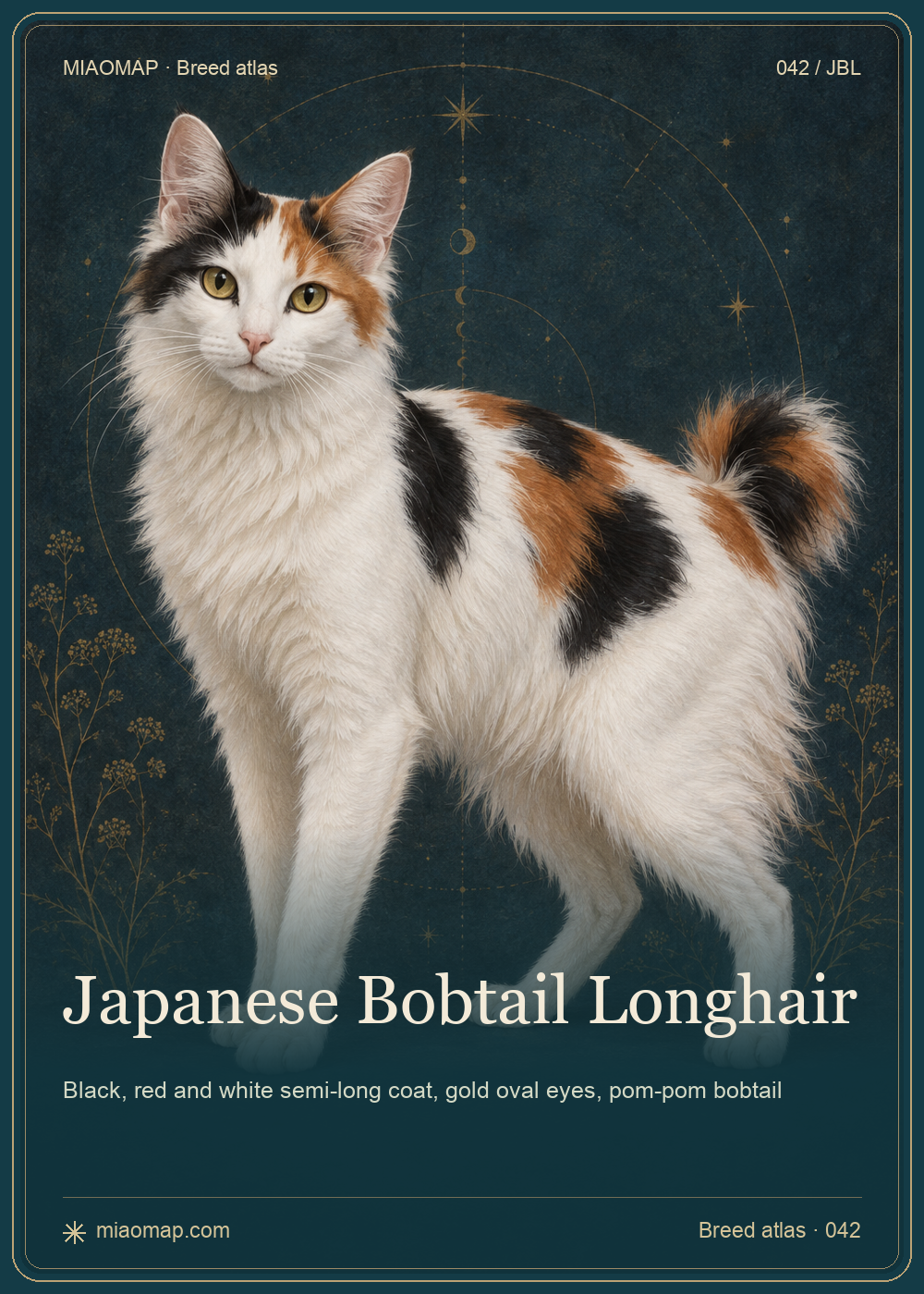
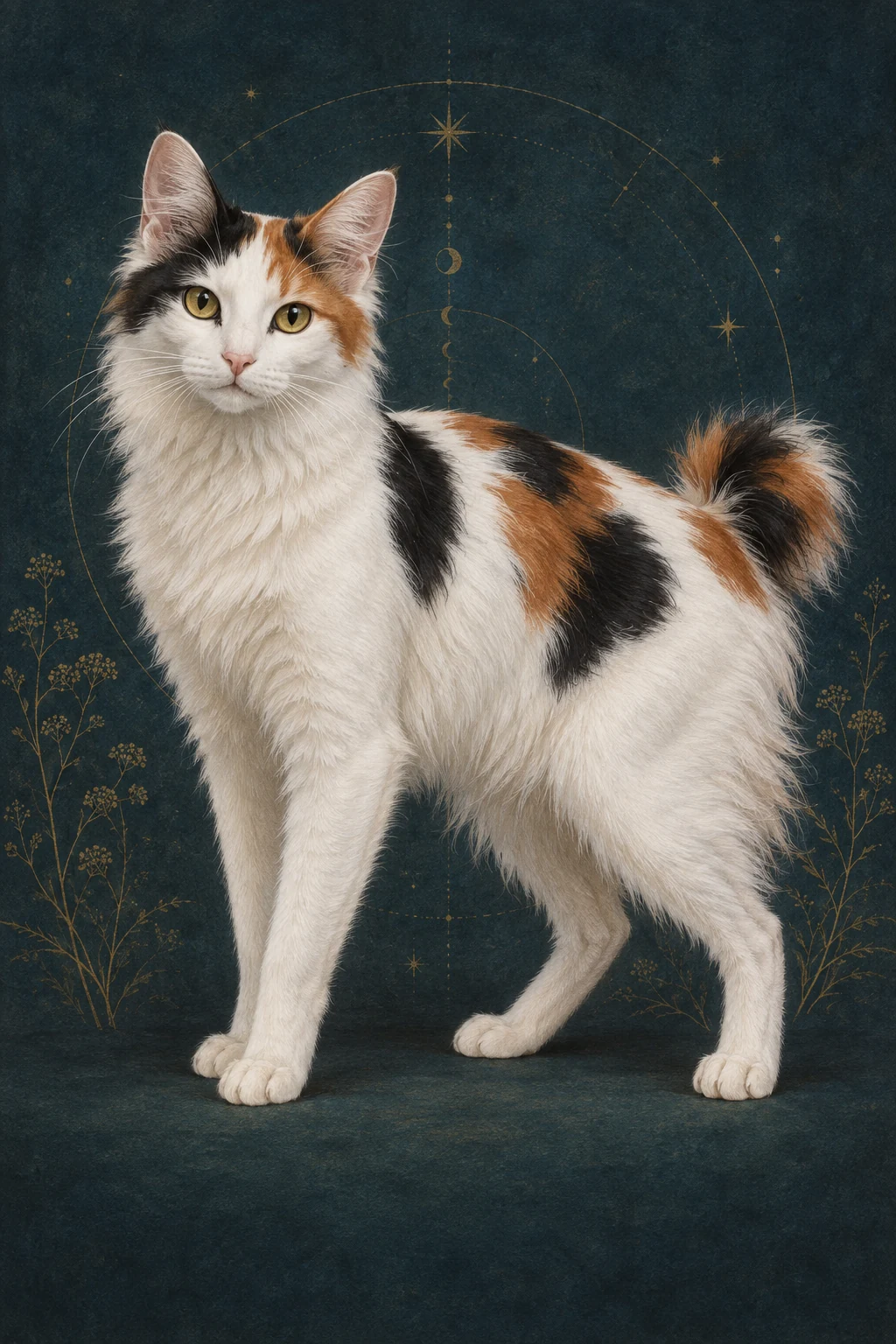
Black, red and white semi-long coat, gold oval eyes, pom-pom bobtail
✳ miaomap.comBreed atlas · 042
Feline breed atlas · 042 / JBL
Silky longer fur and a distinctive pom-pom tail give this Japanese Bobtail coat variety its striking outline.
Move your pointer for a subtle sheen; flip the card to read its profile.
Black, red and white semi-long coat, gold oval eyes, pom-pom bobtail
The Japanese Bobtail Longhair shares its natural Japanese breed origins with the shorthair. Records and artwork document both coat lengths in Japan for at least a thousand years, including longhaired bobtails in a fifteenth-century painting. Associated with the beckoning cat’s good-luck symbolism, the breed is known for black, red and white mi-ke colouring, but also comes in other colours and patterns.
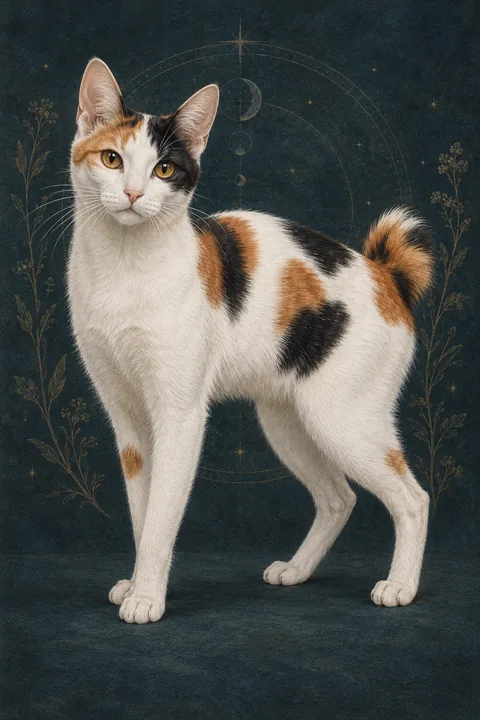
The pictured cat has a black, red and white semi-long coat, gold oval eyes and a pom-pom bobtail. Look for a slender, muscular body, powerful hind legs, a triangular head, prominent cheekbones and large, high-set ears. Its silky coat has little undercoat, with longer belly and hindquarter fur; longer tail hair covers the bends and angles beneath.
Japanese Bobtails are typically active, intelligent and companionable, often communicating with soft chirps and meows. Some enjoy fetching toys, playing with water or exploring elevated spaces, preferring involvement over long stretches on a lap. Individual behaviour varies, however. Introduce children and other pets gradually, and offer regular interactive play alongside quiet places where the cat can choose to rest.
Gently comb the silky coat regularly, increasing attention during seasonal shedding and checking the hindquarters and belly for tangles. Tail bones may be fused or partly jointed, so handle the bobtail gently without pulling or straightening it. Provide safe climbing spaces and daily interactive play. Feed complete, balanced cat food and consult a veterinarian about weight, dental care and individual needs.
They belong to the same breed family, not separate origins. The longhair has a longer draping coat, more noticeable belly and hindquarter furnishings, and a fuller tail. Both have silky coats with little undercoat and naturally bobbed tails shaped by curves and angles.
Yes. The bobtail is natural, not created by cutting. Curves, angles and kinks beneath longer tail hair produce an individually distinctive outline. The tail may be flexible or rigid, so always handle it gently and never try to straighten it forcibly.
No. Black, red and white mi-ke is a traditional appearance, but the breed has many colours and patterns, and eye colour is not restricted to gold. The pictured cat retains its tricolour semi-long coat and gold eyes; these are not universal requirements.
Text is based on the association sources below. AI-assisted original illustrations depict one coat variety, not every individual. Health and care information is general and does not replace veterinary assessment.
Based on the association sources listed on each profile. Illustrations do not establish pedigree. Independently produced by miaomap, without association endorsement. Numbers are catalog IDs, not rarity ranks.
miaomap · Updated
Use our illustration creator to choose fur colors, eyes and tails, then download your own cat.