miaomap.com · Breed atlas049 / LYK
Lykoi
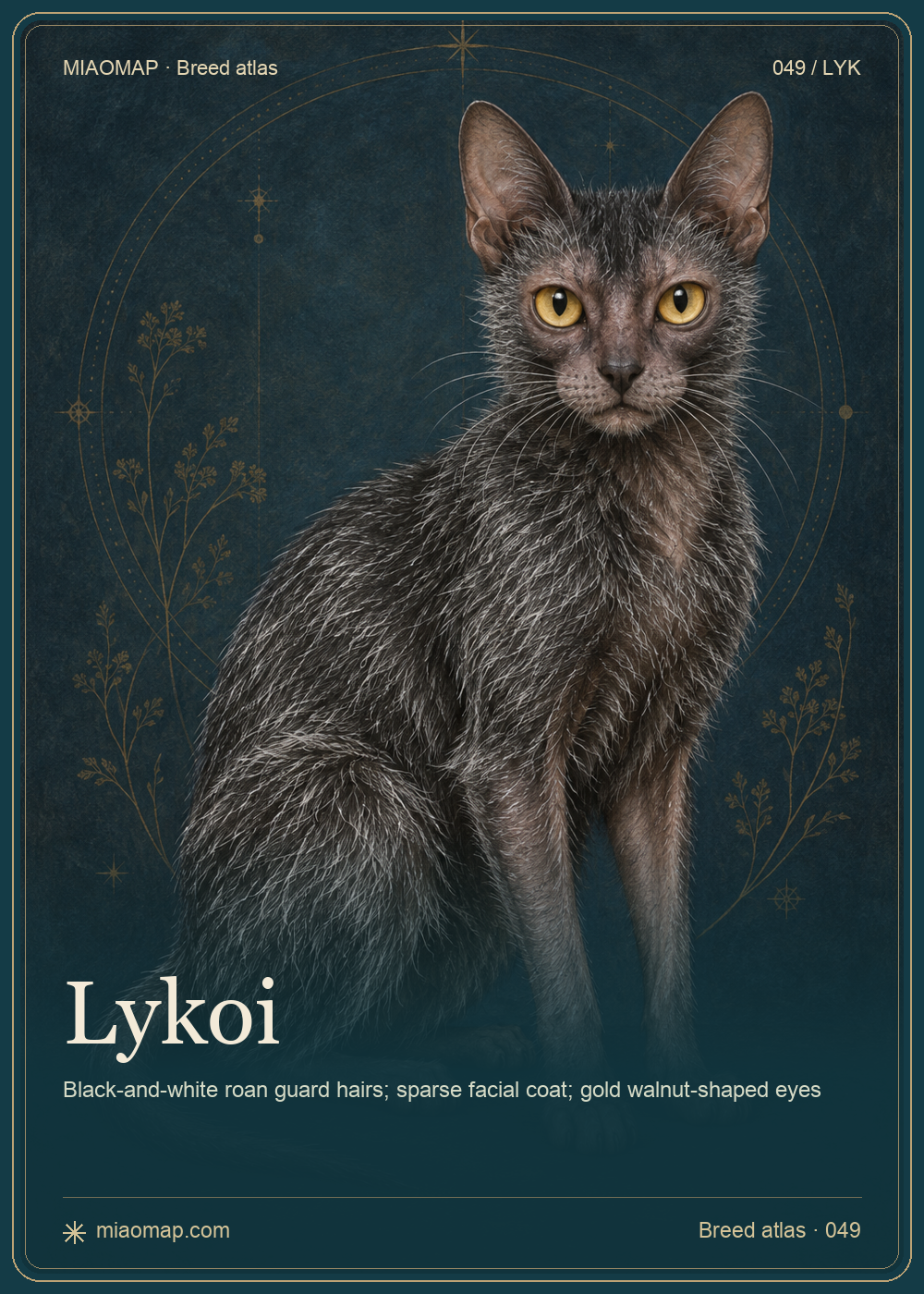
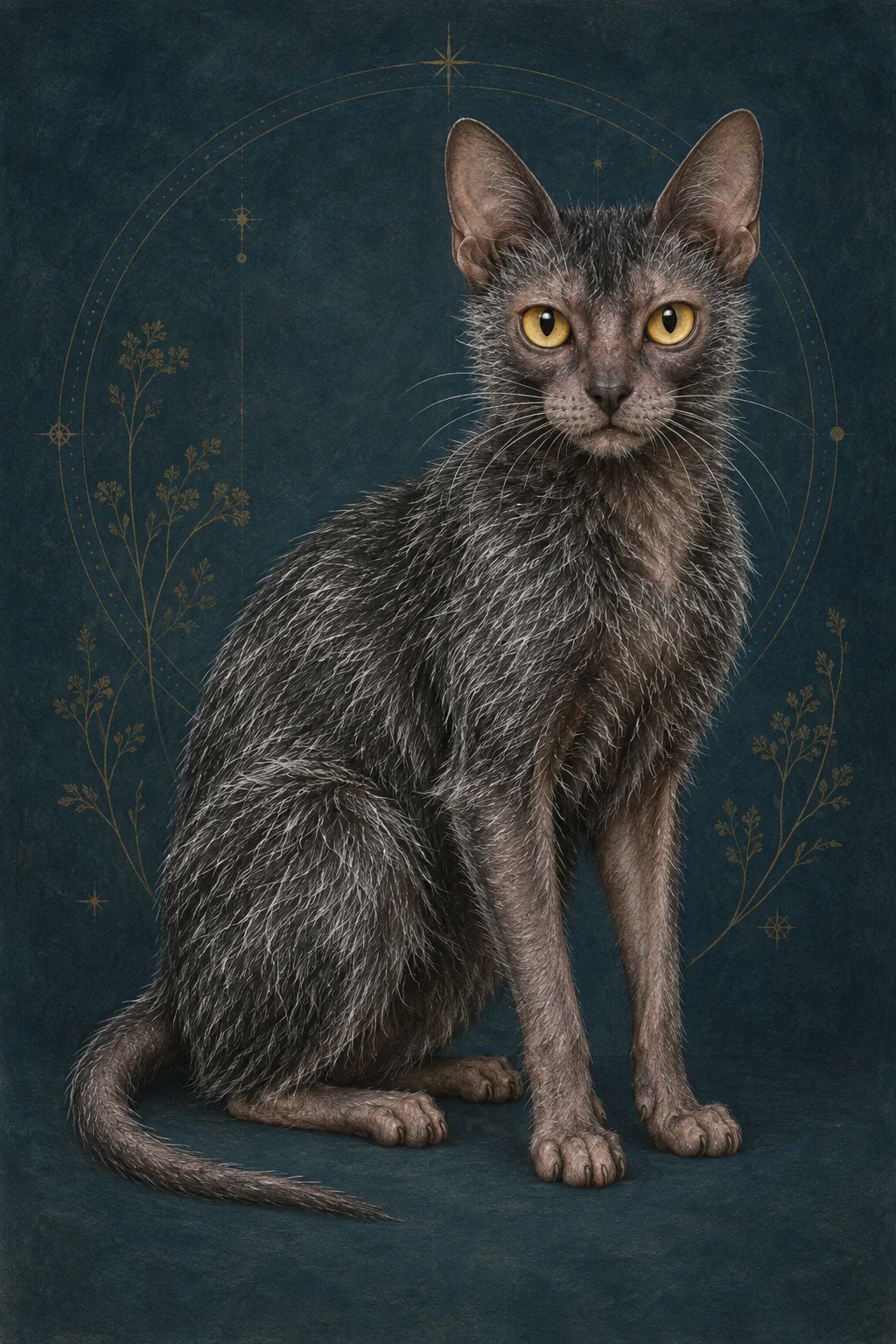
Black-and-white roan guard hairs; sparse facial coat; gold walnut-shaped eyes
✳ miaomap.comBreed atlas · 049
Feline breed atlas · 049 / LYK
A distinctive roan coat and sparsely haired facial mask give this active, curious cat its little-wolf appearance.
Move your pointer for a subtle sheen; flip the card to read its profile.
Black-and-white roan guard hairs; sparse facial coat; gold walnut-shaped eyes
The Lykoi developed from a naturally occurring coat mutation in domestic cat populations, not a wild-cat hybrid. CFA records cats with this appearance in Virginia in 2010 and Tennessee the following year. Subsequent breeding used outcrossing to broaden genetic diversity. Its distinctive coat is associated with a recessive mutation; longhaired Lykoi are a related coat variant, not a breed with separate ancestry.
Lykoi have a rounded modified-wedge head, tall high-set ears, and large walnut-shaped eyes. Sparse hair around the nose and eyes creates the characteristic facial mask. The body is lean and muscular, with medium-length legs and a tapering tail shorter than the body. Short guard hairs mix white with colored hairs, without undercoat; coverage changes with molting. Appearance alone cannot confirm pedigree.
Lykoi are often described as active, intelligent and interactive, with many enjoying stalking and pouncing on toys rather than prolonged lap time. They may initially observe unfamiliar people or surroundings before approaching. Offer regular play and quiet retreat spaces; affection, vocal behavior and acceptance of other pets vary with the individual and experience.
Groom gently and watch for skin irritation or ingrown hairs during molts. Oily skin may need occasional bathing with cat-appropriate products; check ears and toes too. Provide a warm indoor environment and limit strong sun exposure because the coat is sparse and lacks undercoat. Ask a veterinarian before using sunscreen, and do not dismiss new or persistent skin changes as ordinary molting.
Roan means white guard hairs are scattered among colored guard hairs, creating a salt-and-pepper effect rather than the stripes or spots of tabby markings. Lykoi also lack undercoat and have sparse hair on the face, legs and feet. This combination is distinctive, but it does not establish pedigree by appearance alone.
Neither. The Lykoi arose from a natural coat mutation in domestic cats; CFA describes the associated recessive mutation as unrelated to other known mutations. Partial hairlessness does not make it the same coat type as a Sphynx. Lykoi have intermixed white and colored guard hairs, with coverage that can change substantially through their coat cycle.
Yes. Having no undercoat does not mean no shedding, and Lykoi may lose much of their coat during a molt before regrowth. Groom gently and watch for irritation, ingrown hairs or persistent skin changes. Warmth and sun management matter especially when coverage is low; seek veterinary advice for new, persistent or uncomfortable changes.
Text is based on the association sources below. AI-assisted original illustrations depict one coat variety, not every individual. Health and care information is general and does not replace veterinary assessment.
Based on the association sources listed on each profile. Illustrations do not establish pedigree. Independently produced by miaomap, without association endorsement. Numbers are catalog IDs, not rarity ranks.
miaomap · Updated
Use our illustration creator to choose fur colors, eyes and tails, then download your own cat.