miaomap.com · Breed atlas050 / MCPD
Maine Coon Polydactyl
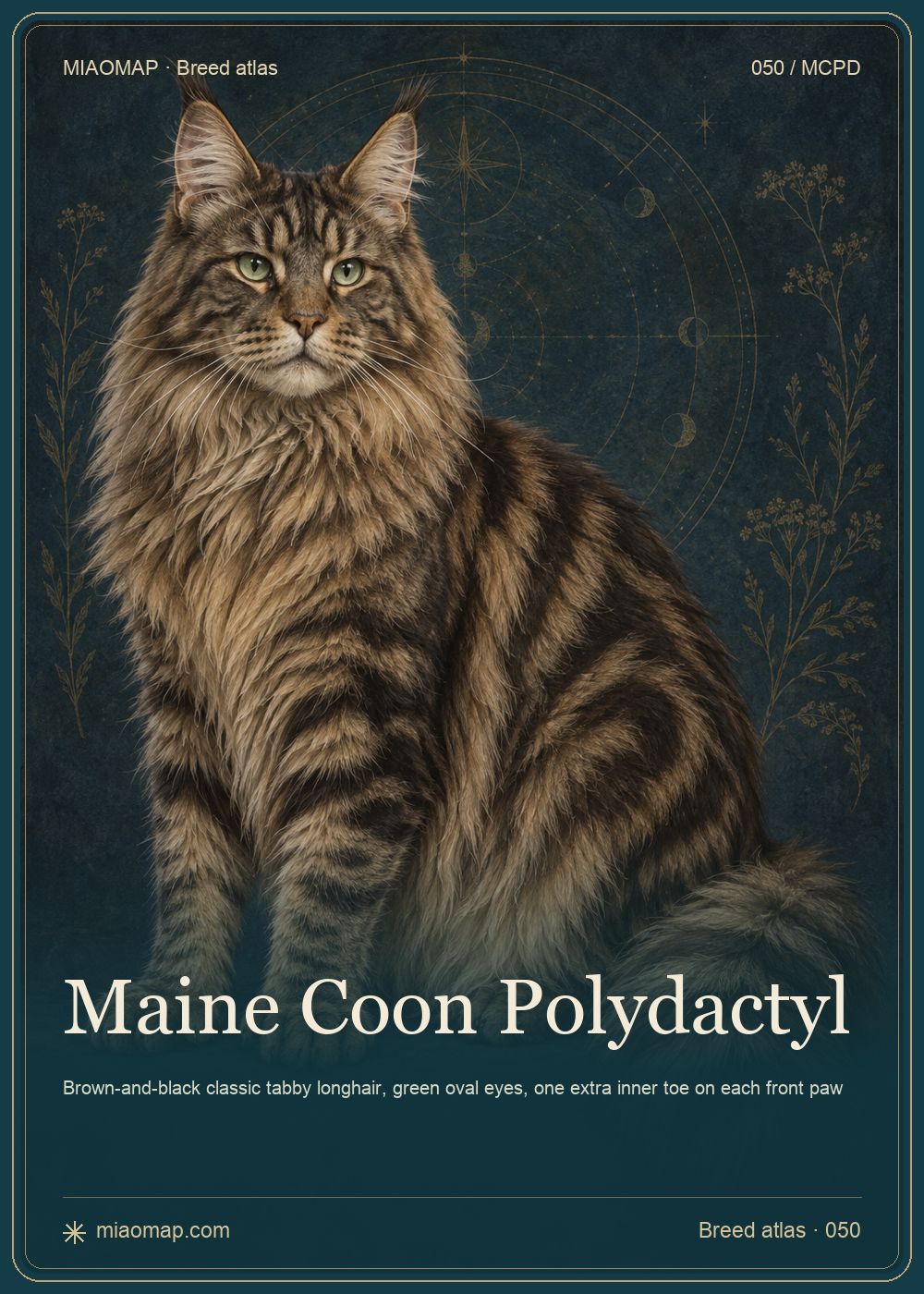
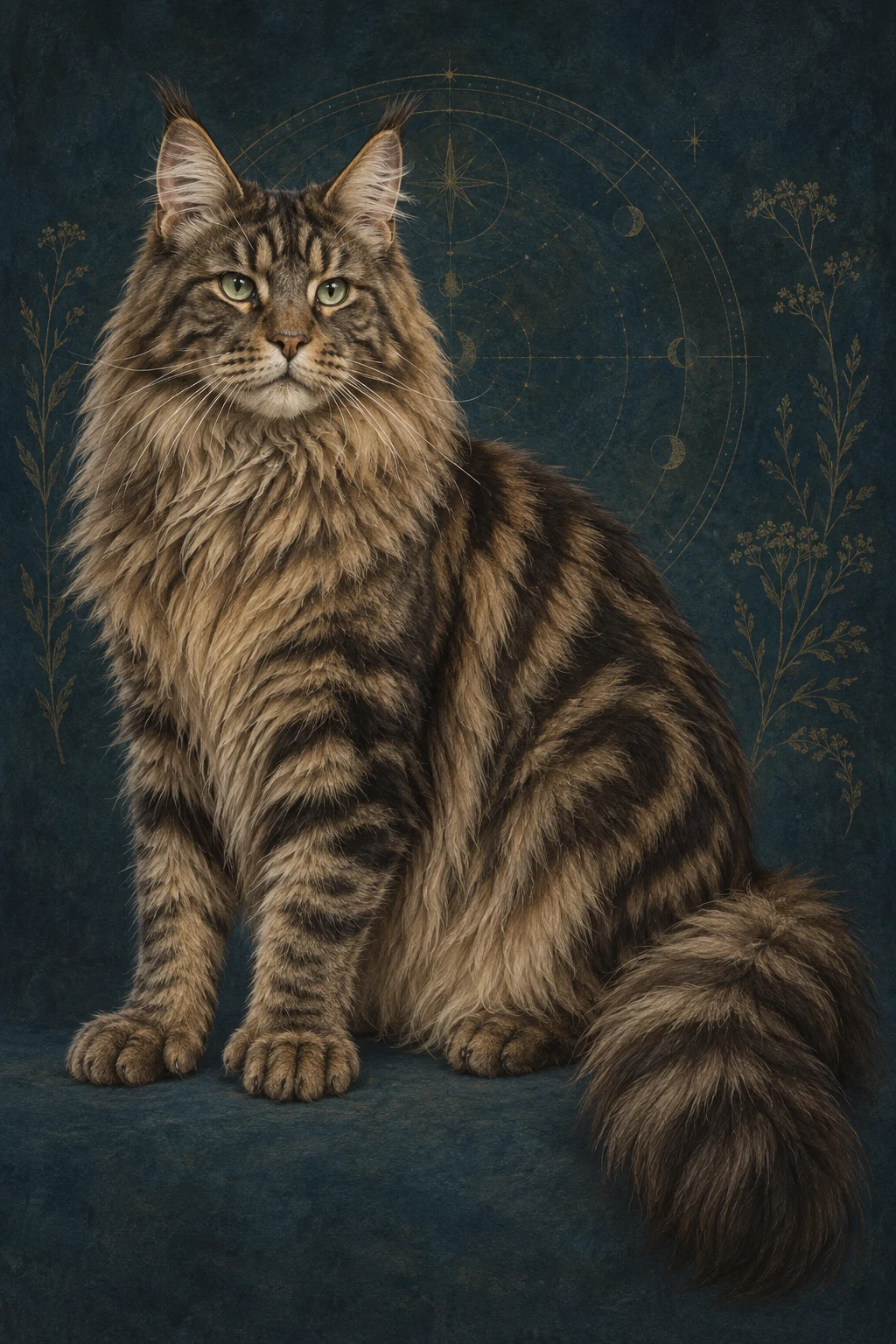
Brown-and-black classic tabby longhair, green oval eyes, one extra inner toe on each front paw
✳ miaomap.comBreed atlas · 050
Feline breed atlas · 050 / MCPD
Extra toes distinguish this large, longhaired Maine Coon variant, often described as friendly and interested in family life.
Move your pointer for a subtle sheen; flip the card to read its profile.
Brown-and-black classic tabby longhair, green oval eyes, one extra inner toe on each front paw
Maine Coon Polydactyl belongs to the same breed family as the Maine Coon, associated with the northeastern United States, especially Maine. Inherited extra toes distinguish it, rather than a separate origin. TICA profiles this variety by name and describes Maine Coons as gentle, friendly companions despite their size. Appearance alone cannot establish pedigree or registration.
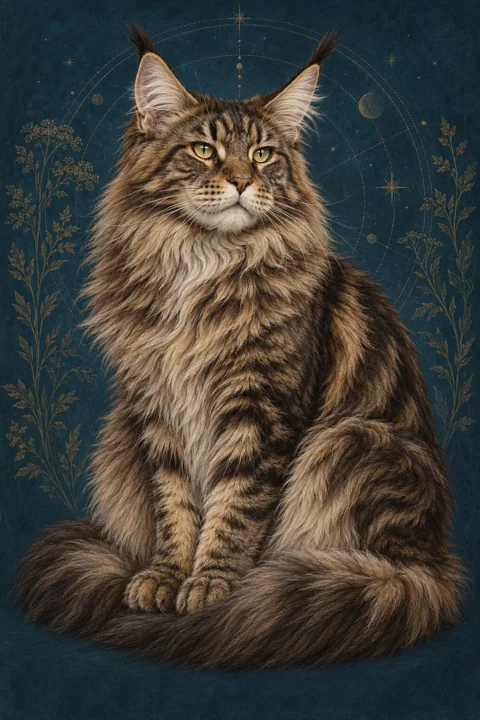
The pictured cat has a large rectangular body, substantial bone, a square muzzle, and one extra inner toe on each front paw. Its brown-and-black classic tabby long coat, green oval eyes, full ruff, longer belly fur, and long plumed tail remain defining visual details. Other polydactyl Maine Coons can have different toe arrangements; broad paws alone do not confirm polydactyly.
TICA describes Maine Coons as sweet-tempered, gentle, friendly cats with a clown-like side. They often enjoy joining household activities as if helping, without demanding constant attention. These are breed tendencies, not promises about an individual. Extra toes do not predict temperament; introduce people and pets gradually, and respect each cat's preferences for play, handling, and companionship.
Comb the long coat regularly, checking armpits, belly, and rear legs for tangles. Inspect every toe and claw, especially extra claws hidden in fur, and trim safely as needed. Provide sturdy climbing furniture and a roomy litter box. Feed complete balanced cat food and consult a veterinarian about portions, limping, swelling, or claws contacting pads.
The main difference is inherited extra toes, not a separate origin or different coat color. It remains within the Maine Coon family, with its large rectangular build and long coat. Other cats can also be polydactyl, so toe count alone cannot prove Maine Coon ancestry.
No. The number and position of extra toes vary, and not every paw must be affected. The pictured cat has one additional inner toe on each front paw and ordinary hind toes; that arrangement is one example, not a universal pattern.
Check every toe carefully, including extra claws concealed by fur, and trim safely as needed. Watch for claws touching pads, irritation, swelling, or limping. Extra toes alone do not establish pain or impaired movement, but these changes warrant veterinary assessment.
Text is based on the association sources below. AI-assisted original illustrations depict one coat variety, not every individual. Health and care information is general and does not replace veterinary assessment.
Based on the association sources listed on each profile. Illustrations do not establish pedigree. Independently produced by miaomap, without association endorsement. Numbers are catalog IDs, not rarity ranks.
miaomap · Updated
Use our illustration creator to choose fur colors, eyes and tails, then download your own cat.