miaomap.com · Breed atlas066 / PXB
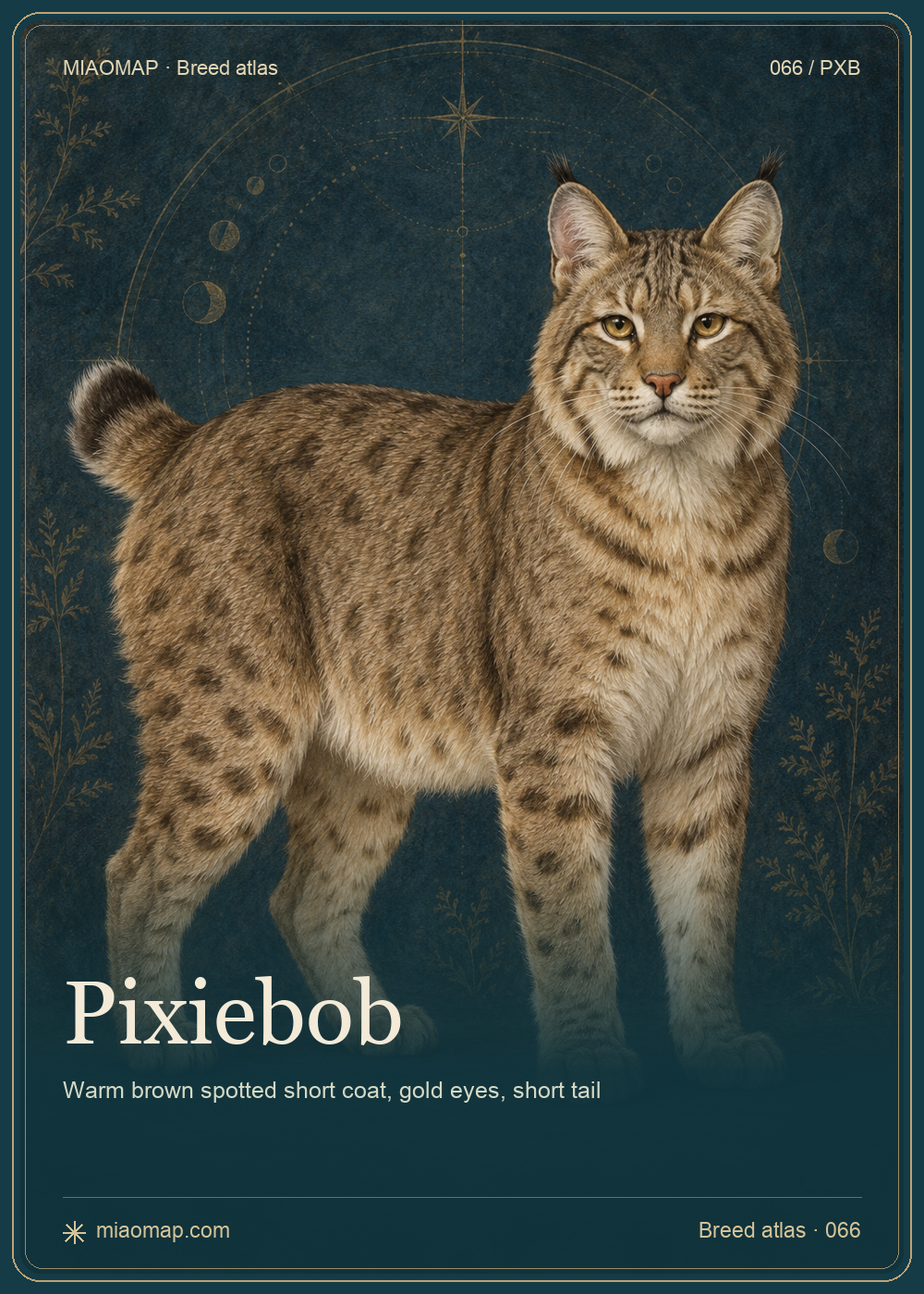
Pixiebob
Warm brown spotted short coat, gold eyes, short tail
✳ miaomap.comBreed atlas · 066
Feline breed atlas · 066 / PXB
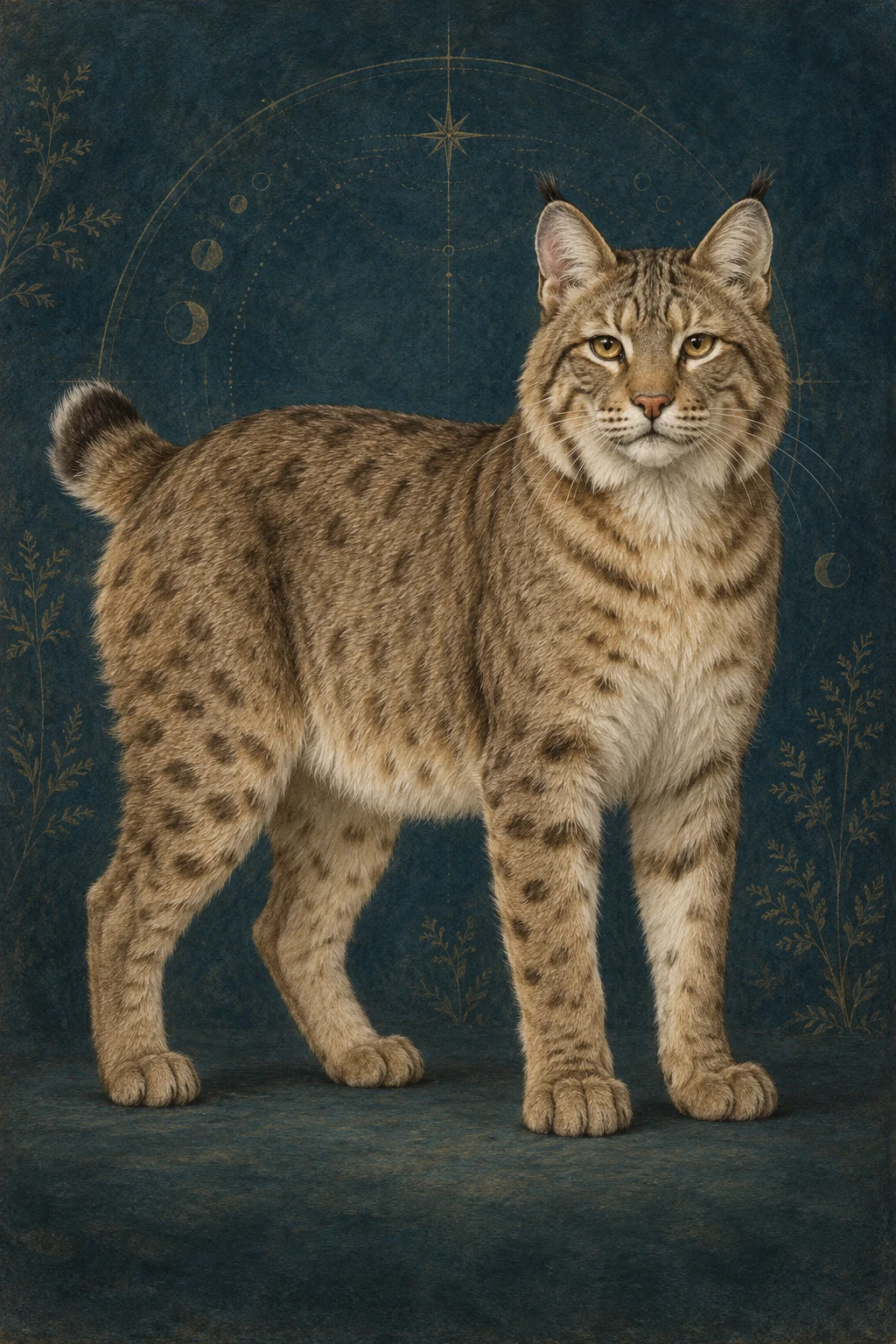
A short tail, deep-set eyes and brown spots give this domestic cat a bobcat-like silhouette.
Move your pointer for a subtle sheen; flip the card to read its profile.
Warm brown spotted short coat, gold eyes, short tail
The Pixiebob originated in the northwestern United States as a domestic breed developed to resemble the North American bobcat. Carol Ann Brewer built her breeding program around Pixie, a female born in 1986, and documented a standard and breed name in 1989. Bobcat-like looks do not establish wild ancestry. The pictured shorthair and the longhair belong to the same breed family.
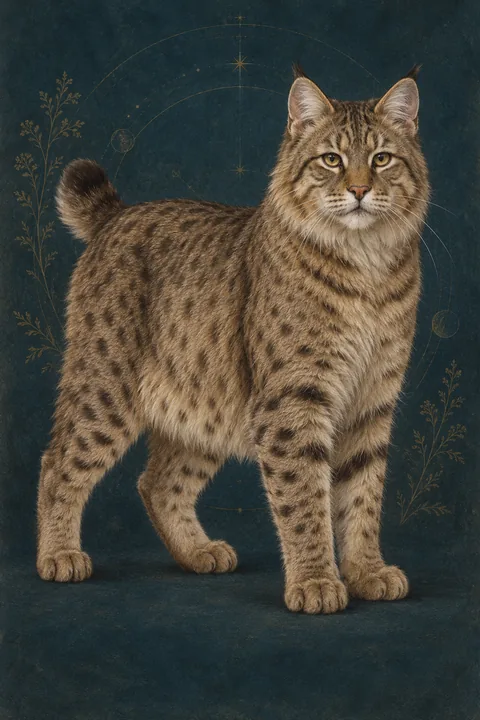
This shorthair Pixiebob has a warm brown spotted coat, gold eyes and a short tail. Its thick, woolly double coat softens the spots through heavy ticking. An inverted-pear head, fleshy chin, heavy brow and deep-set, softly triangular eyes shape the face. Substantial bone, a muscular body, slightly longer hind legs and large paws complete the outline; some individuals have ear tufts.
Pixiebobs are often described as intelligent, active, affectionate and devoted to their families, enjoying involvement in everyday activities. Some learn fetch or harness walking through gradual, positive training, and may communicate with chirps and chitters. These are tendencies, not guarantees. Introduce children and other pets gently, supervise interactions and provide quiet retreats that respect each cat’s preferences.
Brush the dense short double coat weekly, increasing grooming during shedding as needed. Check and trim every claw, including extra digits in polydactyl cats. Provide sturdy scratching furniture, interactive play, fresh water and complete balanced cat food; consult a veterinarian about portions and weight. Maintain dental care and routine veterinary visits, and investigate tail pain or changes in movement.
The Pixiebob was developed as a domestic breed with a bobcat-like appearance. Its short tail, spotted coat and possible ear tufts do not establish wild-hybrid ancestry. Visual resemblance should not be confused with evidence of ancestry or used to determine pedigree from photographs.
No. Pixiebobs may have ordinary toes or extra digits, with up to seven per paw allowed. Tails typically range from about two inches to the hock, although exceptions occur. Even a kinked or knotted tail should remain flexible and move naturally.
They belong to the same breed family, not separately originating breeds. The shorthair has a dense, woolly double coat that stands away from the body; the longhair has medium-length, softer, silkier hair. Both share brown spotting and similar build, with longhair requiring closer checks for tangles.
Text is based on the association sources below. AI-assisted original illustrations depict one coat variety, not every individual. Health and care information is general and does not replace veterinary assessment.
Based on the association sources listed on each profile. Illustrations do not establish pedigree. Independently produced by miaomap, without association endorsement. Numbers are catalog IDs, not rarity ranks.
miaomap · Updated
Use our illustration creator to choose fur colors, eyes and tails, then download your own cat.