miaomap.com · Breed atlas008 / ABT
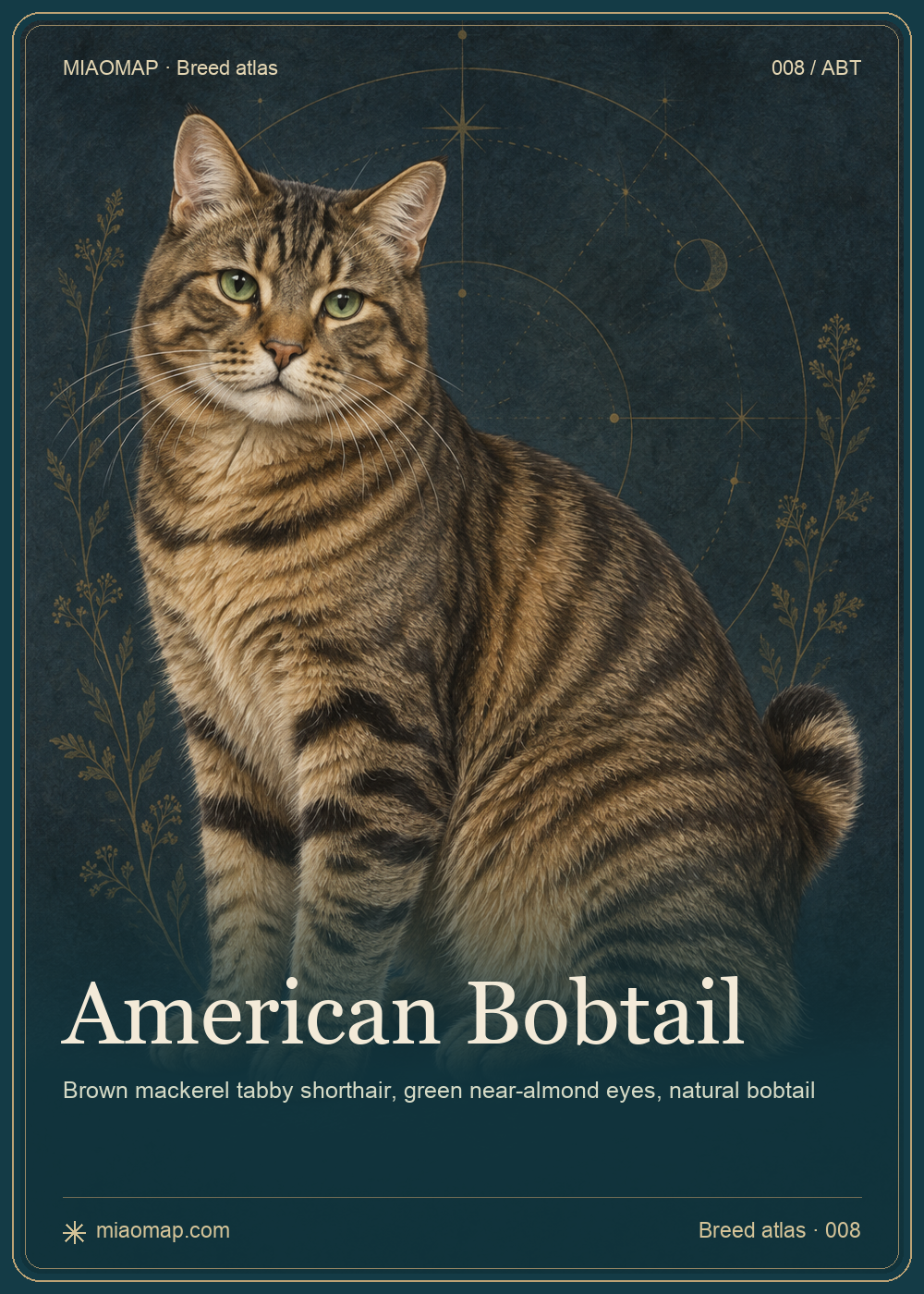
American Bobtail
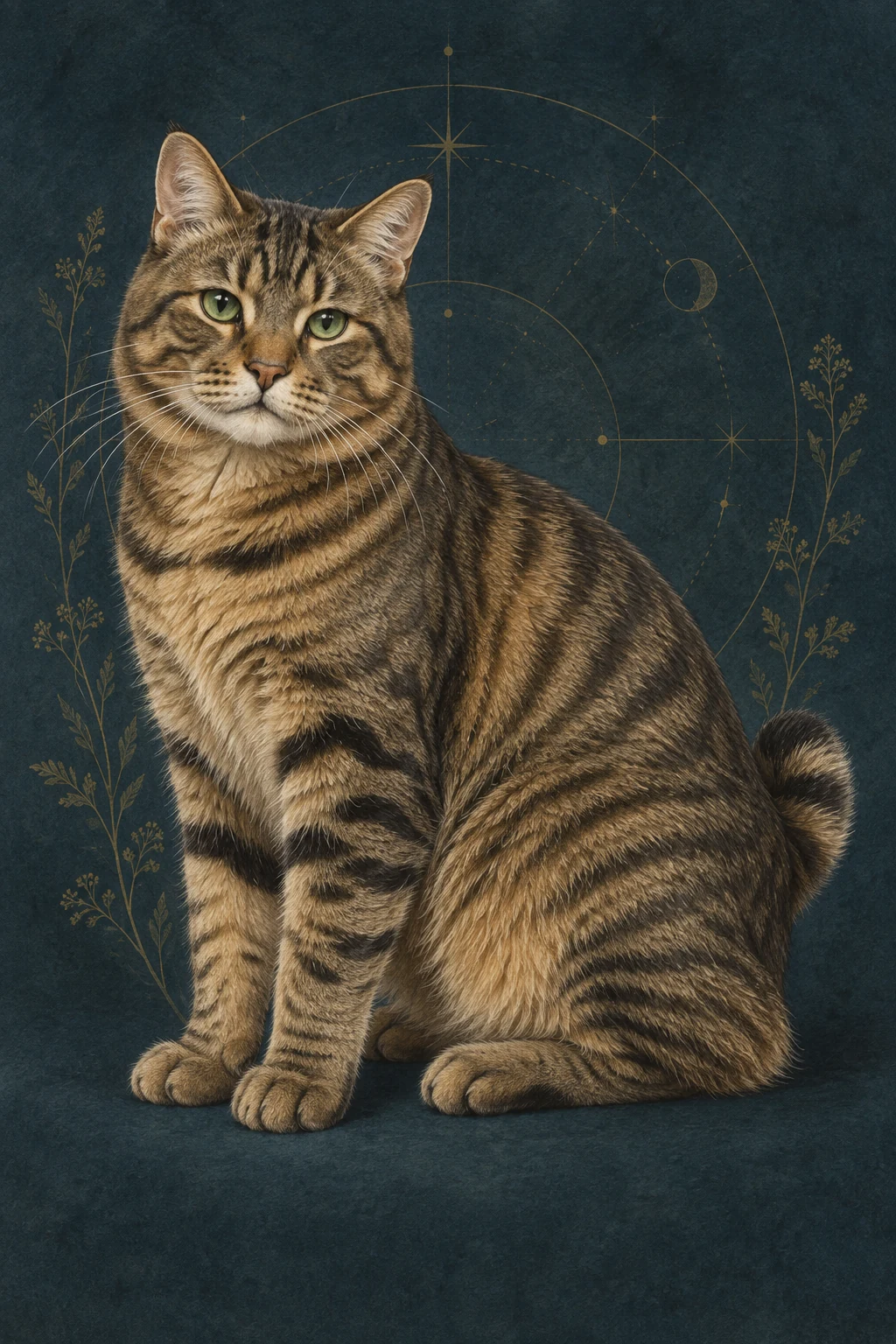
Brown mackerel tabby shorthair, green near-almond eyes, natural bobtail
✳ miaomap.comBreed atlas · 008
Feline breed atlas · 008 / ABT
A natural bobtail, sturdy body, and focused gaze give this domestic cat a distinctly wild-looking silhouette.
Move your pointer for a subtle sheen; flip the card to read its profile.
Brown mackerel tabby shorthair, green near-almond eyes, natural bobtail
The American Bobtail’s breeding concept arose from a bobtailed domestic cat found in Arizona in the late 1960s. Later breeding drew on naturally short-tailed cats from across the United States and Canada rather than a single ancestral line. Despite its wild-looking appearance, it is a domestic breed. Shorthaired and longhaired cats are coat varieties of the same breed, not separate ancestries.
Look for a broad modified-wedge head, pronounced brow, deep-set near-almond eyes, and upright ears with broad bases and rounded tips. A wide chest, muscular rectangular body, substantial legs, and large round paws complete the outline. The natural bobtail is broad-based and varies in length and curvature. This entry depicts a slightly lofty brown mackerel tabby short coat; appearance alone cannot confirm pedigree.
Breed descriptions often portray American Bobtails as affectionate, intelligent, and interactive. Many may enjoy stalking toys and forming close family bonds, but sociability and activity levels vary. Comfortable relationships with children or other pets depend on individual history, gradual introductions, and respectful handling rather than breed alone.
Brush the double coat weekly, increasing sessions during shedding; longhaired cats also need attention around the belly and hind-leg furnishings. Provide interactive play, stable climbing surfaces, and weight management. CFA notes possible spine or hip concerns associated with the tail mutation, and continence issues in completely tailless cats. Discuss changes in movement, comfort, or toileting with a veterinarian rather than judging health from tail appearance.
The breed’s bobtail occurs naturally; it is not created by docking. Length and shape vary, and the tail should be substantial at the base and flexible. A short tail alone does not establish breed identity: reliable pedigree documentation is needed. Tail injury or discomfort warrants veterinary attention.
The American Bobtail is a domestic breed, not a wild hybrid simply because it looks wild. Its development used naturally bobtailed domestic cats from different North American populations. Shorthair and longhair are coat varieties within the same breed, sharing its basic body type rather than representing separate ancestries.
Both coat varieties shed; start with weekly brushing and increase it during seasonal shedding. A short tail neither guarantees health nor proves disease. CFA mentions possible spine and hip concerns, plus continence problems in completely tailless cats. Changes in gait or toileting should be assessed by a veterinarian.
Text is based on the association sources below. AI-assisted original illustrations depict one coat variety, not every individual. Health and care information is general and does not replace veterinary assessment.
Based on the association sources listed on each profile. Illustrations do not establish pedigree. Independently produced by miaomap, without association endorsement. Numbers are catalog IDs, not rarity ranks.
miaomap · Updated
Use our illustration creator to choose fur colors, eyes and tails, then download your own cat.