miaomap.com · Breed atlas011 / ACLH
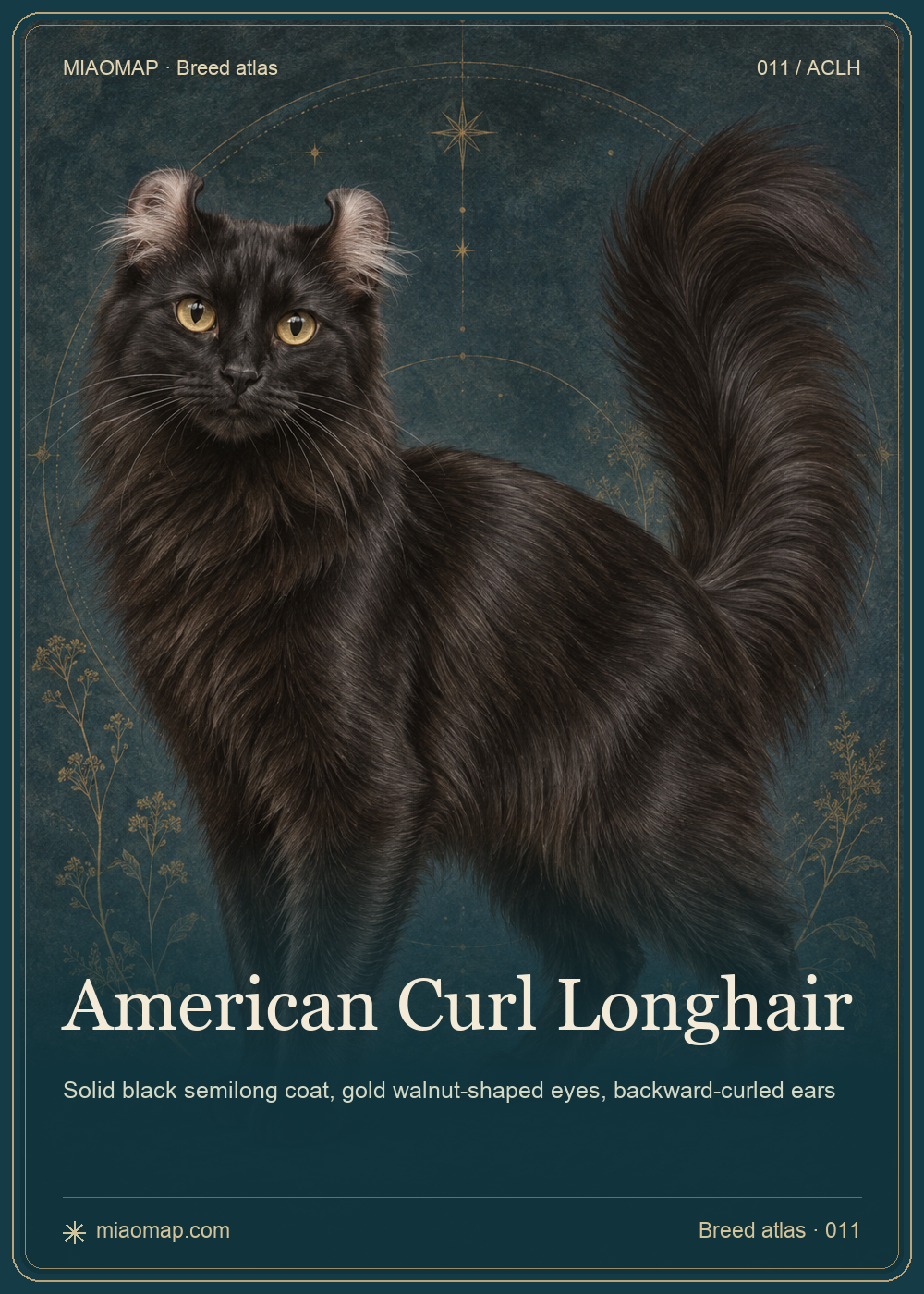
American Curl Longhair
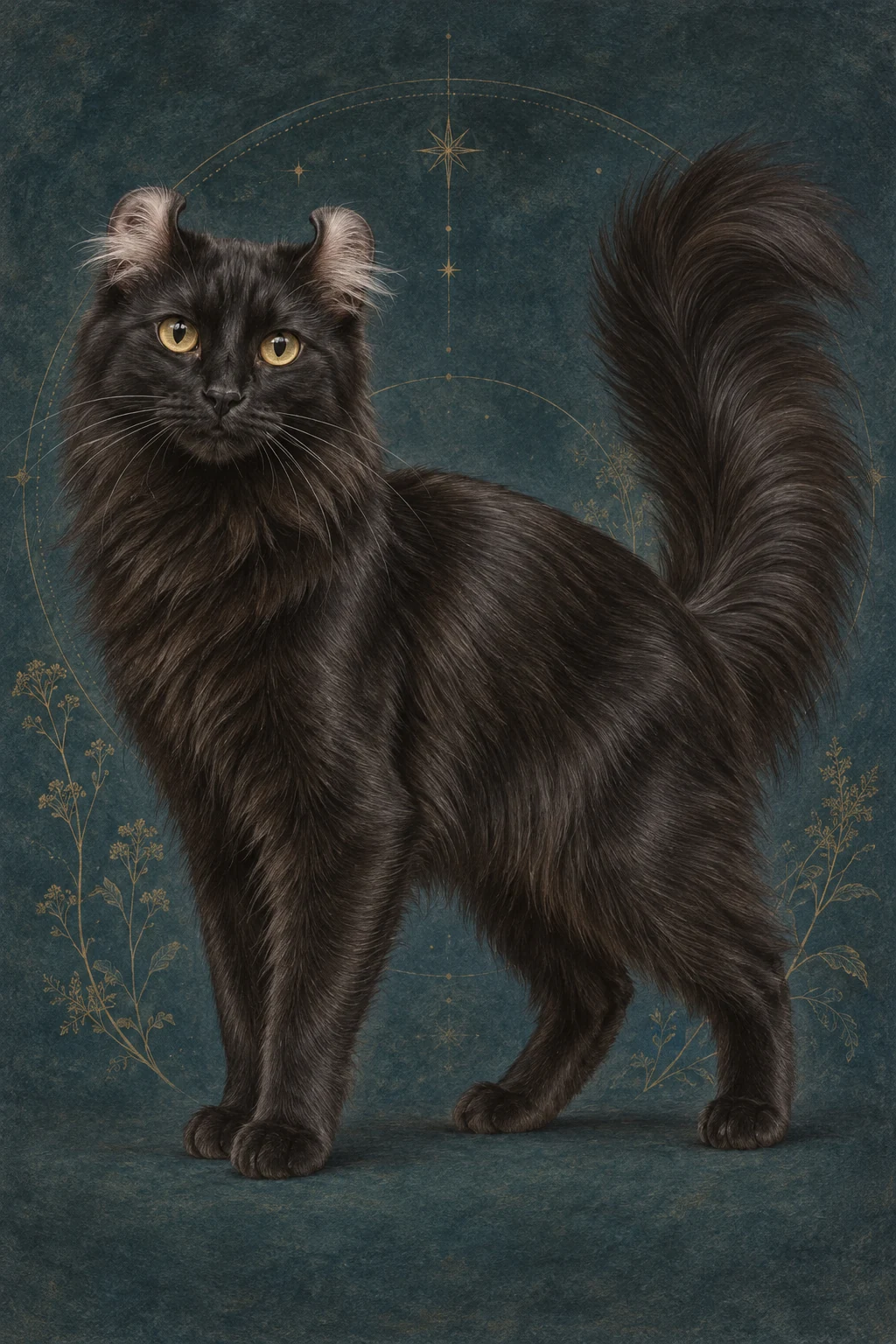
Solid black semilong coat, gold walnut-shaped eyes, backward-curled ears
✳ miaomap.comBreed atlas · 011
Feline breed atlas · 011 / ACLH
Backward-curled ears and a silky plumed tail distinguish a cat often keen to join household activities.
Move your pointer for a subtle sheen; flip the card to read its profile.
Solid black semilong coat, gold walnut-shaped eyes, backward-curled ears
The American Curl traces its beginnings to Shulamith, a black female with curled ears found in California in 1981. Curled-ear kittens in her first litter that year helped establish the breed's foundation. Longhair and shorthair are coat variants within the same breed background, not cats with separate origins; both share the characteristic backward curl of the ears.
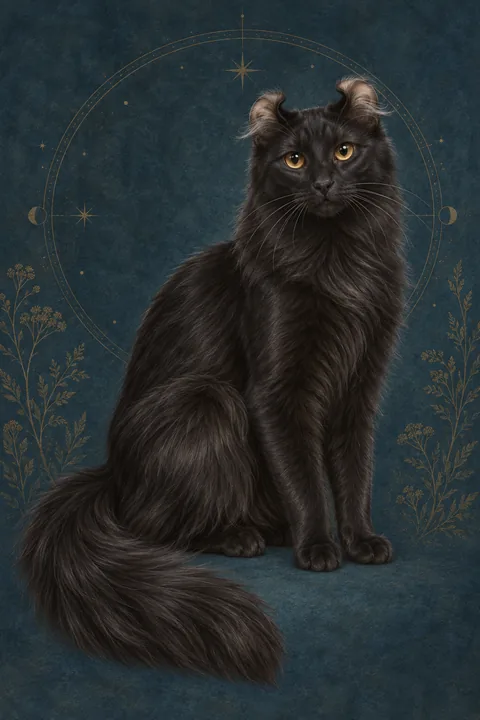
Look for ears that curve backward rather than fold forward. The head is a softly outlined wedge with large walnut-shaped eyes and a relatively straight nose. A medium-sized, elegant, muscular body has proportionate legs. The semilong coat lies close, feels silky, and has little undercoat; the plumed tail is approximately body-length. Appearance alone cannot confirm pedigree.
American Curls are often described as people-oriented, curious, and playful, with many enjoying companionship and involvement in daily routines. Some retain a kitten-like enthusiasm into adulthood. These are tendencies, not promises: socialization, environment, and individual preferences shape comfort with handling, visitors, and other animals.
Comb the silky semilong coat regularly, checking behind the ears, under the legs, and through the plumed tail for tangles; adjust frequency during shedding. Handle curled ears gently without straightening or forcibly bending them, and clean only visible areas as your veterinarian advises. Discharge, odor, or discomfort warrants veterinary advice. Maintain daily play, weight management, and routine veterinary checks.
No. They share the American Curl breed background and differ mainly in coat length and tail furnishing. The longhair has a silky semilong coat and plumed tail, while the shorthair has a shorter coat. Both have backward-curled ears; neither coat length nor ear shape alone proves pedigree.
No. FIFe describes kittens as born with straight ears, with curling beginning at about one week and the degree of curl becoming largely settled around four months. This is a developmental process, not something to shape manually. American Curl ears curve backward, unlike the forward-folded ears of Scottish Folds.
Its silky coat has little undercoat and is generally manageable, but regular combing still removes loose hair and helps prevent tangles, including in the plumed tail. Adjust grooming to the individual coat. Handle curled ears gently without attempting to straighten them; ear discomfort or unusual discharge needs veterinary assessment.
Text is based on the association sources below. AI-assisted original illustrations depict one coat variety, not every individual. Health and care information is general and does not replace veterinary assessment.
Based on the association sources listed on each profile. Illustrations do not establish pedigree. Independently produced by miaomap, without association endorsement. Numbers are catalog IDs, not rarity ranks.
miaomap · Updated
Use our illustration creator to choose fur colors, eyes and tails, then download your own cat.