miaomap.com · Breed atlas010 / ACURL
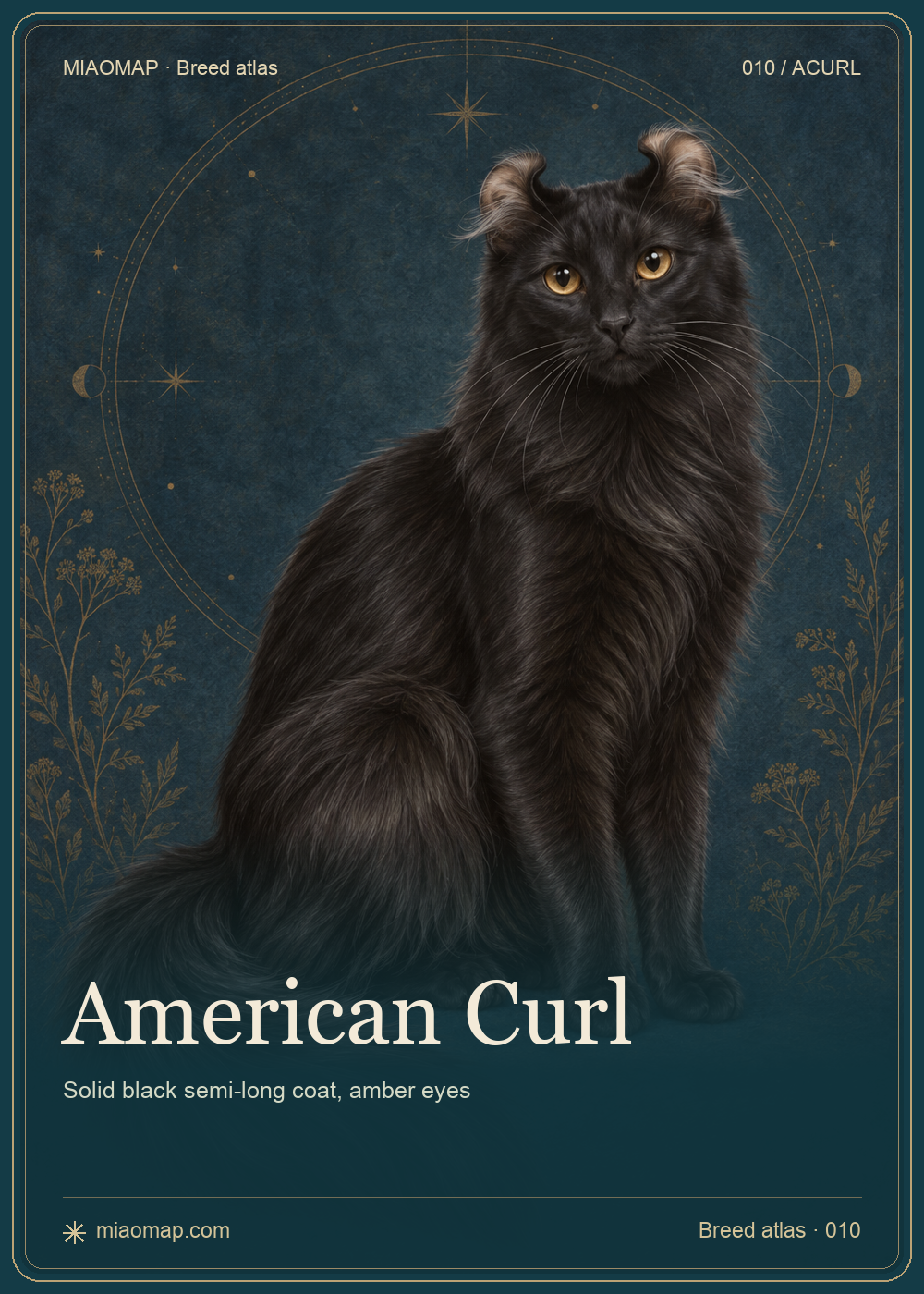
American Curl
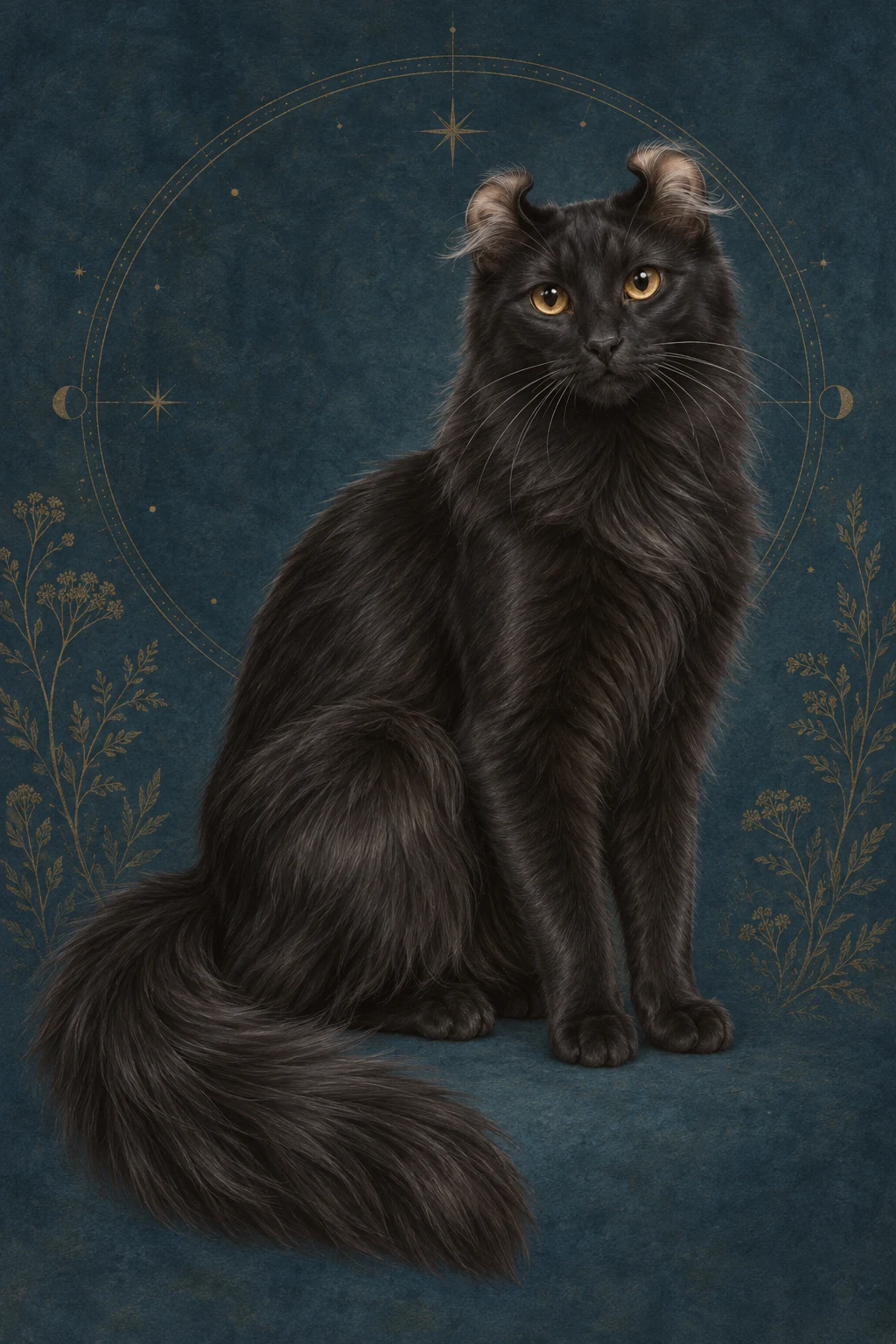
Solid black semi-long coat, amber eyes
✳ miaomap.comBreed atlas · 010
Feline breed atlas · 010 / ACURL
Backward-curving ears and a silky coat distinguish this cat, often described as people-oriented and curious.
Move your pointer for a subtle sheen; flip the card to read its profile.
Solid black semi-long coat, amber eyes
The American Curl traces its breed history to Shulamith, a black longhaired female found in California in 1981. Her kittens also displayed backward-curving ears, a trait subsequently established as autosomal dominant. Joe and Grace Ruga helped develop the breed, with selective breeding beginning in 1983. Longhaired and shorthaired Curls are coat varieties of the same breed, not cats with separate ancestry.
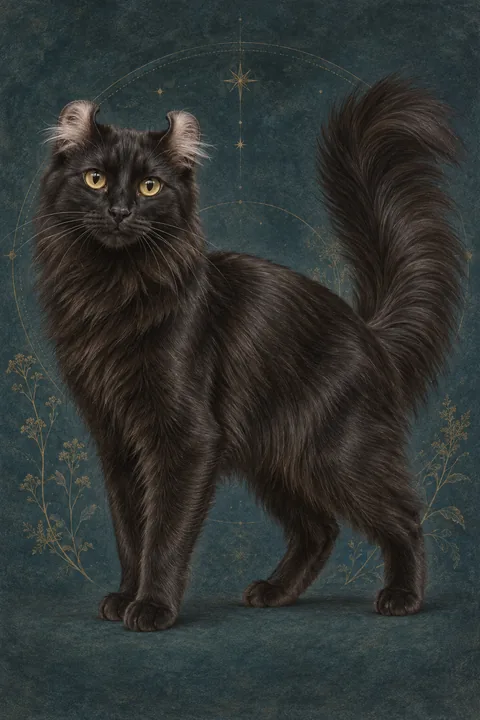
Look for ears that curve smoothly backward rather than fold forward, with broad bases and rounded tips. The head is a softly modified wedge with large, walnut-shaped eyes. A medium rectangular body has proportionate legs and a tail approximately its own length. Both coat varieties are silky and flat-lying; longhairs have a plumed tail. Appearance alone cannot confirm pedigree.
American Curls are often described as affectionate, curious and playful well into adulthood. Many enjoy joining household activities rather than simply watching from a distance. Sociability and adaptability vary between individuals, however; introductions to children or other pets should be gradual, with space for the cat to withdraw.
Gently comb the silky coat, adjusting frequency to shedding and tangles; longhairs need attention around the tail and underarms. Inspect ears without pulling, straightening or forcibly bending the cartilage. Ask a veterinarian about cleaning and never insert cotton swabs into the canal. Provide interactive play, weight management and routine checkups. CFA reports no identified breed-linked health issues, which does not guarantee individual health.
No. American Curl kittens have straight ears at birth, usually beginning to curl backward during their first week. The shape continues changing and is largely settled by about four months. Curl degree varies; ear appearance cannot establish pedigree, and the ears should never be manually shaped.
American Curl ears curve backward; Scottish Fold ears fold forward and downward. These are different inherited traits, not two ear forms of one breed. The Fold trait is associated with osteochondrodysplasia and welfare concerns; that risk should not be assumed for Curls merely from their unusual ears. Handle both gently.
No. American Curls come in longhaired and shorthaired varieties of the same breed. Both have silky coats with relatively little undercoat, but still shed. Longhairs have semi-long body fur and a plumed tail. Adjust combing to seasonal shedding and tangles rather than assuming minimal undercoat means no grooming.
Text is based on the association sources below. AI-assisted original illustrations depict one coat variety, not every individual. Health and care information is general and does not replace veterinary assessment.
Based on the association sources listed on each profile. Illustrations do not establish pedigree. Independently produced by miaomap, without association endorsement. Numbers are catalog IDs, not rarity ranks.
miaomap · Updated
Use our illustration creator to choose fur colors, eyes and tails, then download your own cat.