miaomap.com · Breed atlas017 / BIRM
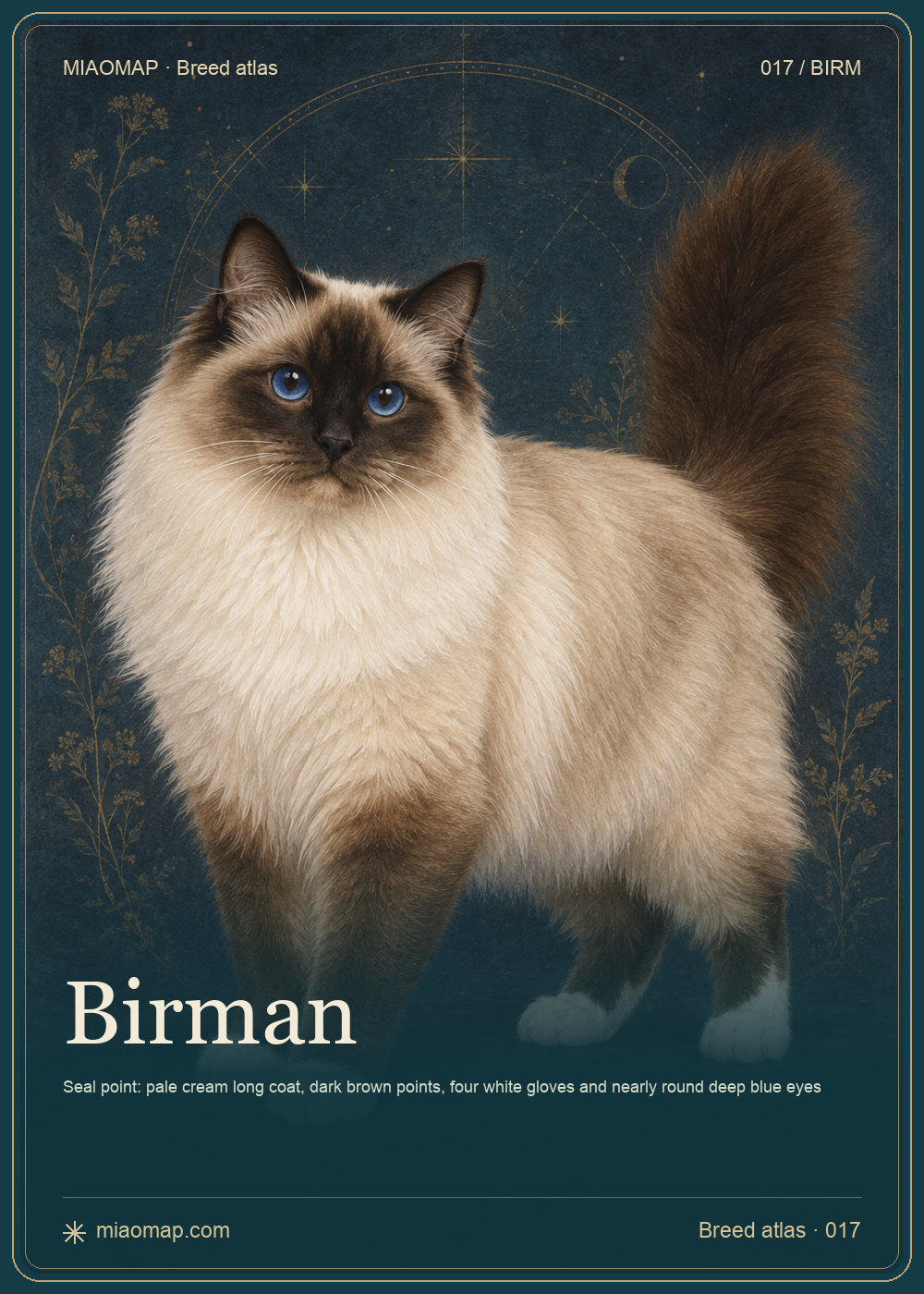
Birman
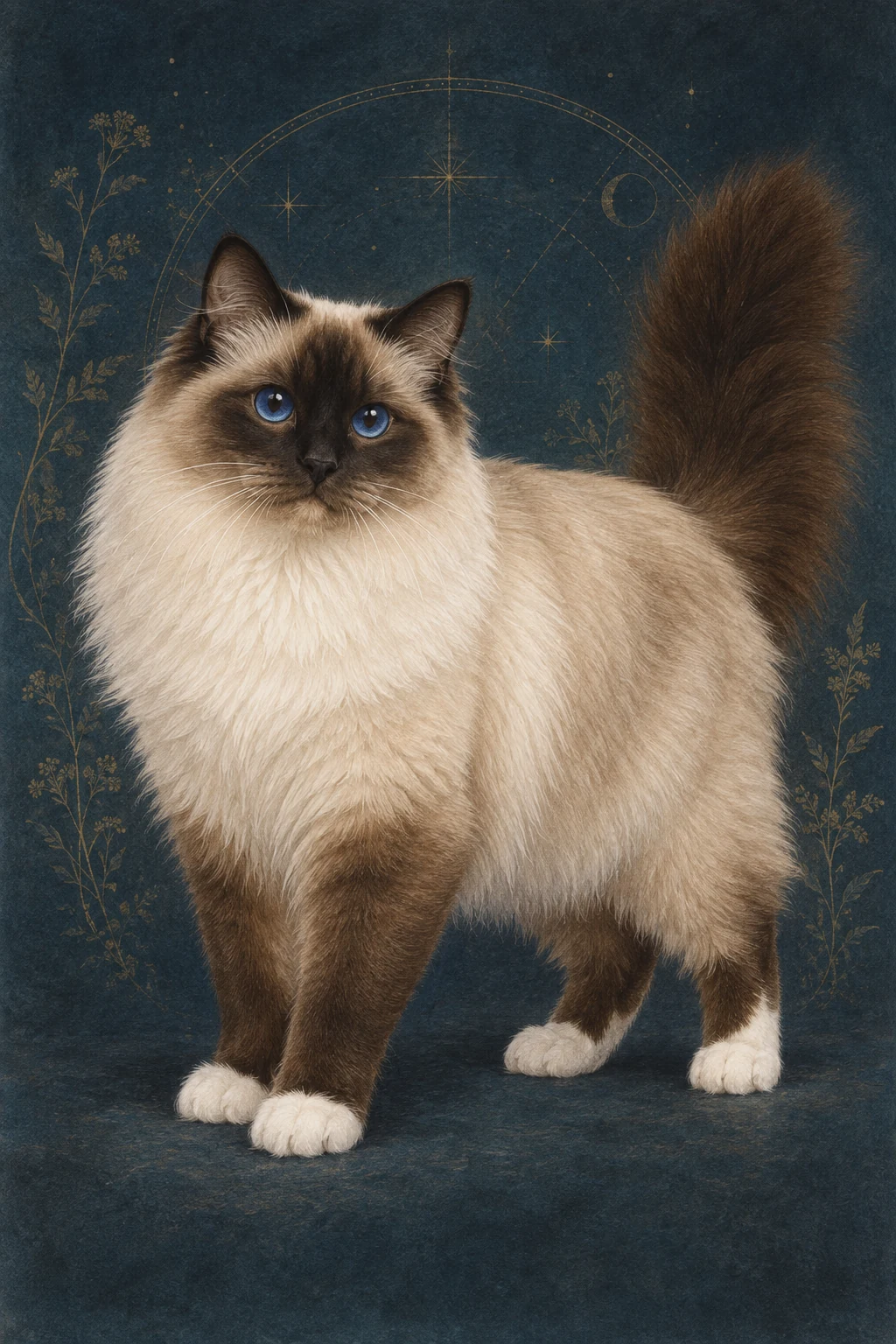
Seal point: pale cream long coat, dark brown points, four white gloves and nearly round deep blue eyes
✳ miaomap.comBreed atlas · 017
Feline breed atlas · 017 / BIRM
Blue eyes and four white gloves distinguish this silky-coated cat, which is often fond of human company.
Move your pointer for a subtle sheen; flip the card to read its profile.
Our Birman resident is still waiting for a voice. Live with a Birman? Share a meow or purr and let others hear a little of your cat’s everyday life.
A little meow, a little fame. If we feature your recording, we’ll credit you or your cat using the name you choose.
A short phone recording is perfect: aim for 5–15 seconds in a quiet setting. Capture a natural moment without disturbing your cat. Audio or video with sound is welcome.
Share your cat’s voice ↗[email protected]Attach your recording and include the breed and your preferred credit. Please confirm you recorded it and allow miaomap to feature it.
Thank you for helping us build a playful Meow Planet together. Every little meow deserves to be heard.
Seal point: pale cream long coat, dark brown points, four white gloves and nearly round deep blue eyes
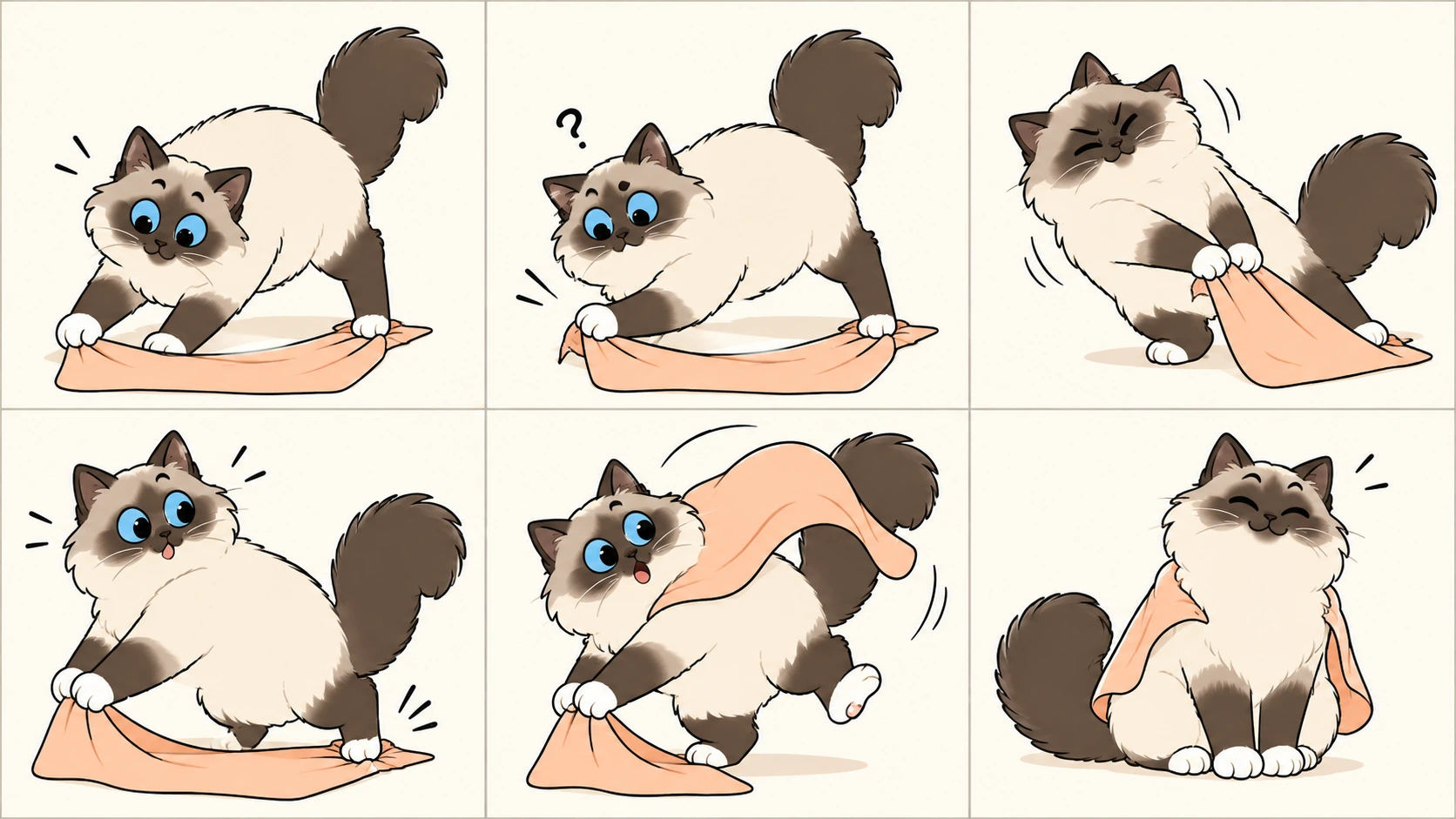
The same seal-point Birman tries to drag a small towel without noticing a hind paw is pinning it down. Six continuous beats turn determined tugging into an accidental towel drape and a completely nonchalant sit, all without words.
The Birman’s early history remains partly uncertain, and temple legends should not be treated as documented ancestry. CFA describes a pair sent from Burma to France around 1919, with the pregnant female establishing the French breeding foundation. After World War II, breeders rebuilt the population using Persian and Siamese outcrosses. Today’s different point colors are coat varieties within the same breed, not separate ancestral lines.
Look for a broad, rounded head, firm chin and medium-length nose with a gently convex profile. The widely spaced eyes are nearly round and blue; ears are medium-sized with rounded tips. An elongated, sturdy body has substantial legs and a medium-length plumed tail. Silky medium-long to long fur carries darker points, four white gloves and pointed white laces behind the hind paws.
Birmans are often described as affectionate, gentle and moderately active, enjoying nearby company and relaxed interactive play. Some have soft voices, though vocal habits vary. They may appreciate regular companionship, but comfort with children or other pets depends on socialization, gradual introductions and the preferences of each individual cat.
Start with weekly combing of the relatively manageable silky coat, increasing frequency during shedding and checking under the forelegs and around the hindquarters. Provide daily play, companionship, nail trimming and dental care while maintaining a healthy weight. CFA notes breeder screening for hypertrophic cardiomyopathy and other conditions; ask about health records and discuss individual screening needs with a veterinarian rather than judging health by appearance.
No. The Birman is also called the Sacred Cat of Burma, but it is distinct from the Burmese. Birmans have silky medium-long to long coats, blue eyes, colorpoints and four white gloves; Burmese are shorthaired. Names referring to Burma do not establish a shared breed identity, and appearance cannot confirm pedigree.
Birman standards emphasize four white gloves and pointed white laces behind the hind paws. Mitted Ragdolls typically also have a white chin and a white area along the belly, unlike the Birman’s standard pattern. Both can have blue eyes and colorpoints, so consider body type and markings together; pedigree still requires documentation.
Birmans do shed, but their silky coat is generally easier to maintain than some densely undercoated longhair coats. Weekly combing is a reasonable starting point; shedding seasons or individual tangling may require more frequent care. Check the underarms, belly and hindquarters, handle tangles gently, and consult a veterinarian about skin changes or suddenly increased shedding.
Text is based on the association sources below. AI-assisted original illustrations depict one coat variety, not every individual. Health and care information is general and does not replace veterinary assessment.
Based on the association sources listed on each profile. Illustrations do not establish pedigree. Independently produced by miaomap, without association endorsement. Numbers are catalog IDs, not rarity ranks.
miaomap · Updated
MIAOMAP / BIRMAN / 017
Meet the Birman in six scenes. Share eight moods.
Our seal-point Birman keeps the profile’s pale cream long coat, dark brown points, four white gloves and nearly round deep blue eyes, with pointed white laces behind the hind paws and a medium-length plumed tail. The comic presents breed facts; the stickers and silent comic are character fiction, not promises about any individual Birman’s temperament. Different point colors are coat varieties within the same breed.
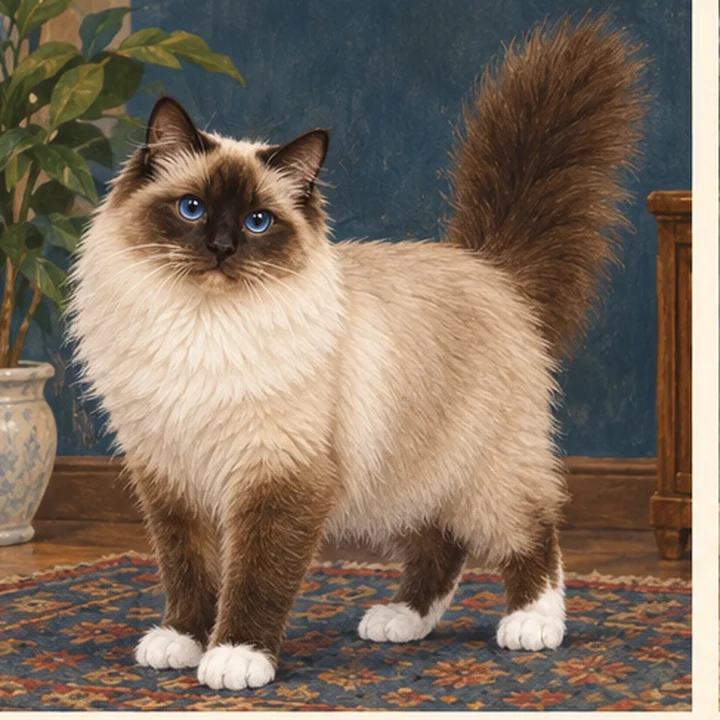
A Birman has a broad, rounded head and widely spaced, nearly round blue eyes. Four white gloves and pointed white laces behind the hind paws are identification clues, but appearance cannot confirm pedigree.
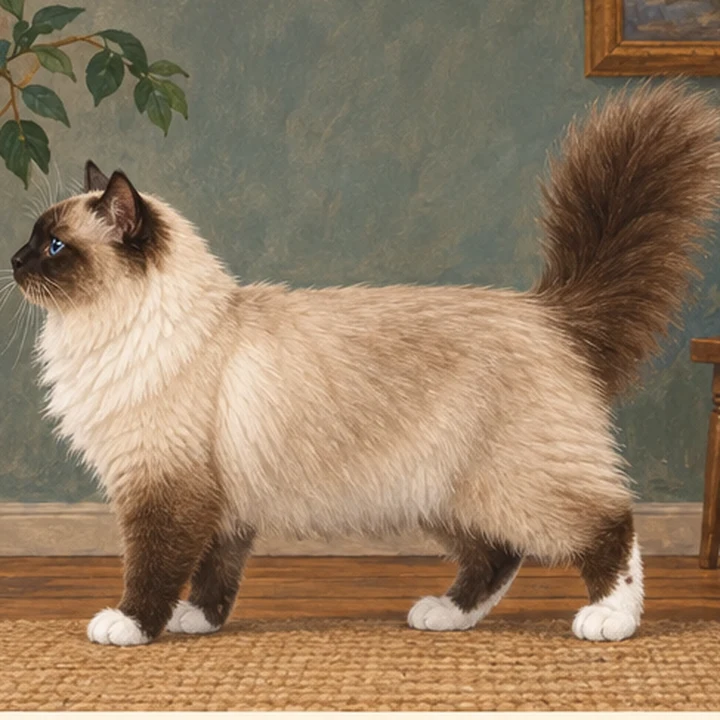
Medium to large, with an elongated sturdy body, substantial legs and a medium-length plumed tail. This seal-point Birman has pale cream silky medium-long to long fur, dark brown points and white gloves.

CFA describes a pair sent from Burma to France around 1919, with the pregnant female establishing the French breeding foundation. Persian and Siamese outcrosses helped rebuild the breed after World War II; temple legends are not documented ancestry.
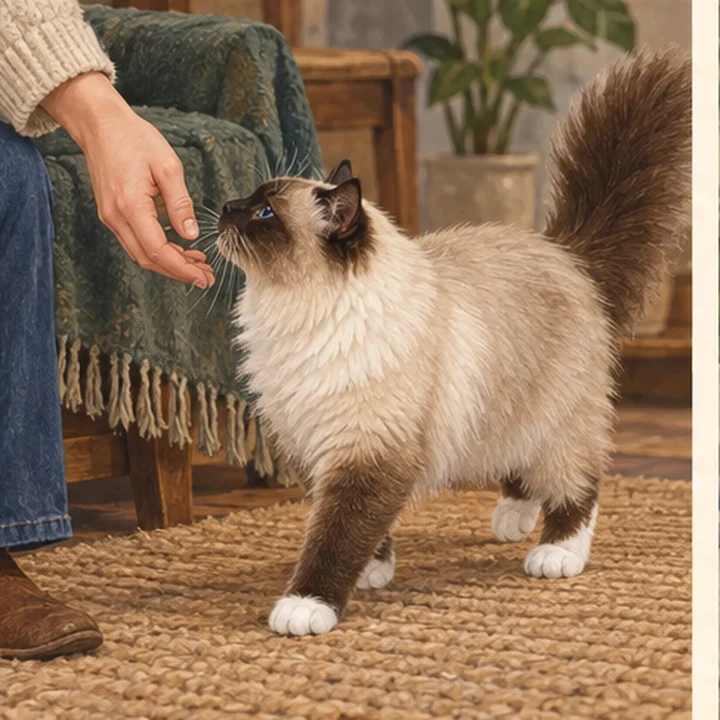
Birmans are often described as affectionate, gentle and moderately active, but preferences vary. Let the cat approach or leave freely; introductions to children or other pets should be gradual.
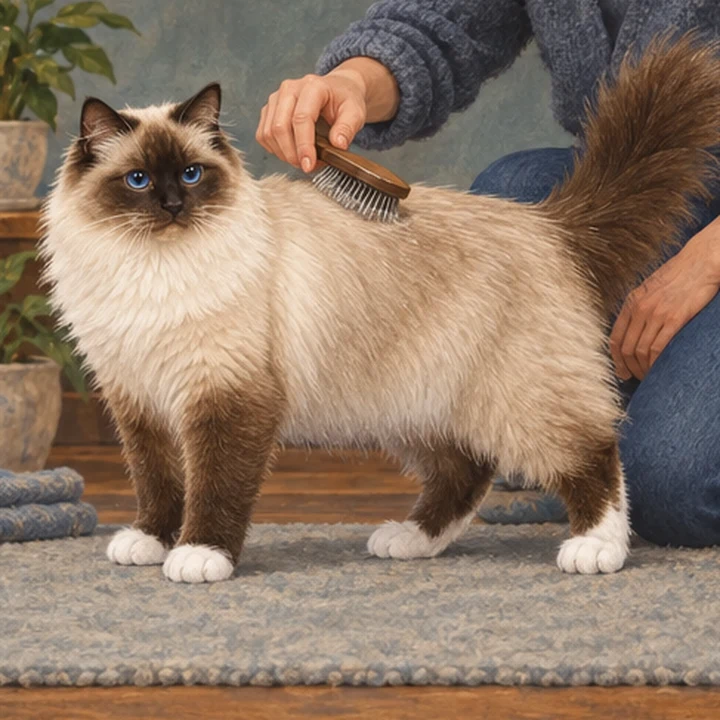
Start with weekly combing, increasing frequency during shedding as needed. Check underarms, belly and hindquarters, handle tangles gently, and consult a veterinarian about skin changes or suddenly increased shedding.
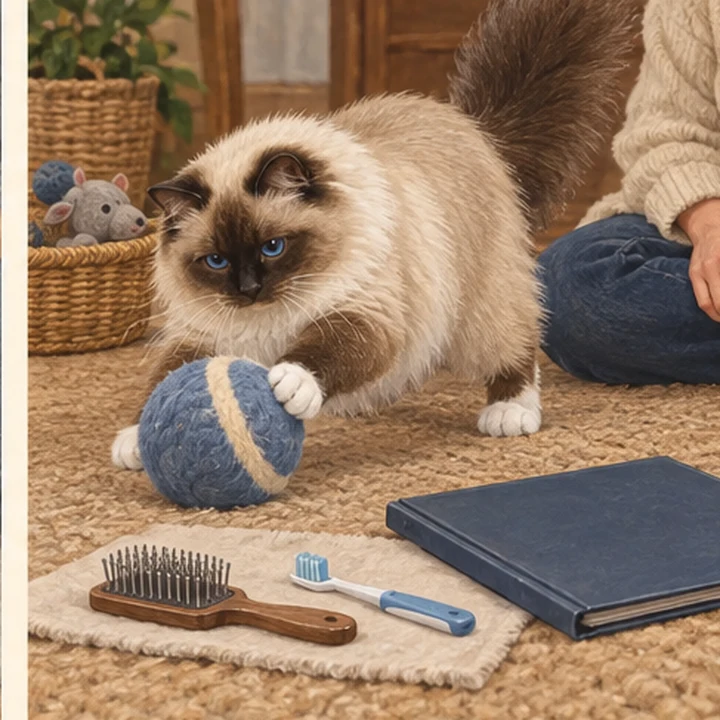
Provide daily play and companionship, nail and dental care, and maintain a healthy weight. CFA notes breeder screening for hypertrophic cardiomyopathy and other conditions; ask for health records and discuss individual screening needs with a veterinarian. Looks alone cannot establish health.
Eight transparent PNG stickers. Save them individually or download a set in your language. The textless edition works across languages and leaves room for your own captions.
Original miaomap artwork, illustrated with AI assistance. Free for personal chats, avatars and non-commercial sharing; credit miaomap.com when reposting. Commercial use, resale or redistribution of the asset pack requires permission. Breed facts reference CFA; no association endorsement.
Compare appearance and care needs to find a cat that fits your routine.
Breed comparisons ↗Pure AI fantasy. Please don’t take it seriously.
Use our illustration creator to choose fur colors, eyes and tails, then download your own cat.