miaomap.com · Breed atlas019 / BLH
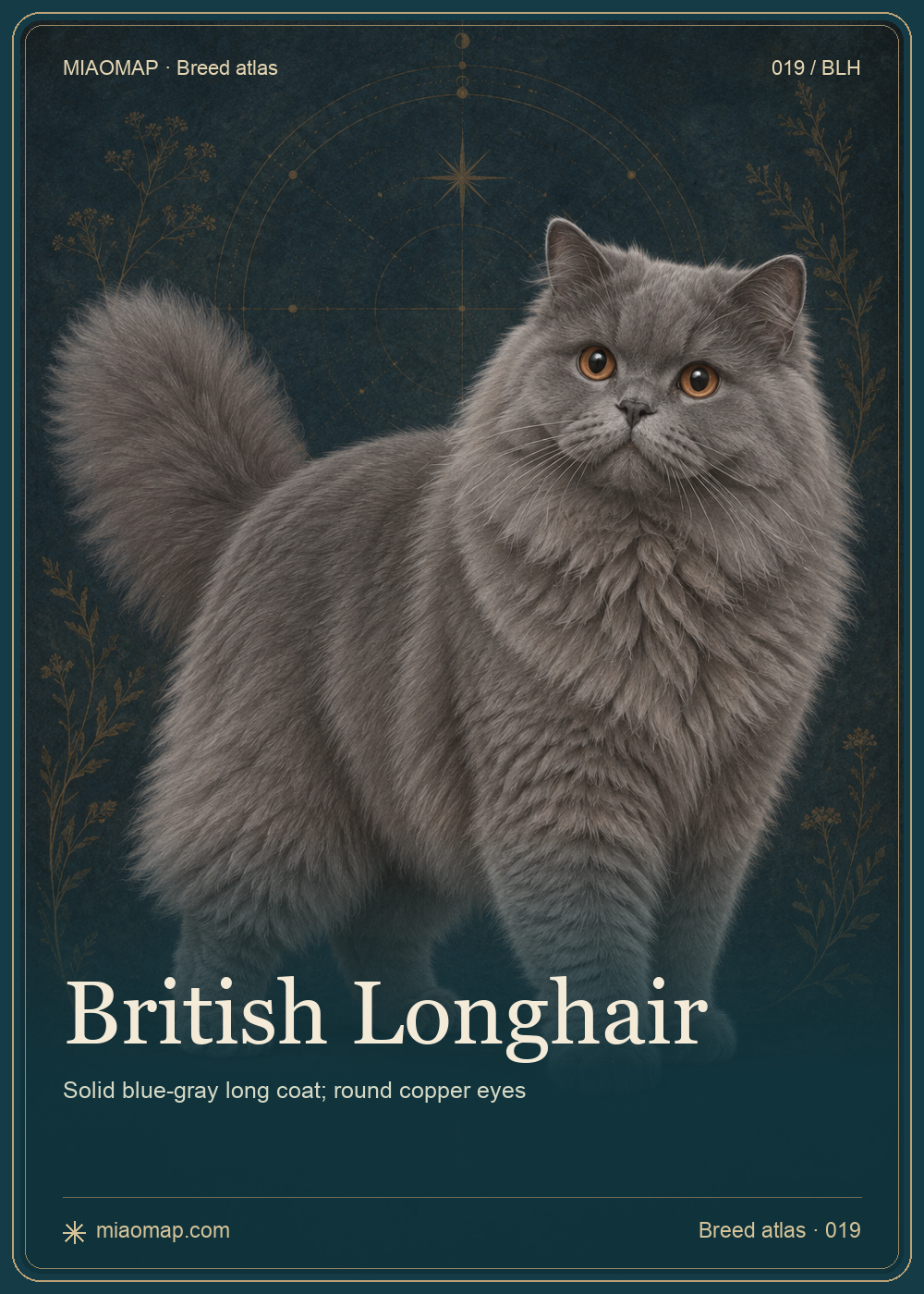
British Longhair
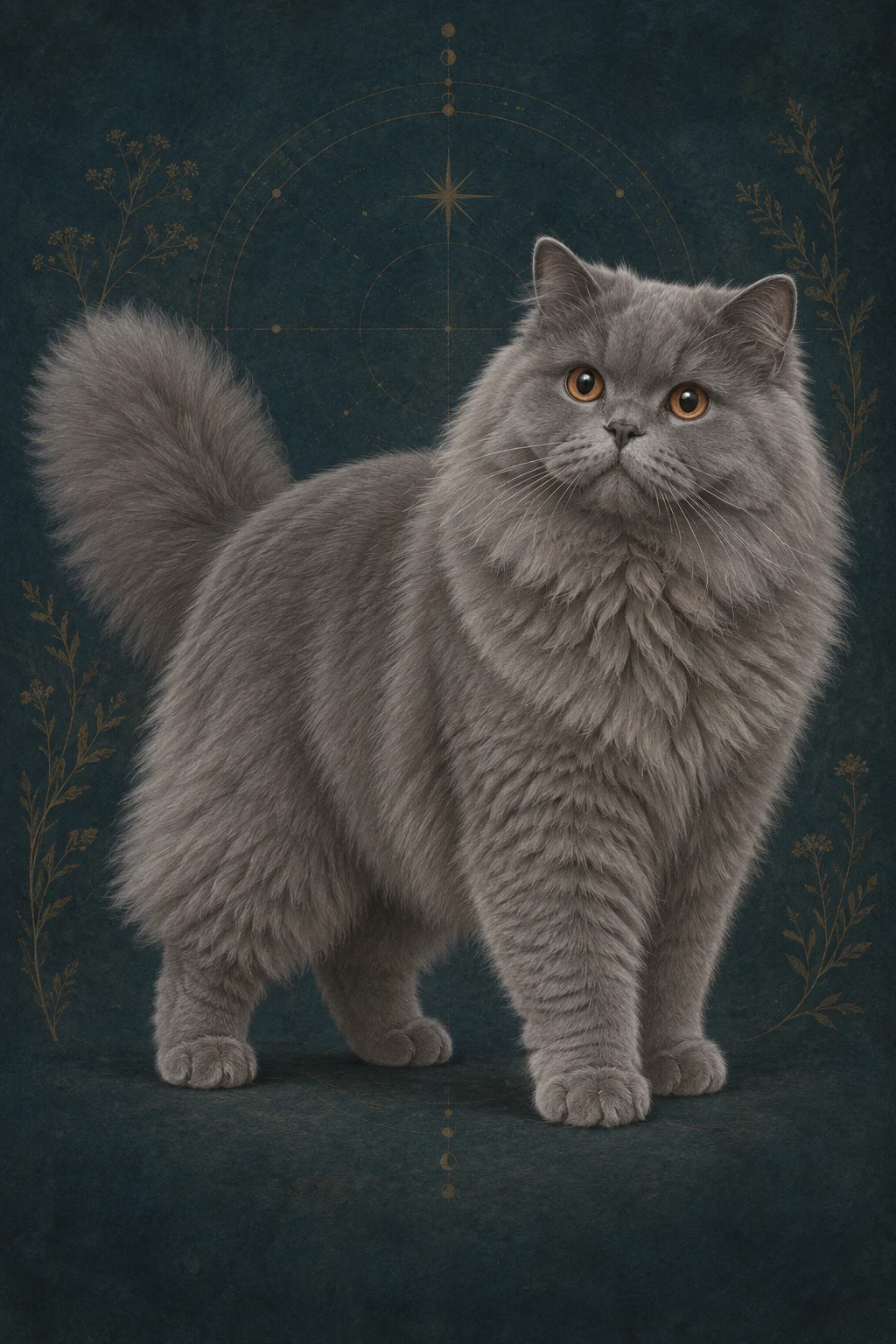
Solid blue-gray long coat; round copper eyes
✳ miaomap.comBreed atlas · 019
Feline breed atlas · 019 / BLH
A rounded face and dense long coat give the British Longhair the distinctive substantial outline of the British breed family.
Move your pointer for a subtle sheen; flip the card to read its profile.
Solid blue-gray long coat; round copper eyes
The British Longhair is closely related to the British Shorthair, representing the longhaired member of the same British breed family rather than an entirely separate ancestry. Historical Persian outcrosses in British breeding introduced longhair genes that could persist in descendants. Today's British Longhair combines the familiar substantial British build with a fuller coat. Blue-gray is especially familiar, but the breed is not limited to that color.
Look for a round head, full cheeks, a broad chest, and a sturdy medium-to-large body. The ears are relatively small with rounded tips, and the eyes are large and round, with color varying by coat variety. Strong legs, rounded paws, and a thick, well-furnished tail complete the outline. Dense long fur is especially noticeable around the neck and hindquarters, but appearance alone cannot establish pedigree.
British Longhairs are often described as gentle and easygoing, with an independent streak. Some enjoy staying near their people without wanting prolonged holding. Social experience, age, and surroundings influence each cat's behavior; offer quiet resting places, gentle interaction, and regular play while allowing the cat to choose its own pace of contact.
Comb gently several times weekly, increasing frequency during shedding, and check the armpits, belly, and hindquarters for tangles. Work through the coat rather than brushing only its surface; ask a professional to handle tight mats near the skin. Support a healthy weight with measured meals and daily play. Arrange routine veterinary care; particularly short-faced individuals merit attention to eye irritation or breathing changes and veterinary advice.
They belong to the closely related British breed family and share rounded features and substantial bodies. The principal difference is the coat: British Longhairs have longer fur, especially full around the neck and tail, requiring more frequent grooming. A similar-looking longhaired cat is not automatically one; pedigree requires reliable records.
No. Blue-gray is a familiar representative color, but British Longhairs also come in other colors and patterns, and eye color varies with coat variety. This page illustrates one representative combination: solid blue-gray fur and copper eyes. Neither coat color nor eye color alone proves breed identity or pedigree.
The dense long coat can develop mats, particularly around the armpits, belly, and hindquarters. Use a comb gently several times a week, increasing frequency during shedding as needed and reaching beneath the surface. Do not pull tight mats or cut close to skin with scissors; seek a groomer's or veterinarian's help for difficult tangles.
Text is based on the association sources below. AI-assisted original illustrations depict one coat variety, not every individual. Health and care information is general and does not replace veterinary assessment.
Based on the association sources listed on each profile. Illustrations do not establish pedigree. Independently produced by miaomap, without association endorsement. Numbers are catalog IDs, not rarity ranks.
miaomap · Updated
Use our illustration creator to choose fur colors, eyes and tails, then download your own cat.