miaomap.com · Breed atlas026 / CPSH
Colorpoint Shorthair
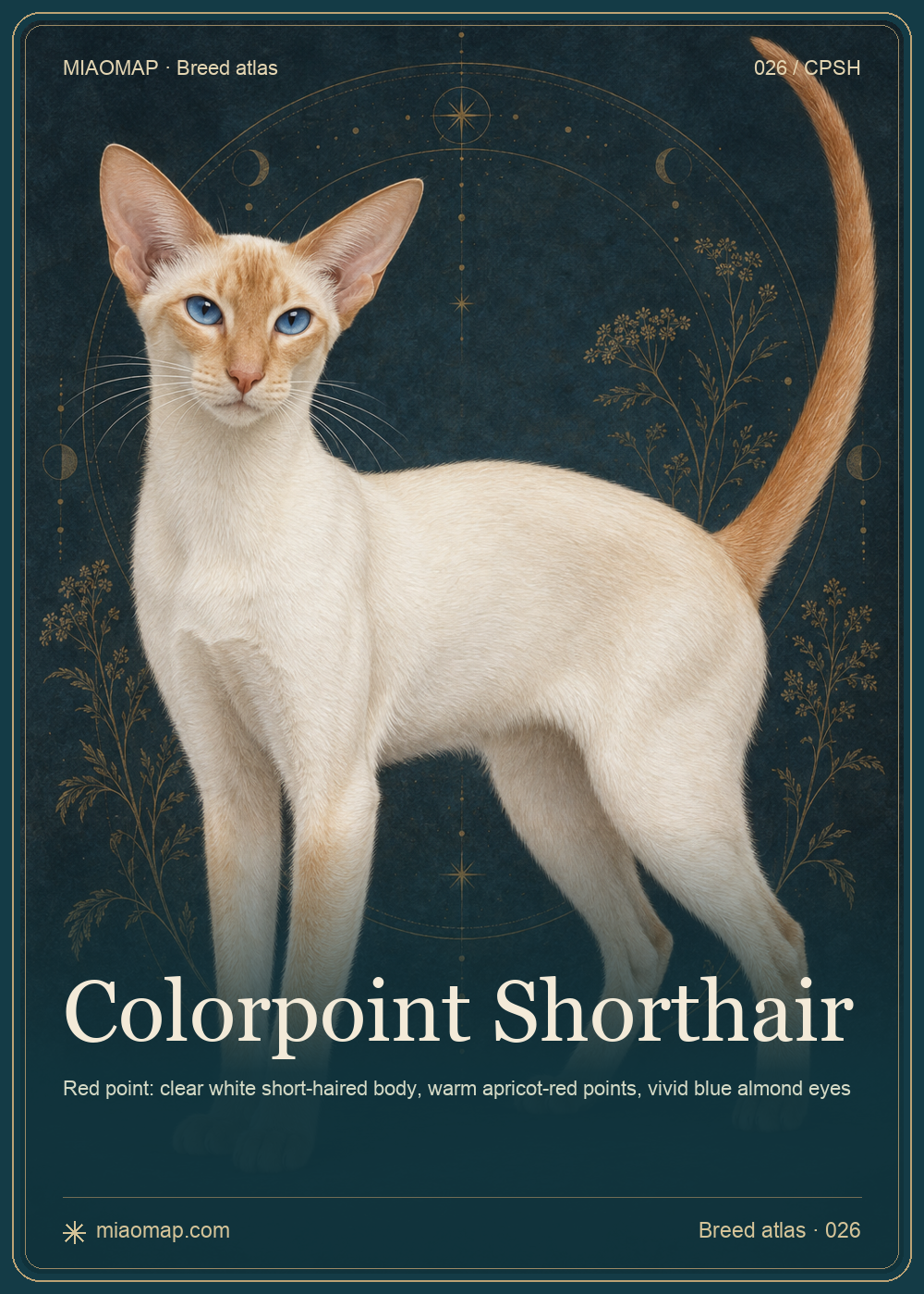
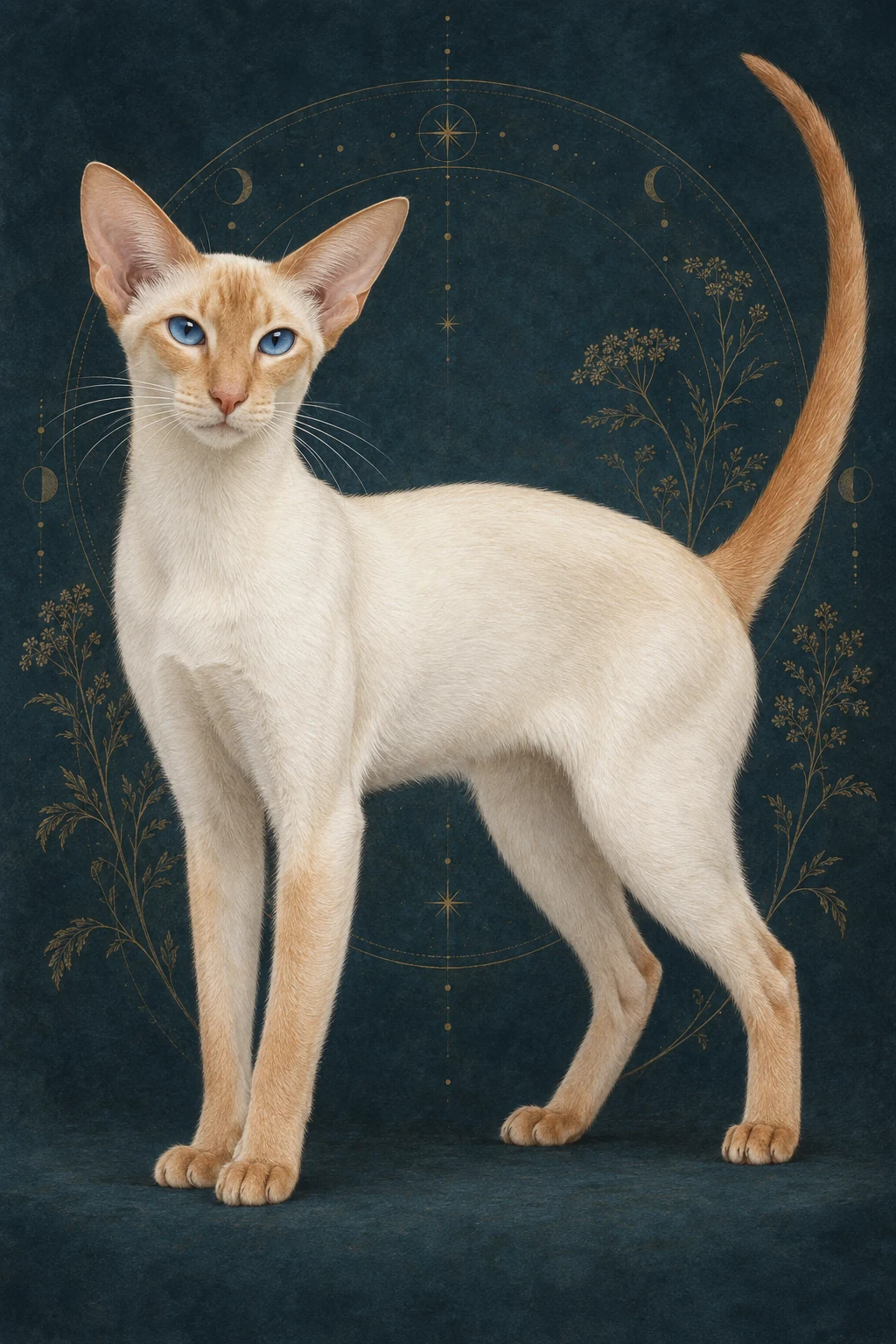
Red point: clear white short-haired body, warm apricot-red points, vivid blue almond eyes
✳ miaomap.comBreed atlas · 026
Feline breed atlas · 026 / CPSH
A Siamese-like silhouette in a wider point-color palette, often paired with an active, affectionate, vocal nature.
Move your pointer for a subtle sheen; flip the card to read its profile.
Red point: clear white short-haired body, warm apricot-red points, vivid blue almond eyes
The Colorpoint Shorthair developed through breeding aimed at expanding Siamese point colors while preserving Siamese body type. In the mid-1950s, breeders introduced red coloration; British work on tabby points also contributed to its development. CFA accepted early colors for registration in the late 1950s. Red, cream, lynx and tortie points are coat categories within this breed, not separate ancestral breeds.
Look for a long wedge-shaped head, large broad-based ears continuing its triangular outline, and slanted, vivid blue almond eyes. The neck and torso are long, the legs slender with higher hindquarters, and the tail thin and tapering. Fine, short fur lies close to the body, contrasting lighter torso with colored points. These features suggest type but cannot establish pedigree visually.
Colorpoint Shorthairs are often described as affectionate, active and vocal, with many seeking involvement in household routines. Interactive toys and regular companionship can suit them well. However, vocal intensity, tolerance of handling and relationships with other pets vary with the individual, socialization and experience; breed alone cannot guarantee behavior.
Use gentle weekly grooming or damp hands to remove loose hair from the close coat; routine bathing is usually unnecessary. Offer daily interactive play, safe climbing spaces and predictable companionship. CFA notes crossed eyes, tail kinks and other health concerns requiring testing or examination. Ask about parental screening records and discuss individual needs with a veterinarian rather than diagnosing from appearance.
Under CFA standards, their intended body type is the same; the main distinction is the point-color category. Siamese have the traditional seal, chocolate, blue and lilac points, while Colorpoint Shorthairs include red, cream, lynx and tortie variations. Color helps comparison, but confirming pedigree requires appropriate records.
Point coloration is temperature-sensitive: cooler ears, face, limbs and tail generally develop stronger color than the warmer torso. The coat can darken with age or in cooler living conditions. Maintain a comfortable environment rather than deliberately exposing a cat to cold to alter its appearance.
Within the Colorpoint Shorthair, these names describe coat categories, not separate breeds. Lynx points have tabby bars on the points; tortie points combine their base color with red or cream mottling. Some varieties combine both features. They share the breed's body standard, but either pattern alone does not prove pedigree.
Text is based on the association sources below. AI-assisted original illustrations depict one coat variety, not every individual. Health and care information is general and does not replace veterinary assessment.
Based on the association sources listed on each profile. Illustrations do not establish pedigree. Independently produced by miaomap, without association endorsement. Numbers are catalog IDs, not rarity ranks.
miaomap · Updated
Use our illustration creator to choose fur colors, eyes and tails, then download your own cat.