miaomap.com · Breed atlas035 / EXSH
Exotic Shorthair
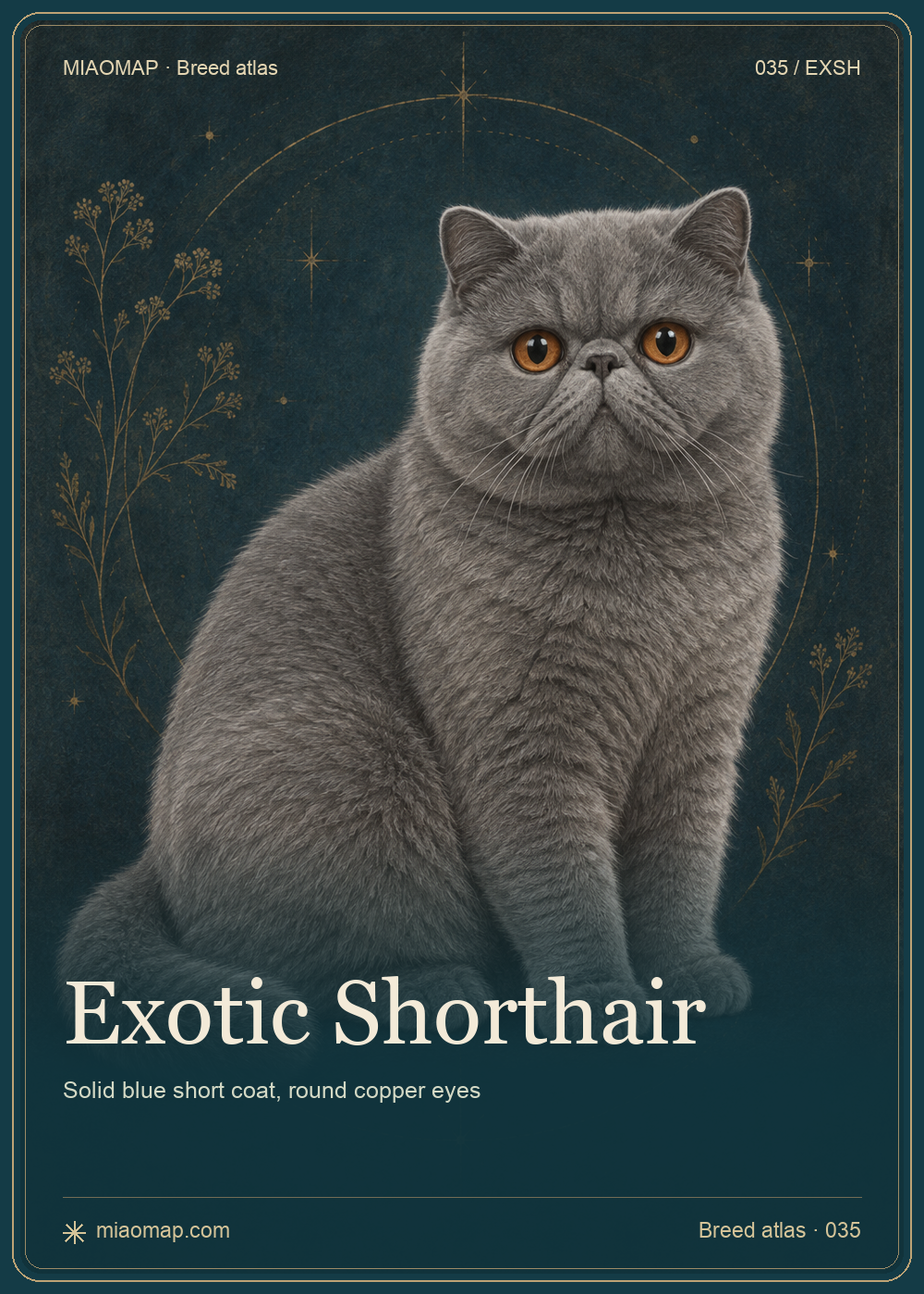
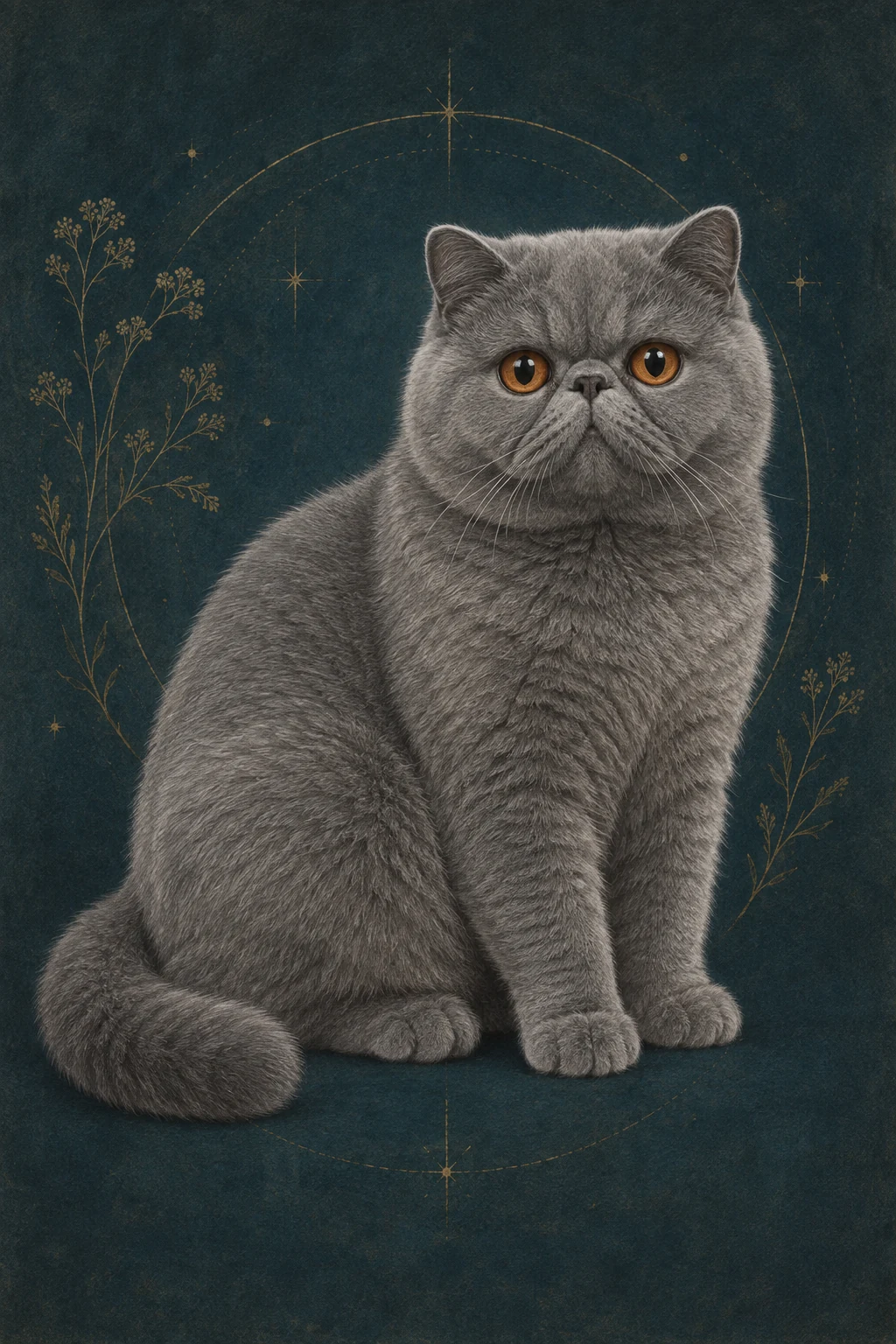
Solid blue short coat, round copper eyes
✳ miaomap.comBreed atlas · 035
Feline breed atlas · 035 / EXSH
With Persian-like rounded features and a dense short coat, the Exotic Shorthair is often appreciated for quiet, affectionate companionship.
Move your pointer for a subtle sheen; flip the card to read its profile.
Solid blue short coat, round copper eyes
According to CFA, the Exotic developed from Persian–American Shorthair crosses on the United States West Coast during the 1950s and became a CFA breed in 1966. Subsequent breeding mainly returned to Persians, explaining their closely shared body type. CFA now uses the name Exotic; the shorthaired form and related longhaired variant should remain distinct without implying separate ancestry.
The Exotic Shorthair has a broad, rounded head, full cheeks and a short, wide nose with a break between the eyes. Large round eyes are widely spaced, while small round-tipped ears sit low. Its compact, muscular body has sturdy legs and a proportionately short tail. Dense undercoat lifts the plush short coat; appearance alone cannot confirm pedigree.
Exotics are often described as quiet and affectionate, preferring to stay near familiar people. Some are notably playful, though activity levels vary. Living with children or other pets still calls for gradual introductions, gentle handling and retreat spaces; a breed description cannot guarantee any individual cat’s temperament.
Comb the dense coat weekly, increasing frequency during shedding; bathe only as needed with cat-safe products and dry thoroughly. Gently clean around the eyes and watch for irritation or changed discharge. Brachycephalic features can create eye and breathing welfare concerns, so seek veterinary advice for discomfort. Keep surroundings cool, maintain a healthy weight, and request relevant genetic screening records for breeding cats.
The main difference is coat: the Exotic Shorthair has shorter, dense plush fur, while the Persian is longhaired. Their rounded heads and compact bodies reflect continuing Persian ancestry. Related longhaired Exotics also exist, but do not represent separate ancestry; reliable records, not appearance, are needed to establish pedigree.
Brachycephalic anatomy can affect eye comfort and breathing. Clean around the eyes gently and watch for squinting, persistent discharge or changes in breathing. Provide a cool, ventilated environment, and do not dismiss obvious discomfort as normal for the breed. Symptoms need veterinary assessment; appearance alone cannot establish an individual’s health.
Yes. Their dense undercoat sheds, particularly during seasonal coat changes. Weekly combing is a useful starting point for much of the year, with more frequent sessions when loose fur increases. Short hair does not mean maintenance-free: neglected coats can mat. If bathing is needed, use cat-safe products and dry thoroughly.
Text is based on the association sources below. AI-assisted original illustrations depict one coat variety, not every individual. Health and care information is general and does not replace veterinary assessment.
Based on the association sources listed on each profile. Illustrations do not establish pedigree. Independently produced by miaomap, without association endorsement. Numbers are catalog IDs, not rarity ranks.
miaomap · Updated
Compare appearance and care needs to find a cat that fits your routine.
Breed comparisons ↗Use our illustration creator to choose fur colors, eyes and tails, then download your own cat.