miaomap.com · Breed atlas038 / HLDR
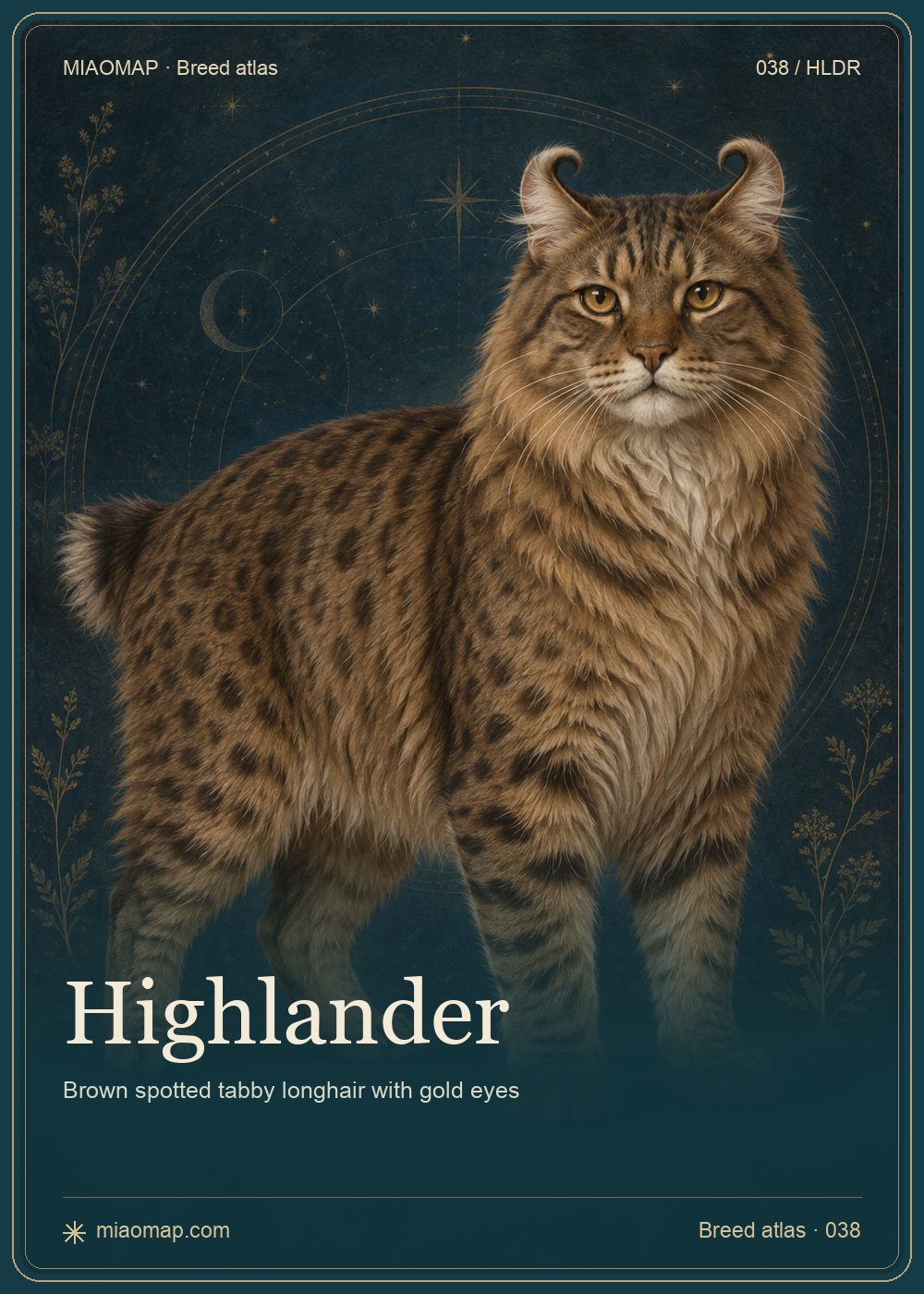
Highlander
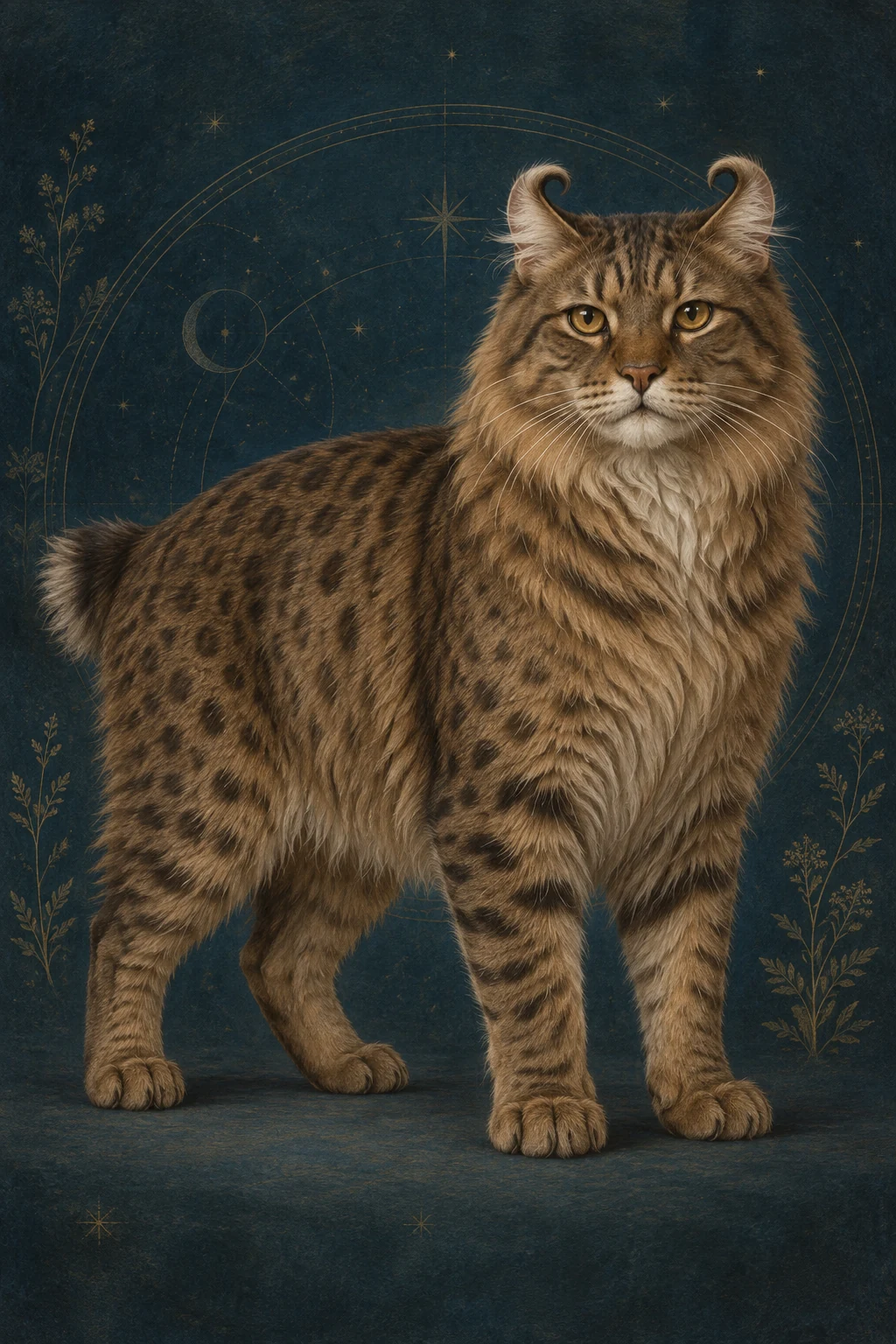
Brown spotted tabby longhair with gold eyes
✳ miaomap.comBreed atlas · 038
Feline breed atlas · 038 / HLDR
Backward-curling ear tips and a naturally short tail give this substantial domestic cat a distinctive silhouette.
Move your pointer for a subtle sheen; flip the card to read its profile.
Brown spotted tabby longhair with gold eyes
Development of the Highlander began in the United States in 2004, aiming for a domestic cat with a powerful big-cat appearance; its name was chosen in 2005. Foundation cats were selected from the domestic gene pool, not existing recognized breeds. Longhair and shorthair belong to the same breed family; this entry depicts a brown spotted tabby longhair.
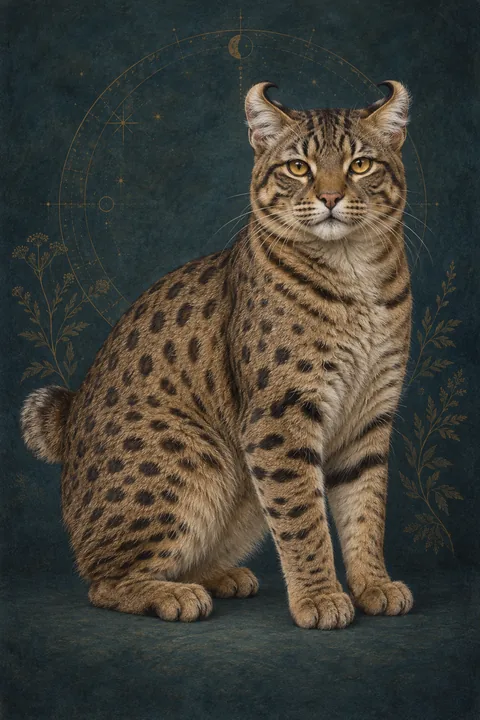
A long, sloping forehead, broad nose, boxy muzzle, and deep chin distinguish the Highlander. Wide-based, upright ears curl loosely backward in their upper third. The body is substantial and muscular, with large feet. This cat retains sturdy normal-length legs, brown spotted tabby longhair, slightly oval gold eyes, and a naturally short tail ending before the hocks.
Highlanders are commonly described as playful, energetic, and people-oriented, often enjoying attention. Some greet their people or show off to visitors. They tend to be relatively quiet vocally but enthusiastic about chasing games. These are tendencies, not guarantees: offer predictable interaction and climbing opportunities while respecting each cat’s need for rest, retreat, or distance.
Comb the long coat several times weekly, checking the armpits, belly, and hindquarters for tangles. Inspect curled ears gently without pulling or straightening their tips. Provide stable climbing furniture and daily interactive play. Feed complete balanced cat food and consult a veterinarian about weight management; ear discomfort, tail pain, or movement changes also warrant assessment.
The Highlander’s upper ear curls loosely backward, whereas Scottish Fold ears fold forward. The Scottish Fold trait is associated with cartilage and bone disease; an unusual ear shape alone does not establish that Highlanders share the same condition.
No. Longhair and shorthair are coat forms within the same Highlander breed family, not evidence of separate origins. This entry depicts the longhaired form. Coat length affects grooming needs, but neither coat length nor appearance alone establishes pedigree.
The Highlander’s short tail is natural, not created by docking. Length can range from about one inch to the hock, and kinks or curls may occur. This cat’s tail ends before the hocks; pain or sensitivity warrants veterinary advice.
Text is based on the association sources below. AI-assisted original illustrations depict one coat variety, not every individual. Health and care information is general and does not replace veterinary assessment.
Based on the association sources listed on each profile. Illustrations do not establish pedigree. Independently produced by miaomap, without association endorsement. Numbers are catalog IDs, not rarity ranks.
miaomap · Updated
Use our illustration creator to choose fur colors, eyes and tails, then download your own cat.