miaomap.com · Breed atlas041 / JBT
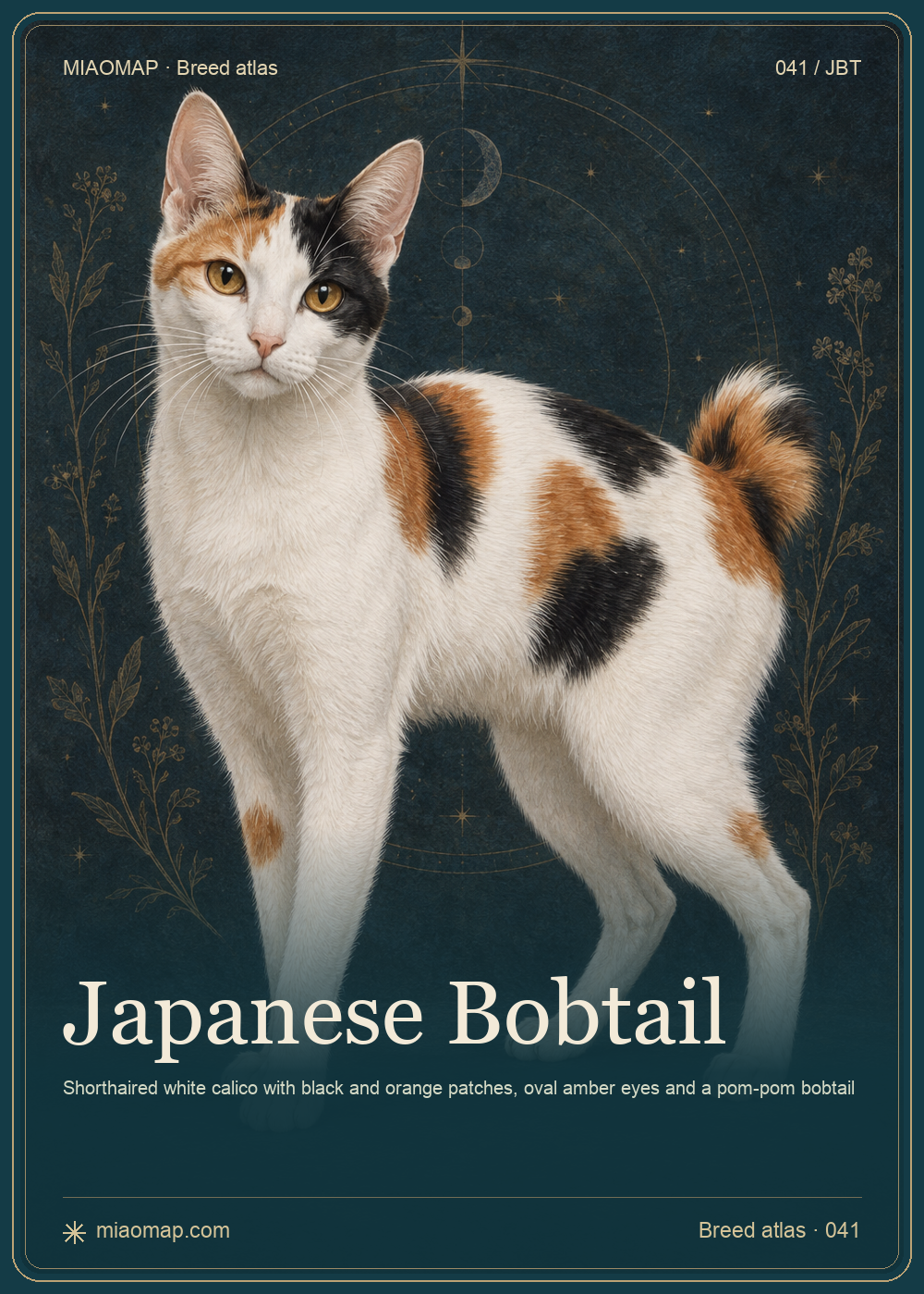
Japanese Bobtail
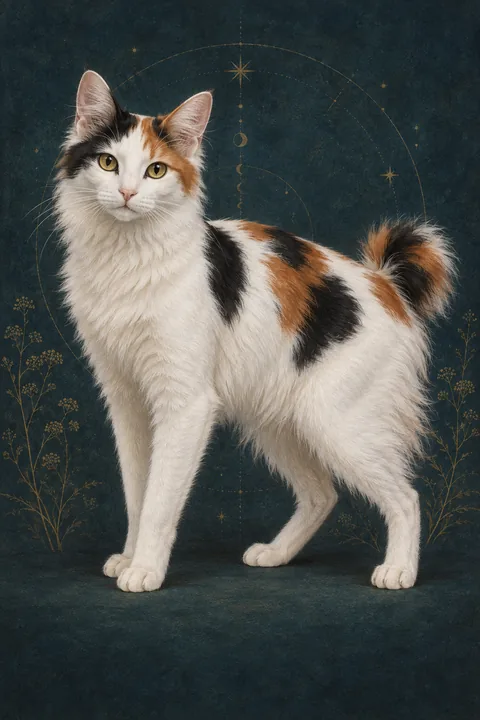
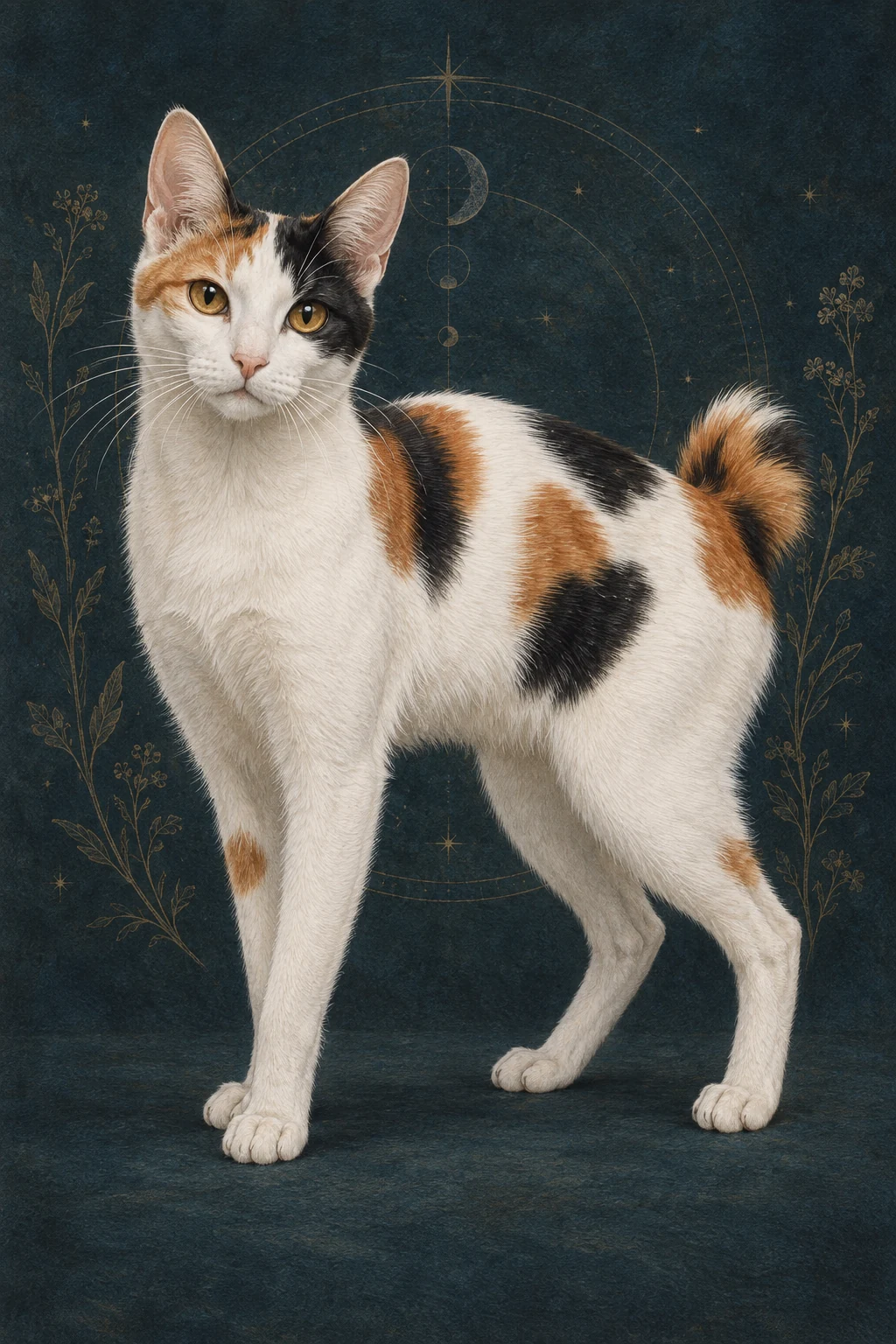
Shorthaired white calico with black and orange patches, oval amber eyes and a pom-pom bobtail
✳ miaomap.comBreed atlas · 041
Feline breed atlas · 041 / JBT
With a distinctive pom-pom tail and an elegant frame, the Japanese Bobtail is typically active, intelligent and keen to join everyday interactions.
Move your pointer for a subtle sheen; flip the card to read its profile.
Shorthaired white calico with black and orange patches, oval amber eyes and a pom-pom bobtail
Japanese Bobtails have appeared in Japanese art and folklore for centuries. Their earlier origins remain uncertain, with accounts linking them to bobtailed domestic cat populations elsewhere in Asia. The breed reached the United States in 1968. Shorthaired and longhaired cats are varieties of the same breed, not separate ancestral lines, and recognition of the two coat lengths differs among associations.
Look for a short tail formed by curves, angles or kinks, with outward-fanning fur creating a pom-pom close to its base. The medium-sized body is lean and muscular, with longer hind legs. A roughly triangular head, high cheekbones, large upright ears and slanted oval eyes complete the outline. Silky coats come in two lengths; appearance alone cannot confirm pedigree.
Japanese Bobtails are often described as active, intelligent and affectionate, with a preference for interactive play over prolonged lap time. Some respond with soft vocalizations. Individual personalities vary, and comfort with children or other pets depends on socialization, gradual introductions and respectful handling.
Gently comb the short coat regularly and groom the longhair variety more often, adjusting for seasonal shedding. The bobtail is sensitive: never pull it or try to straighten it. Provide secure climbing spaces, daily interactive play and routine veterinary care. CFA reports no known abnormalities associated with this tail trait, but that does not guarantee individual health; seek advice for pain or movement changes.
The breed's bobtail is an inherited natural feature, not the result of tail cropping. Curves, angles or kinks in the tail, covered by spreading fur, create the pom-pom shape, and each cat's tail can differ. It remains sensitive and should never be pulled or forcibly straightened.
No. Black, red and white calico, often called mi-ke, is a familiar variety, but Japanese Bobtails occur in many other colors and patterns. A pom-pom tail, triangular head and lean body offer visual clues, not proof of ancestry. Reliable pedigree and registration documentation are needed to establish breed identity.
They are coat-length varieties of the same breed, sharing the signature pom-pom tail and lean build. Longhairs have more pronounced hind-leg and tail furnishings and generally need more frequent combing. Both lack a noticeable undercoat but still shed. Associations differ in recognizing the longhair variety, so check the relevant registry.
Text is based on the association sources below. AI-assisted original illustrations depict one coat variety, not every individual. Health and care information is general and does not replace veterinary assessment.
Based on the association sources listed on each profile. Illustrations do not establish pedigree. Independently produced by miaomap, without association endorsement. Numbers are catalog IDs, not rarity ranks.
miaomap · Updated
Use our illustration creator to choose fur colors, eyes and tails, then download your own cat.