miaomap.com · Breed atlas046 / KBL
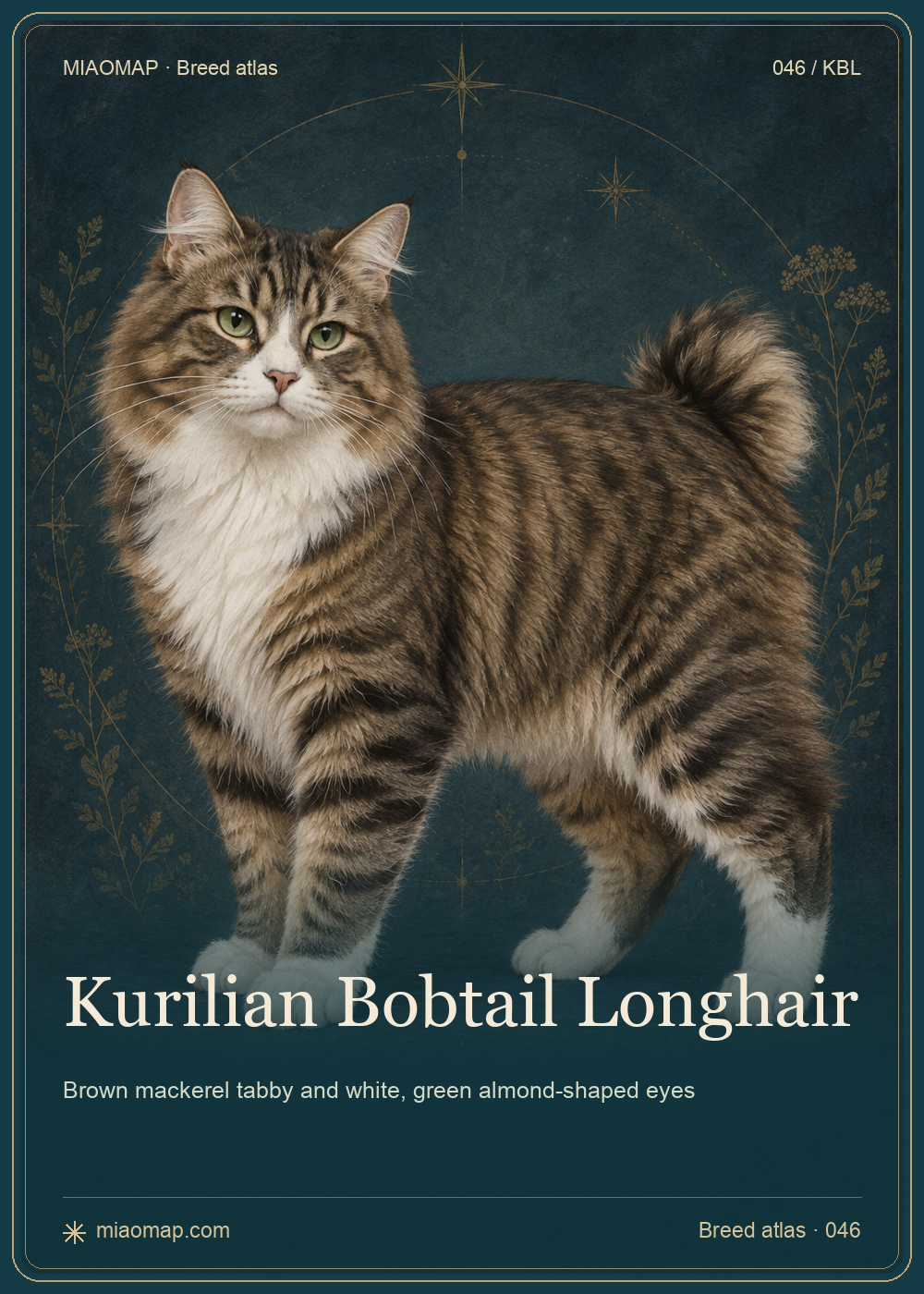
Kurilian Bobtail Longhair
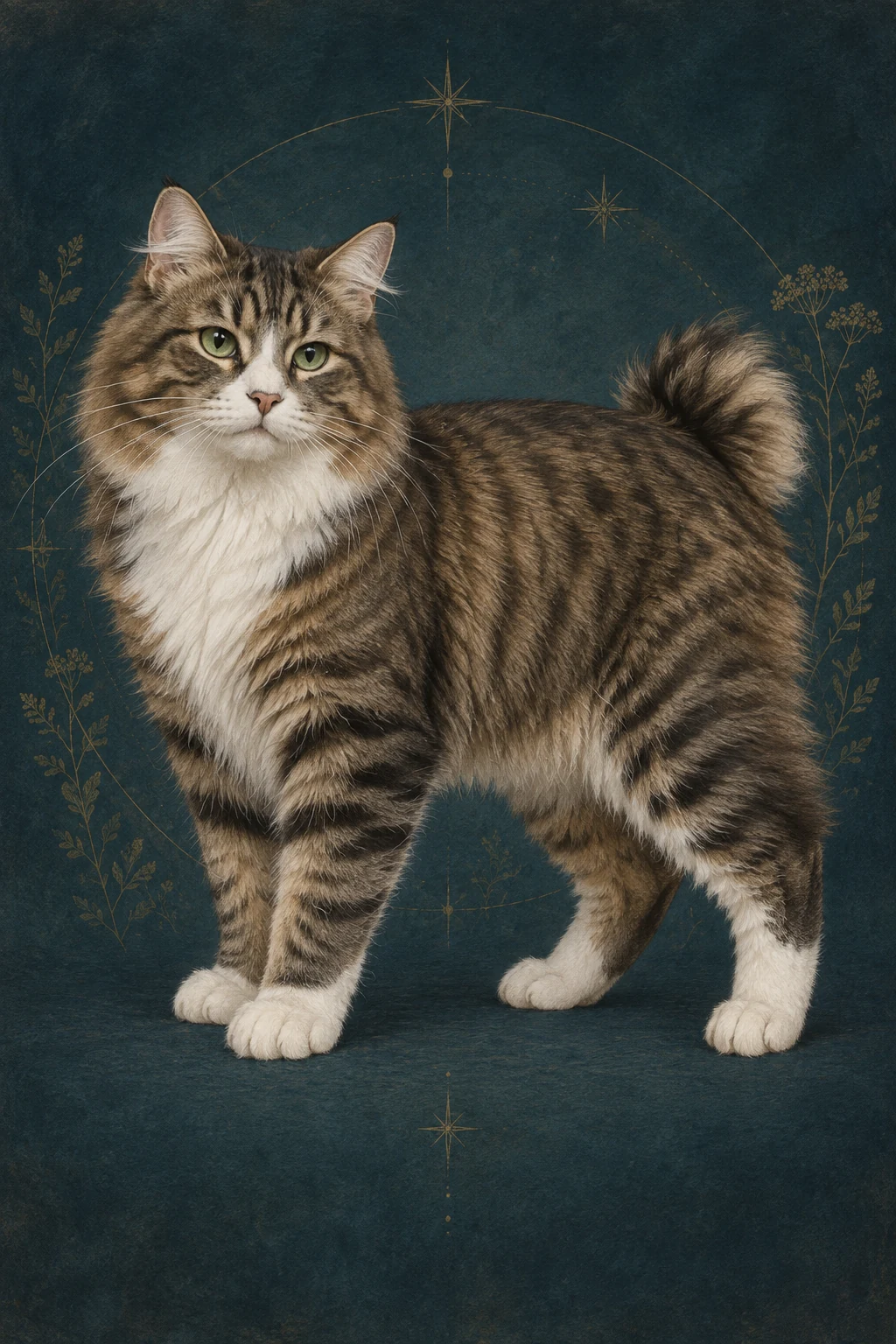
Brown mackerel tabby and white, green almond-shaped eyes
✳ miaomap.comBreed atlas · 046
Feline breed atlas · 046 / KBL
A compact, powerful body, longer hind legs, and a fluffy bobtail distinguish this longhaired variety.
Move your pointer for a subtle sheen; flip the card to read its profile.
Brown mackerel tabby and white, green almond-shaped eyes
The Kurilian Bobtail is associated with Russia’s Kuril Islands, Sakhalin, and nearby Kamchatka. Its longhaired and shorthaired forms are coat varieties of the same breed, not separate ancestral lines. Accounts of its early development differ, including a theory involving Japanese Bobtail and Siberian cats; this should not be treated as a proven pedigree. Today it is presented as distinct from the Japanese Bobtail.
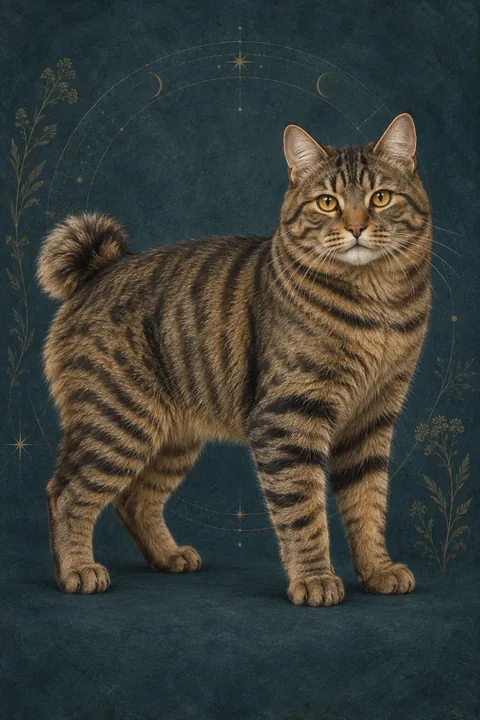
Look for a medium-to-large, compact, muscular body, with hind legs longer than the forelegs and a slightly arched back. The broad face has a trapezoid-like outline, wide cheeks, and medium-sized ears. The longhaired variety carries a semi-long coat. Its defining feature is a kinked, fluffy tail about 3–8 cm long. Tail shape varies between individuals, and appearance alone cannot establish pedigree.
Breed descriptions often portray Kurilian Bobtails as clever, gentle, and receptive to interactive activities. Some may enjoy water-related play, but this is not universal. Affection and compatibility with other pets depend on early experiences, environment, and individual preferences; gradual introductions and daily play matter more than a breed label.
Comb the semi-long coat several times weekly, checking the armpits, belly, and hindquarters for tangles; increase grooming during shedding periods. Gently inspect the skin and cleanliness around the bobtail without trying to straighten its bends. Offer sturdy climbing furniture, interactive play, and weight management. Consult a veterinarian for tail pain, swelling, or changes in movement rather than judging health from tail shape alone.
No. They are two coat-length varieties of the same breed, sharing regional origins and key features such as a compact body, longer hind legs, and a kinked bobtail. The longhaired form has a fuller-looking coat and tail, requiring more attention to tangles. Coat length does not imply a separate, proven ancestral history.
The Kurilian Bobtail is presented as a breed distinct from the Japanese Bobtail, with a substantial, compact body, longer hind legs, and a broad, trapezoid-like face. Both have bobtails, so the tail alone is not a reliable distinction. Proposed early connections are origin theories, not substitutes for documented pedigree.
Routine care should be gentle: comb the surrounding fur, check the skin and any soiling, and never pull the tail or try to straighten its bends. A kinked bobtail is a breed feature, not an assessment of individual health. Pain, swelling, wounds, or new movement difficulties warrant veterinary evaluation.
Text is based on the association sources below. AI-assisted original illustrations depict one coat variety, not every individual. Health and care information is general and does not replace veterinary assessment.
Based on the association sources listed on each profile. Illustrations do not establish pedigree. Independently produced by miaomap, without association endorsement. Numbers are catalog IDs, not rarity ranks.
miaomap · Updated
Use our illustration creator to choose fur colors, eyes and tails, then download your own cat.