miaomap.com · Breed atlas047 / LAP
LaPerm
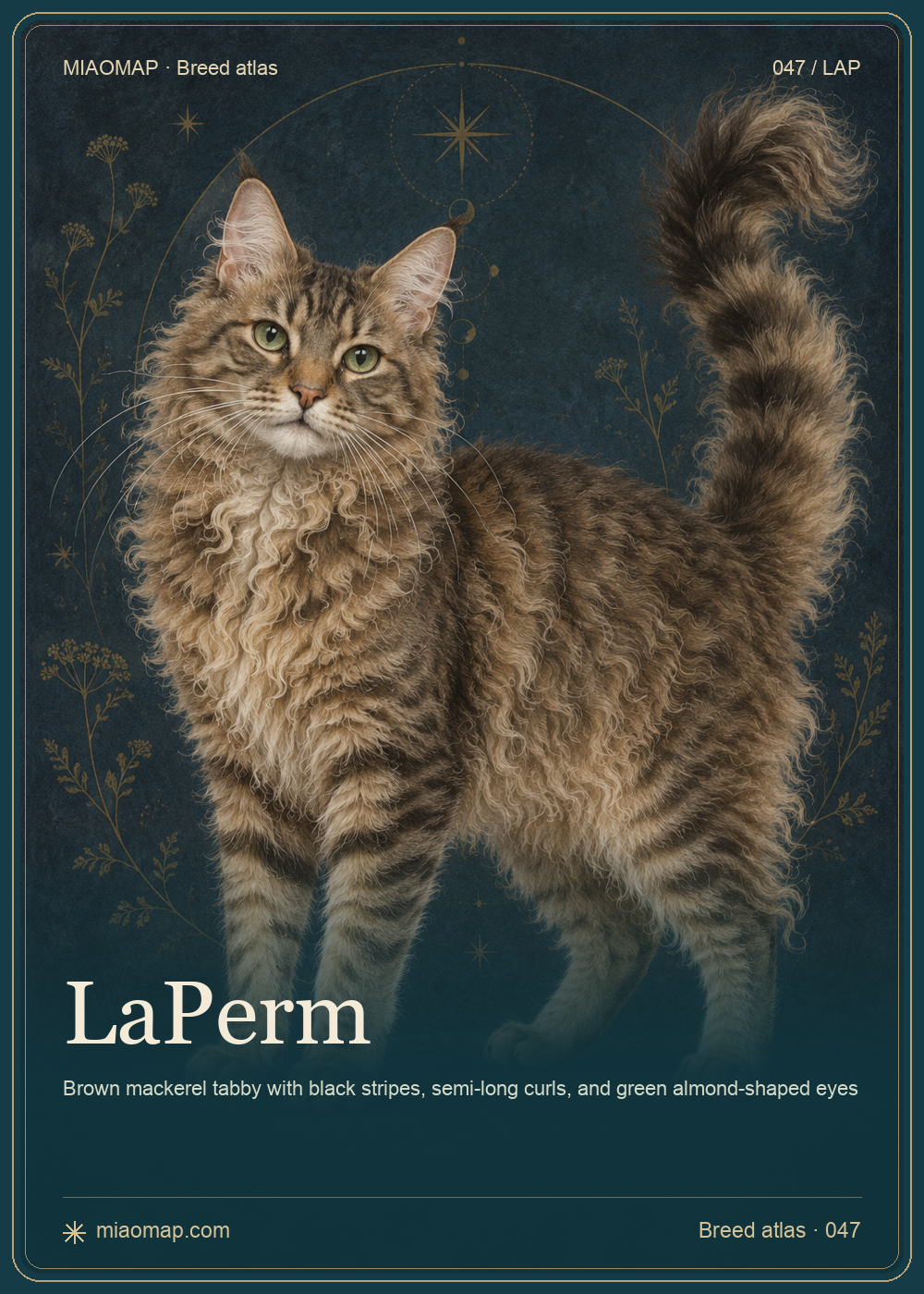
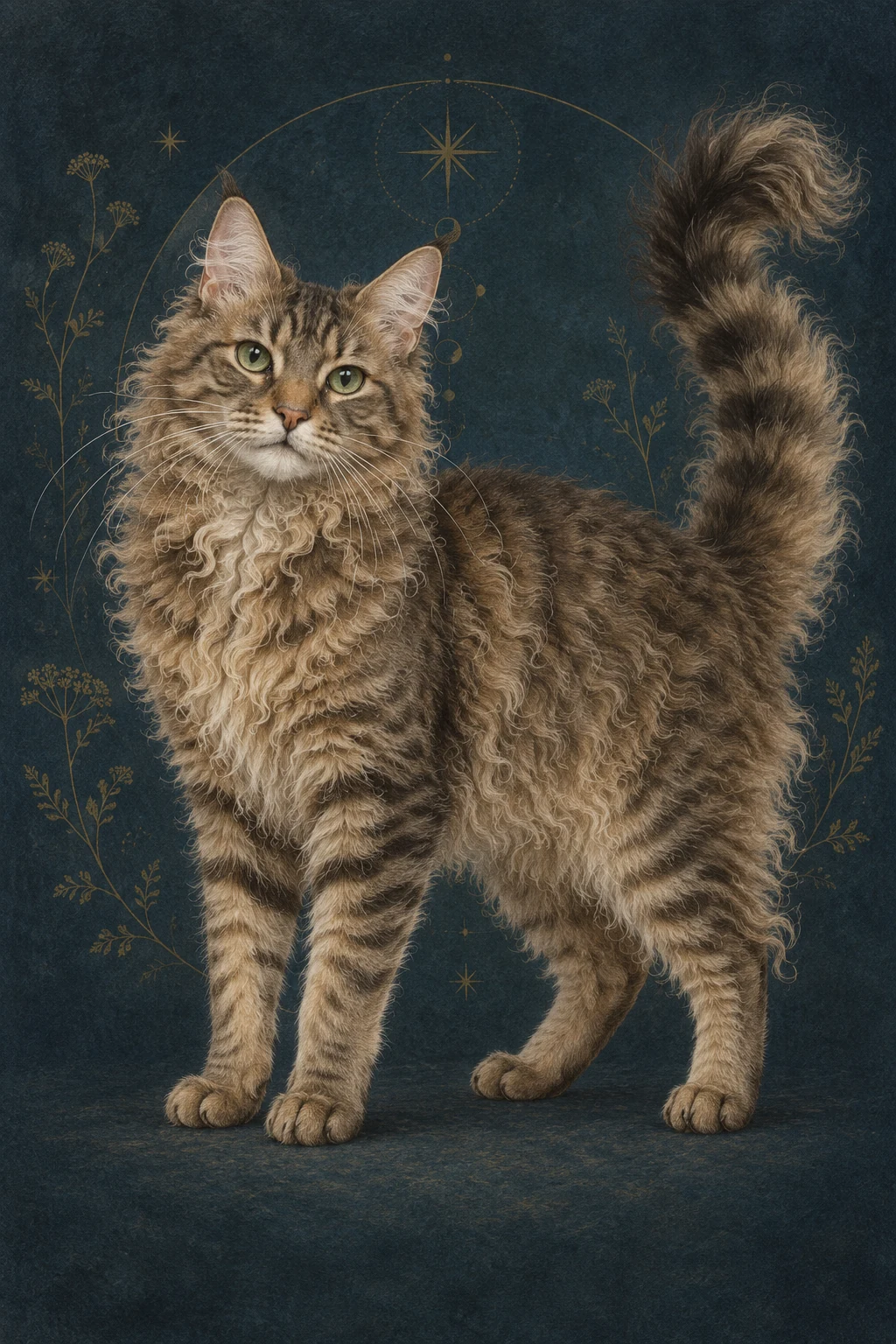
Brown mackerel tabby with black stripes, semi-long curls, and green almond-shaped eyes
✳ miaomap.comBreed atlas · 047
Feline breed atlas · 047 / LAP
A naturally curly-coated cat from an Oregon farm, distinguished by airy curls and often people-oriented behavior.
Move your pointer for a subtle sheen; flip the card to read its profile.
Brown mackerel tabby with black stripes, semi-long curls, and green almond-shaped eyes
The LaPerm traces its beginnings to Curly, a kitten born on an Oregon farm in 1982. Initially hairless, she later developed curls, and owner Linda Koehl subsequently established a planned breeding program. The curly coat arose through a natural mutation. Longhaired and shorthaired LaPerms are coat varieties of the same breed, not separate lineages; some offspring may also have straight coats.
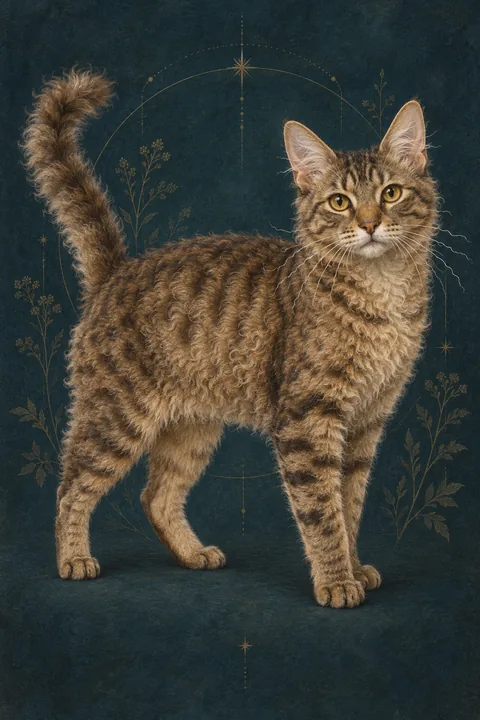
A LaPerm has a medium-sized, balanced body, a gently contoured modified-wedge head, rounded whisker pads, and medium to large ears. Its eyes are almond-shaped when relaxed. Moderately long legs place the hips slightly above the shoulders. The airy coat forms waves or curls; longhairs often have a neck ruff and plumed tail, while shorthairs have a bottlebrush-like tail.
LaPerms are often described as affectionate, curious and active, with many enjoying both interactive play and quiet companionship. Hunting-style games and gentle training can provide enrichment. Comfort with handling, children or other pets varies individually, so introduce companions gradually and respect the cat’s choice to withdraw.
Comb the curls gently and regularly; a rolling-tooth comb can help limit pulling. Check the ruff and tail for tangles, and bathe only when needed with cat-safe products. Coat fullness can change, so protect sparsely covered skin from strong sunlight. CFA reports no specific breed health problems noted so far, but this does not replace routine veterinary checks and dental care.
They are two coat varieties within the same breed. Longhairs commonly have a fuller neck ruff and plumed tail; shorthairs may have a crisper texture and bottlebrush-like tail. Both can show waves or curls. Appearance alone cannot establish pedigree, which requires reliable documentation.
No. The original kitten, Curly, was born hairless and developed curls later. Straight-coated offspring can also occur, and coat length and fullness may change with maturity and season. A kitten’s initial appearance is not proof of pedigree; concerning skin or coat changes should be discussed with a veterinarian.
Yes. The curls can retain loose hairs, and CFA describes shedding as generally limited, but this does not mean no shedding or tangles. Regular gentle combing removes loose hair and helps check the ruff and tail for knots. Avoid pulling curls, and monitor sun exposure if sparse areas develop.
Text is based on the association sources below. AI-assisted original illustrations depict one coat variety, not every individual. Health and care information is general and does not replace veterinary assessment.
Based on the association sources listed on each profile. Illustrations do not establish pedigree. Independently produced by miaomap, without association endorsement. Numbers are catalog IDs, not rarity ranks.
miaomap · Updated
Use our illustration creator to choose fur colors, eyes and tails, then download your own cat.