miaomap.com · Breed atlas083 / TNREX
Tennessee Rex
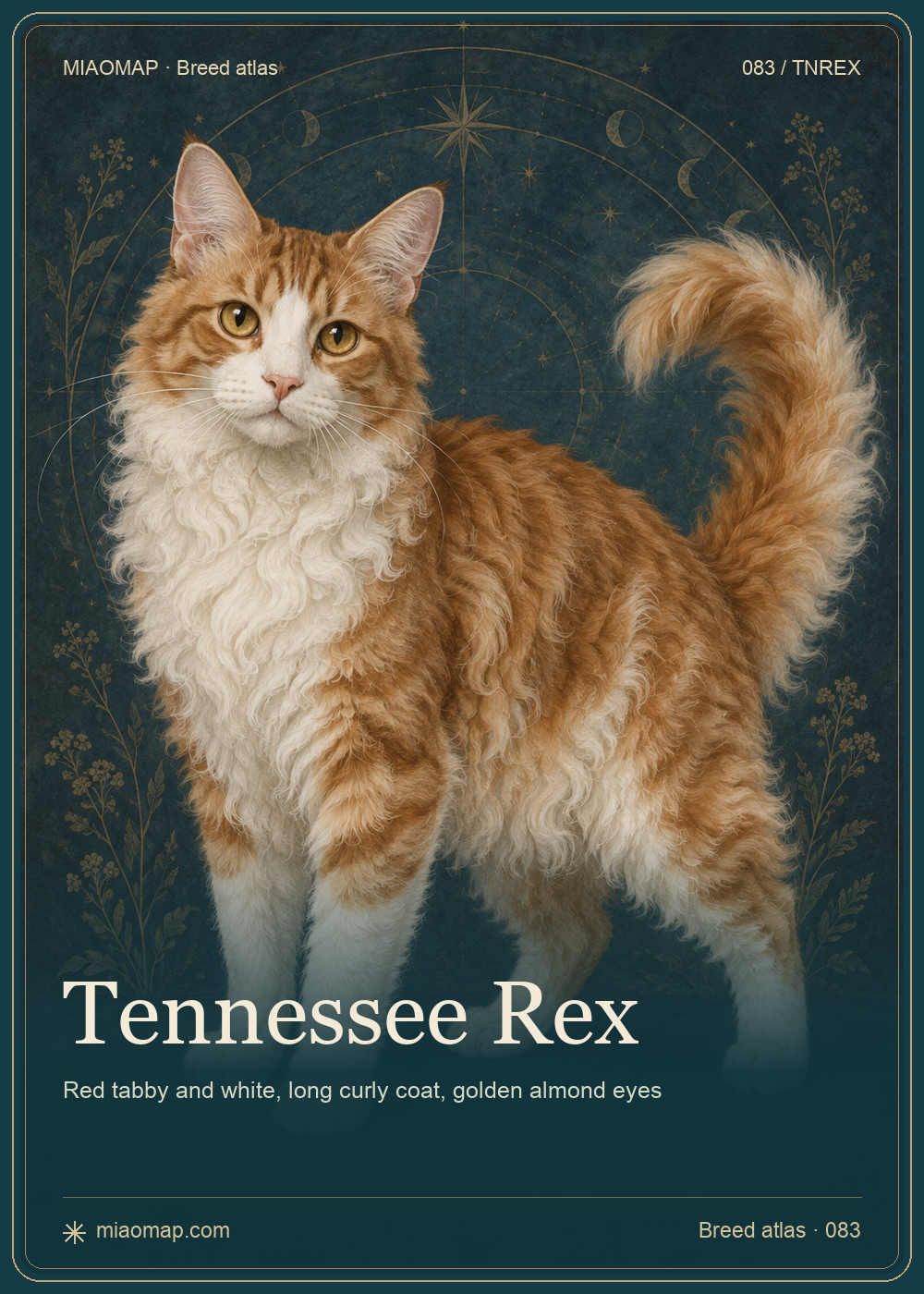
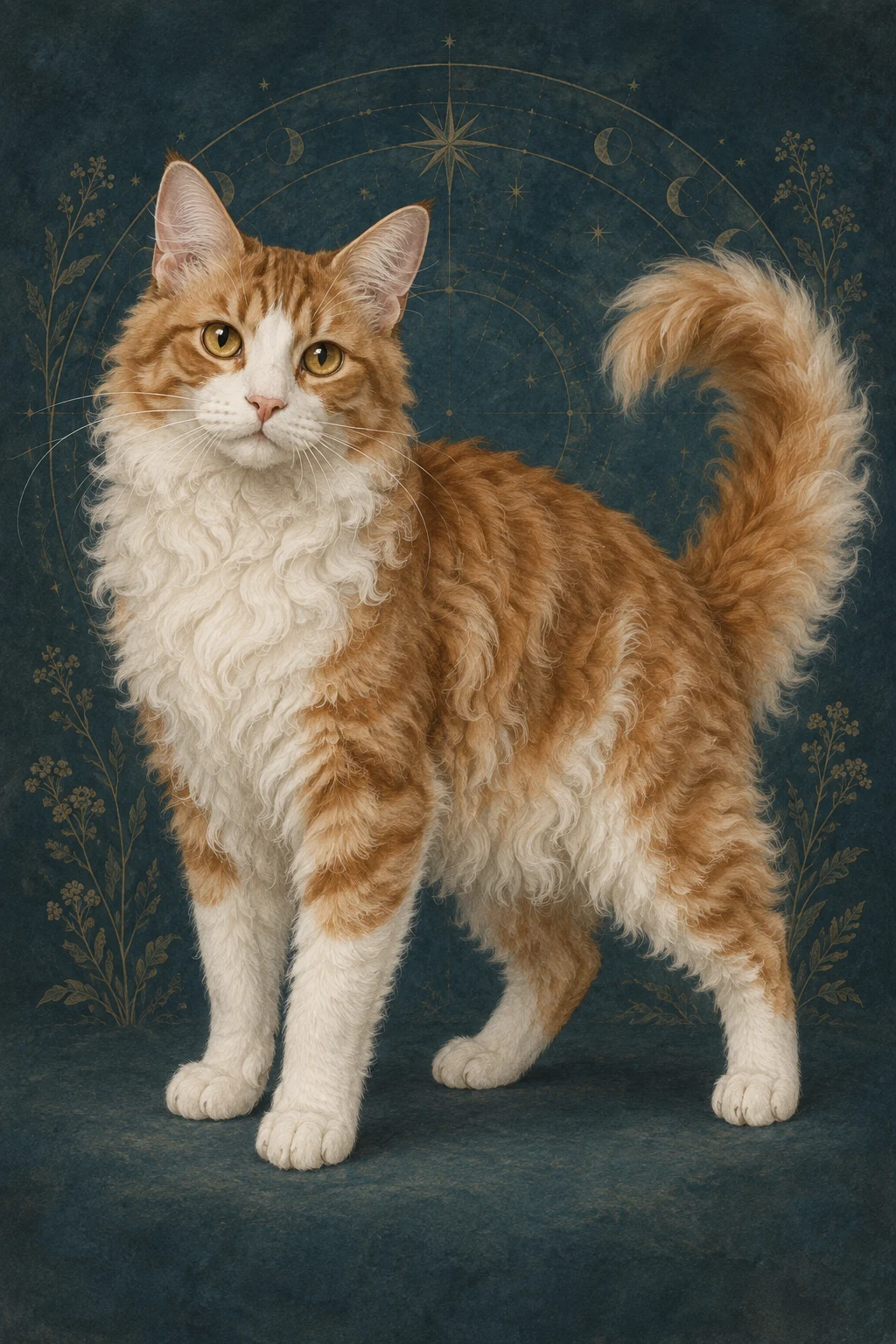
Red tabby and white, long curly coat, golden almond eyes
✳ miaomap.comBreed atlas · 083
Feline breed atlas · 083 / TNREX
Curls and a satin sheen together define this Tennessee-born cat’s distinctive coat.
Move your pointer for a subtle sheen; flip the card to read its profile.
Red tabby and white, long curly coat, golden almond eyes
The Tennessee Rex is associated with Tennessee in the United States and is distinguished by curls and a satin-like coat sheen. Breed background should be distinguished from an individual cat’s documented ancestry. Longhair and shorthair belong to the same breed family, not separate origins. This entry depicts the longhaired variety; curls, sheen, or color alone cannot establish pedigree.
The pictured longhaired Tennessee Rex has a red tabby-and-white coat and golden almond-shaped eyes. Its medium-sized, rectangular body is muscular and athletic, with moderate-length legs. A softly contoured wedge-shaped head, prominent cheekbones, and widely spaced upright ears frame the face. Waves, curls, satin sheen, and a fully present plumed tail complete the appearance, without independently proving ancestry.
A Tennessee Rex’s curls or sheen do not predict its personality. Get to know the individual by observing how it approaches people, responds to play, and rests after everyday interaction. Early experiences, socialization, and household conditions influence behavior. Offer interactive toys, climbing opportunities, and quiet retreats, allowing the cat to choose contact and build familiarity at a comfortable pace.
Gently comb this long, curly coat, checking the underarms, belly, and tail for tangles without pulling or excessive brushing. Do not trim whiskers. Feed complete, balanced cat food and consult a veterinarian about portions and body condition. Include dental care, play, and routine examinations; persistent itching, redness, or unusual hair loss deserves assessment rather than being dismissed as a curl-related feature.
No. Curls describe the hair’s shape, while satin sheen describes its light-reflecting appearance. Both contribute to the Tennessee Rex’s distinctive coat, but lighting and viewing angle affect photographs, so sheen intensity alone cannot establish ancestry or health.
No. Longhaired and shorthaired Tennessee Rex cats belong to the same breed family rather than separate origins. This entry shows the longhaired variety with a plumed, curly tail. Grooming should follow actual coat length and tangling, not assumptions of separate ancestry.
Not necessarily. Those features match the pictured cat, but color and curls alone do not confirm breed identity. Body shape, head, ears, and coat can inform visual comparison; establishing an individual cat’s ancestry still requires reliable parentage and registration records.
Text is based on the association sources below. AI-assisted original illustrations depict one coat variety, not every individual. Health and care information is general and does not replace veterinary assessment.
Based on the association sources listed on each profile. Illustrations do not establish pedigree. Independently produced by miaomap, without association endorsement. Numbers are catalog IDs, not rarity ranks.
miaomap · Updated
Use our illustration creator to choose fur colors, eyes and tails, then download your own cat.