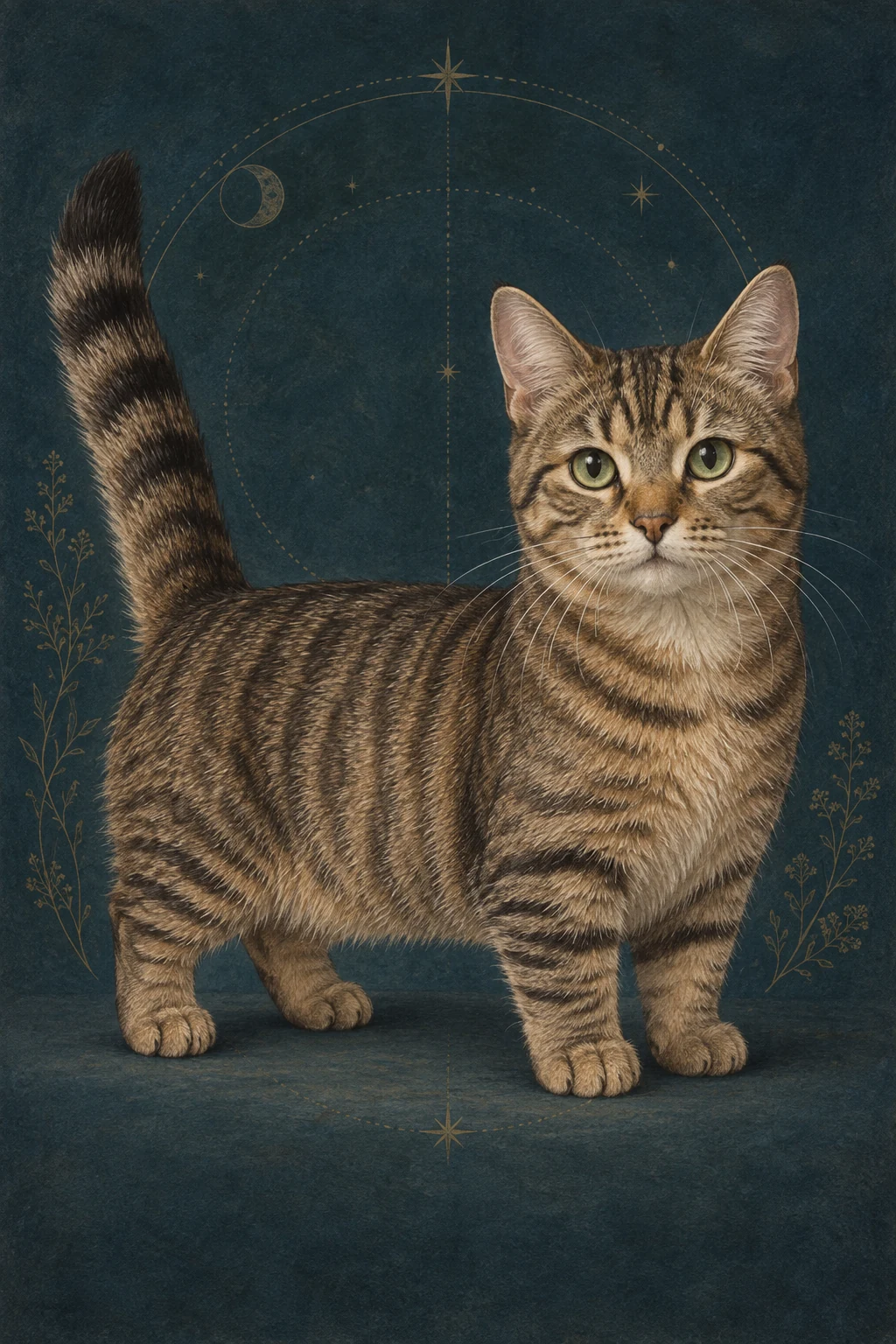
miaomap.com · Breed atlas057 / MCHK
Munchkin
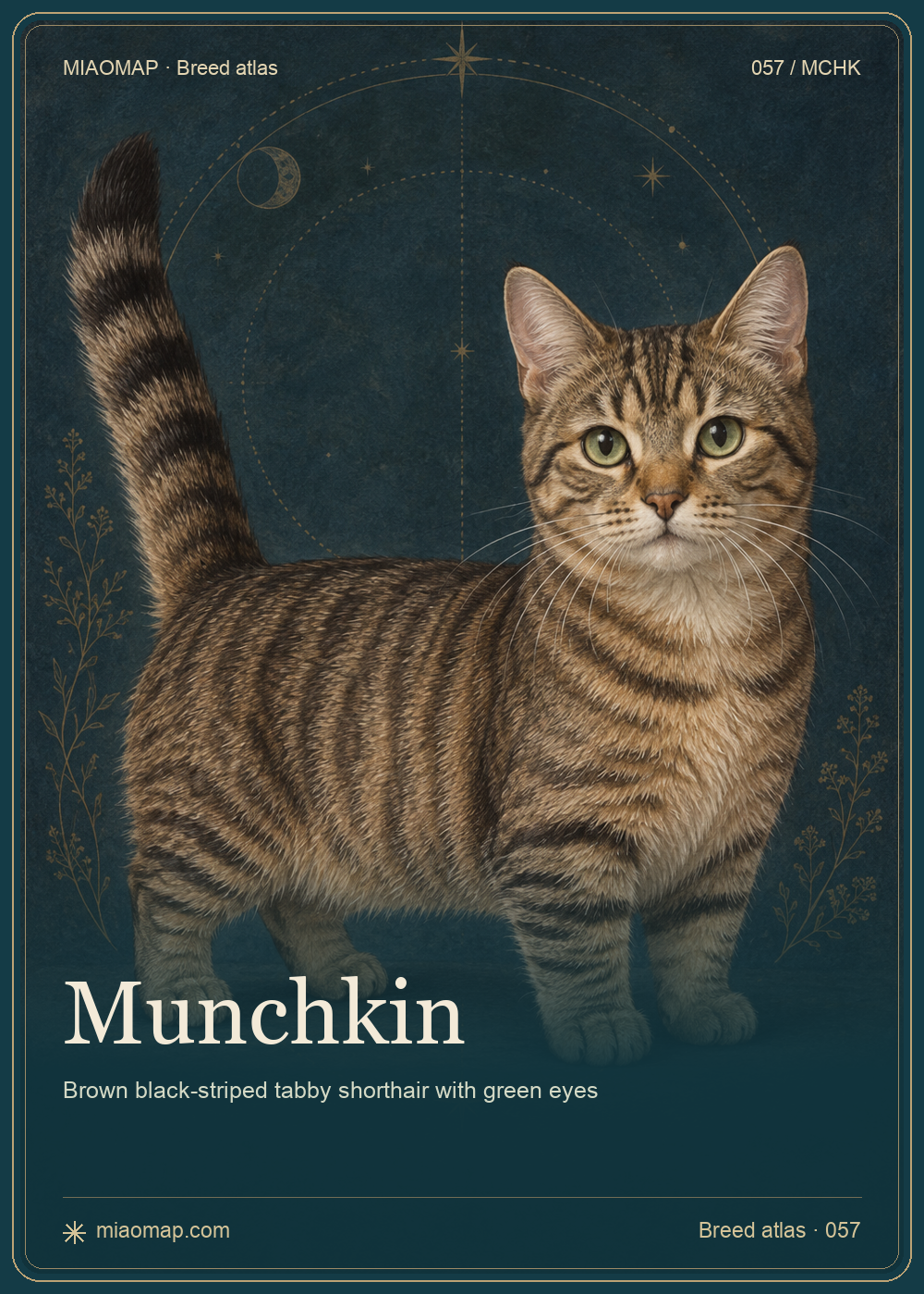
Brown black-striped tabby shorthair with green eyes
✳ miaomap.comBreed atlas · 057
Feline breed atlas · 057 / MCHK
The Munchkin combines a distinctive short-legged silhouette with a wide range of coat lengths and colors.
Move your pointer for a subtle sheen; flip the card to read its profile.
Real recording · Individual purr example · Short audio sample
Recording source: ivoliYT · Freesound ↗ · CC BY 4.0 · Open the recording · Edited: excerpt trimmed, faded in and converted to WAV
Brown black-striped tabby shorthair with green eyes
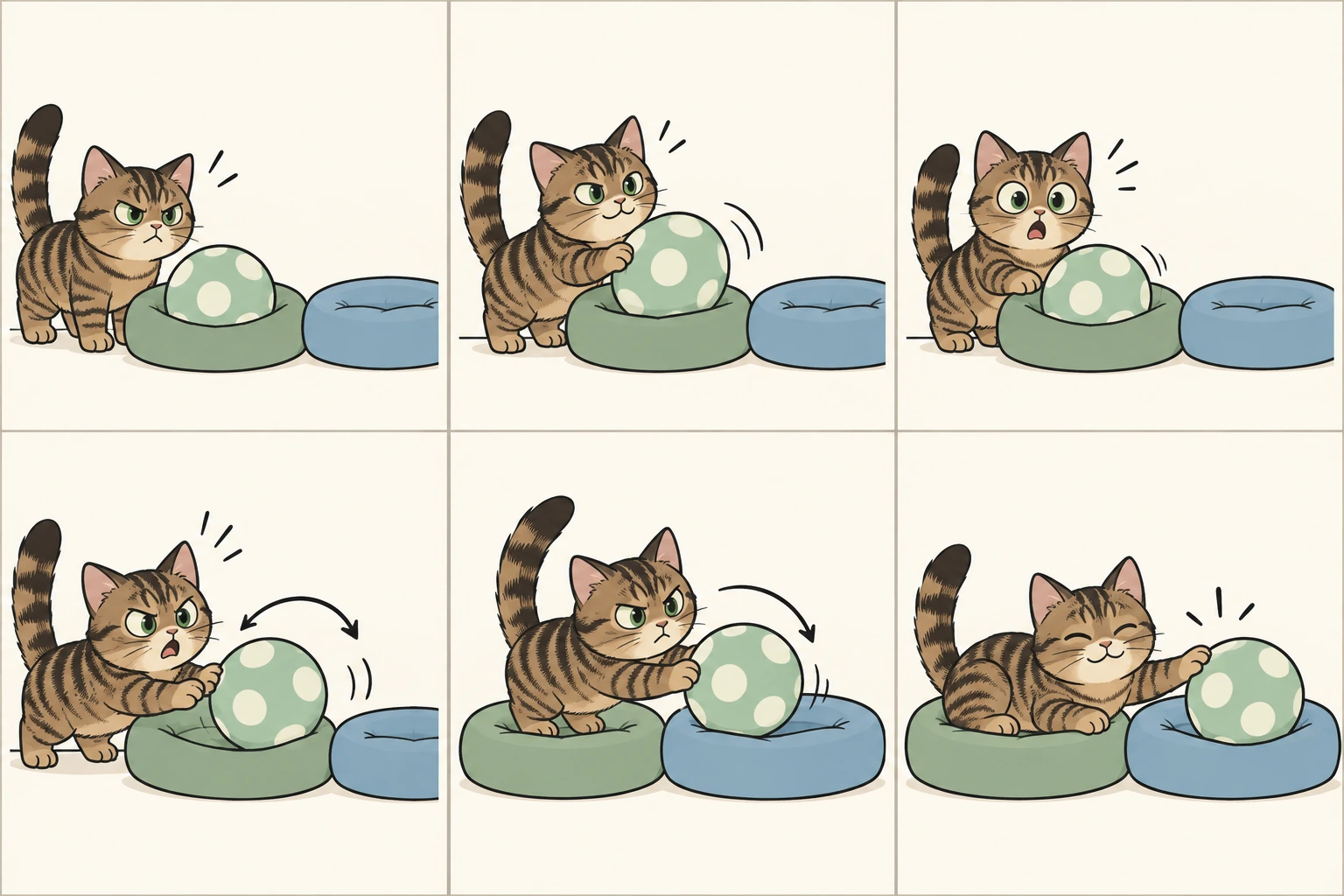
The same Munchkin tries to nudge a soft ball off a cushion, but it keeps rolling back. Six wordless beats end with a cushion each for the cat and the ball.
The Munchkin developed as a modern breed in the United States around an inherited short-legged trait. Its coats come in shorthaired and longhaired forms, with many colors and patterns. These are variations within the same breed family, not separate origins. Understanding the breed means considering both its distinctive appearance and the mobility and welfare questions associated with its conformation.
The defining feature is shortened legs, not a miniature body. Munchkins have a medium-sized torso, a softly contoured modified-wedge head, upright ears, and large, gently walnut-shaped eyes. The illustrated cat retains a short brown coat with black tabby stripes, green eyes, and a normal full-length tail. Color and silhouette can suggest a type but cannot establish pedigree.
Munchkins are commonly described as curious and affectionate, with an interest in exploration and interactive play. These descriptions are tendencies, not promises about an individual cat. Early experiences, socialization, health, and household conditions all influence behavior. Offer gentle, accessible games and let the cat choose when to seek company or withdraw to a quiet, secure resting place.
Brush this shorthaired cat regularly and monitor skin or coat changes. Feed complete, balanced cat food and consult a veterinarian about appropriate weight. Low-entry litter trays, nonslip surfaces, and stable steps can improve access. Short-legged conformation requires mobility and welfare consideration; avoid forced jumping and seek veterinary assessment for altered gait, reduced activity, or discomfort.
No. Short and long coats are variations within the same Munchkin breed family, rather than separate origins. Both can occur in many colors and patterns. A practical difference is grooming: longhaired cats generally need more frequent combing and checks for tangles.
No. The Munchkin's characteristic feature is shortened legs, not an entirely miniaturized body. This cat has a medium-sized, moderately proportioned torso and a normal full-length tail. A bobtail is not part of this illustrated type, and appearance alone cannot confirm pedigree.
Provide stable steps, nonslip flooring, low-entry litter trays, and accessible resting places. Mobility varies, so allow the cat to move at its own comfort level. Short-legged conformation raises welfare considerations; new stiffness, reduced activity, or gait changes deserve veterinary attention.
Text is based on the association sources below. AI-assisted original illustrations depict one coat variety, not every individual. Health and care information is general and does not replace veterinary assessment.
Based on the association sources listed on each profile. Illustrations do not establish pedigree. Independently produced by miaomap, without association endorsement. Numbers are catalog IDs, not rarity ranks.
miaomap · Updated
MIAOMAP / MUNCHKIN / 057
Meet the Munchkin in six scenes and share eight moods.
This Munchkin retains the profile’s brown, black-striped tabby short coat, green eyes, short legs, medium-sized torso and normal full-length tail. The comic presents documented traits and care; the stickers are character illustrations. Munchkins also have long coats and many colors. Temperament and mobility vary individually, and short-legged conformation calls for welfare consideration.
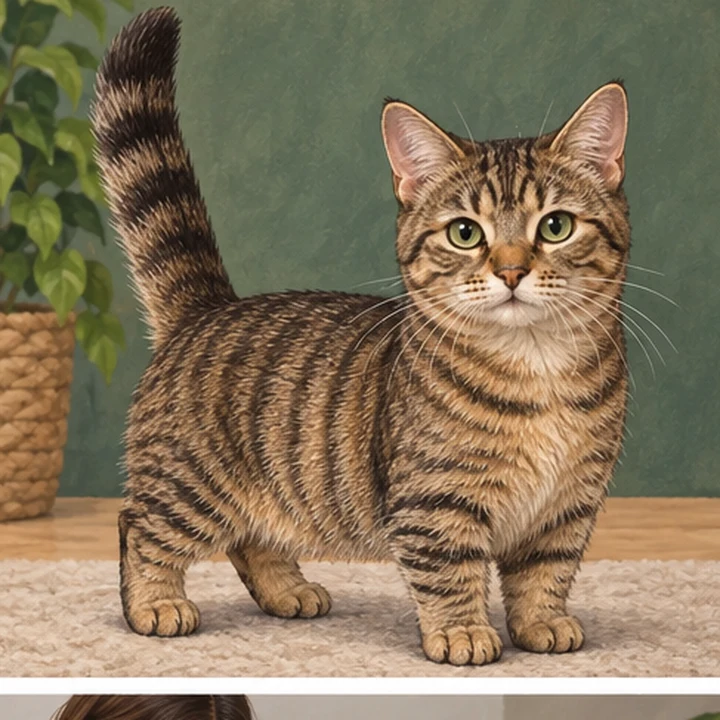
Munchkins have a medium-sized torso, a softly contoured modified-wedge head, upright ears and large walnut-shaped eyes. Appearance alone cannot establish pedigree.
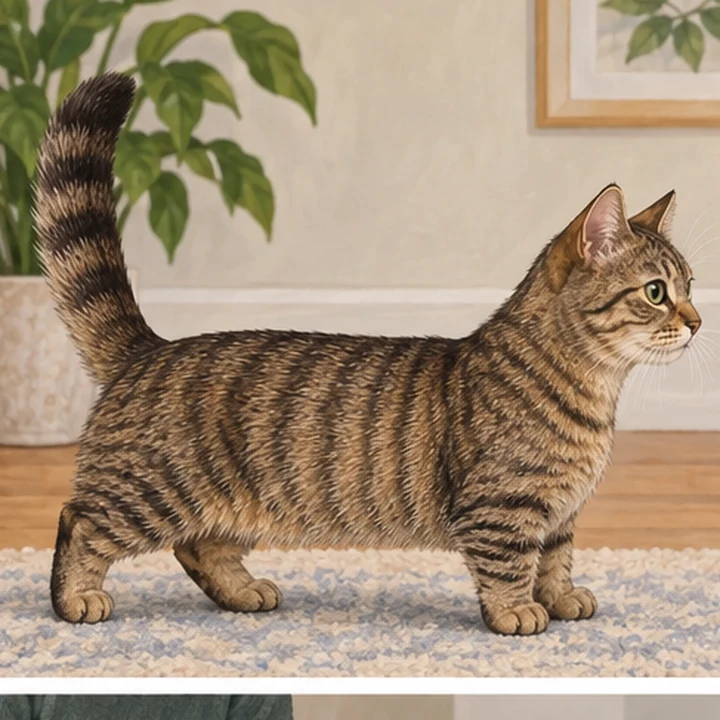
This cat has a short brown coat with black tabby stripes, green eyes, a moderately proportioned body and a normal full-length tail. The breed also includes long coats and many colors.
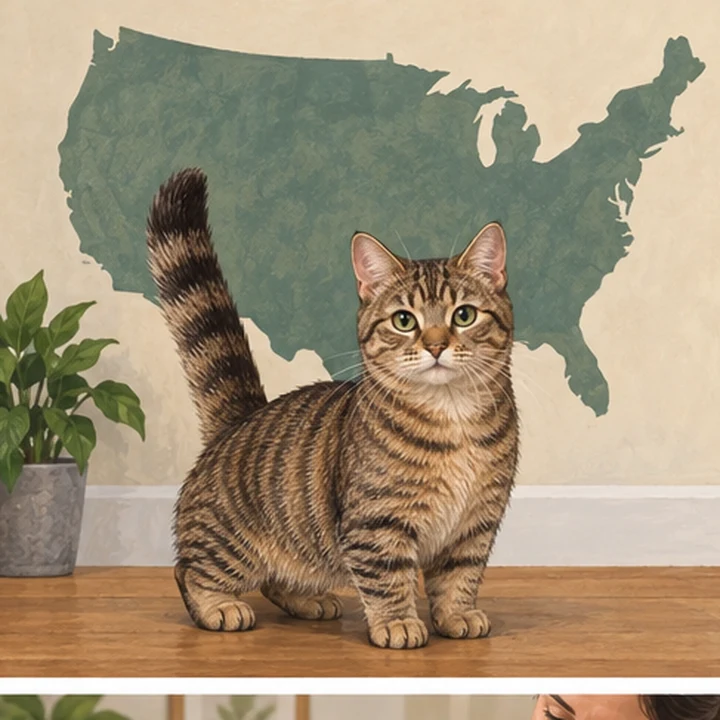
The Munchkin developed in the United States around an inherited short-legged trait. Short and long coats are variations within the same breed family, not separate origins.
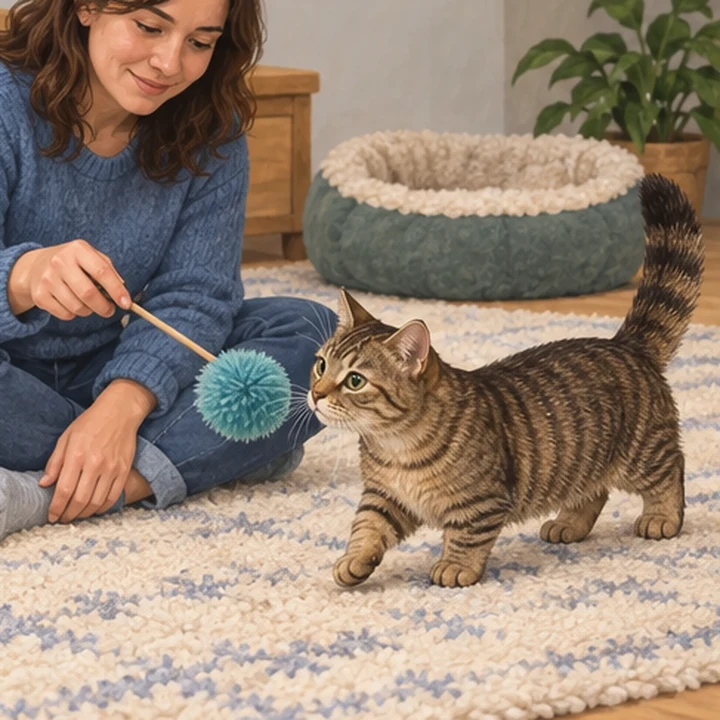
Curiosity and affection are common descriptions, not temperament guarantees. Offer gentle, accessible play and let the cat approach or withdraw to a quiet, secure resting place.
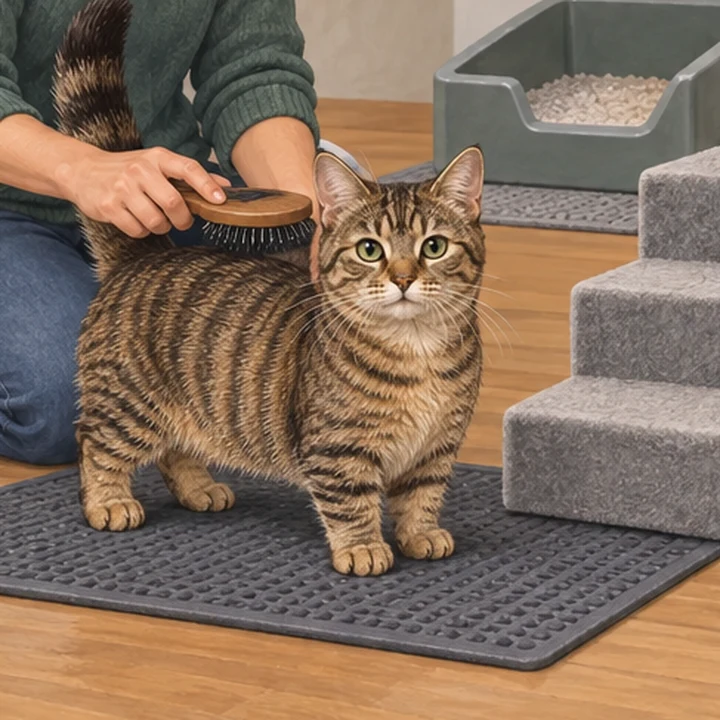
Brush the short coat regularly and watch for skin or coat changes. Provide a low-entry litter tray, nonslip surfaces and stable steps; never force jumping.
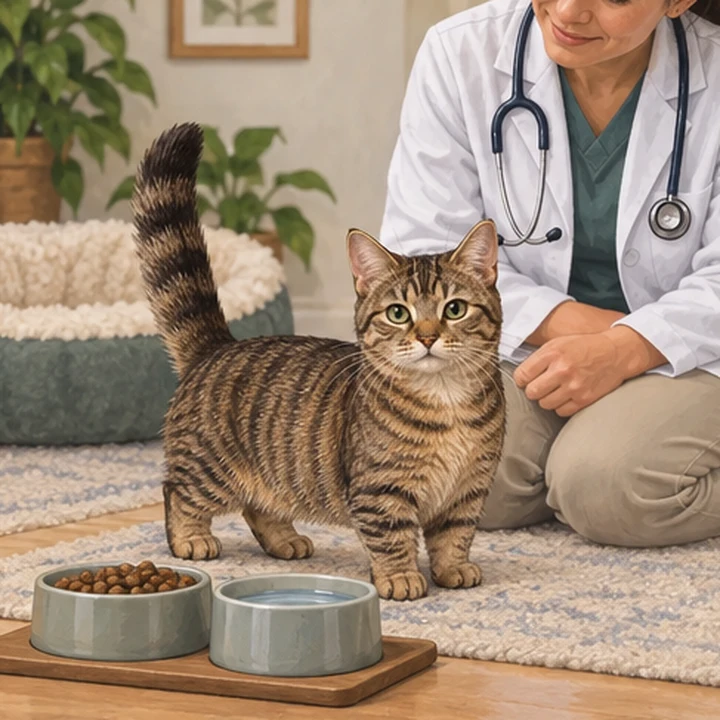
Feed complete, balanced cat food and consult a veterinarian about appropriate weight. Let activity follow the cat’s comfort level; seek veterinary assessment for gait changes, reduced activity or discomfort.
Eight transparent PNG stickers. Save them individually or download a set in your language. The textless edition works across languages and leaves room for your own captions.
Original miaomap artwork, illustrated with AI assistance. Free for personal chats, avatars and non-commercial sharing; credit miaomap.com when reposting. Commercial use, resale or redistribution of the asset pack requires permission. Breed facts follow the supplied verified profile, which records TICA recognition; this material has no association endorsement.
Pure AI fantasy. Please don’t take it seriously.
Use our illustration creator to choose fur colors, eyes and tails, then download your own cat.