miaomap.com · Breed atlas020 / BUR
Burmese
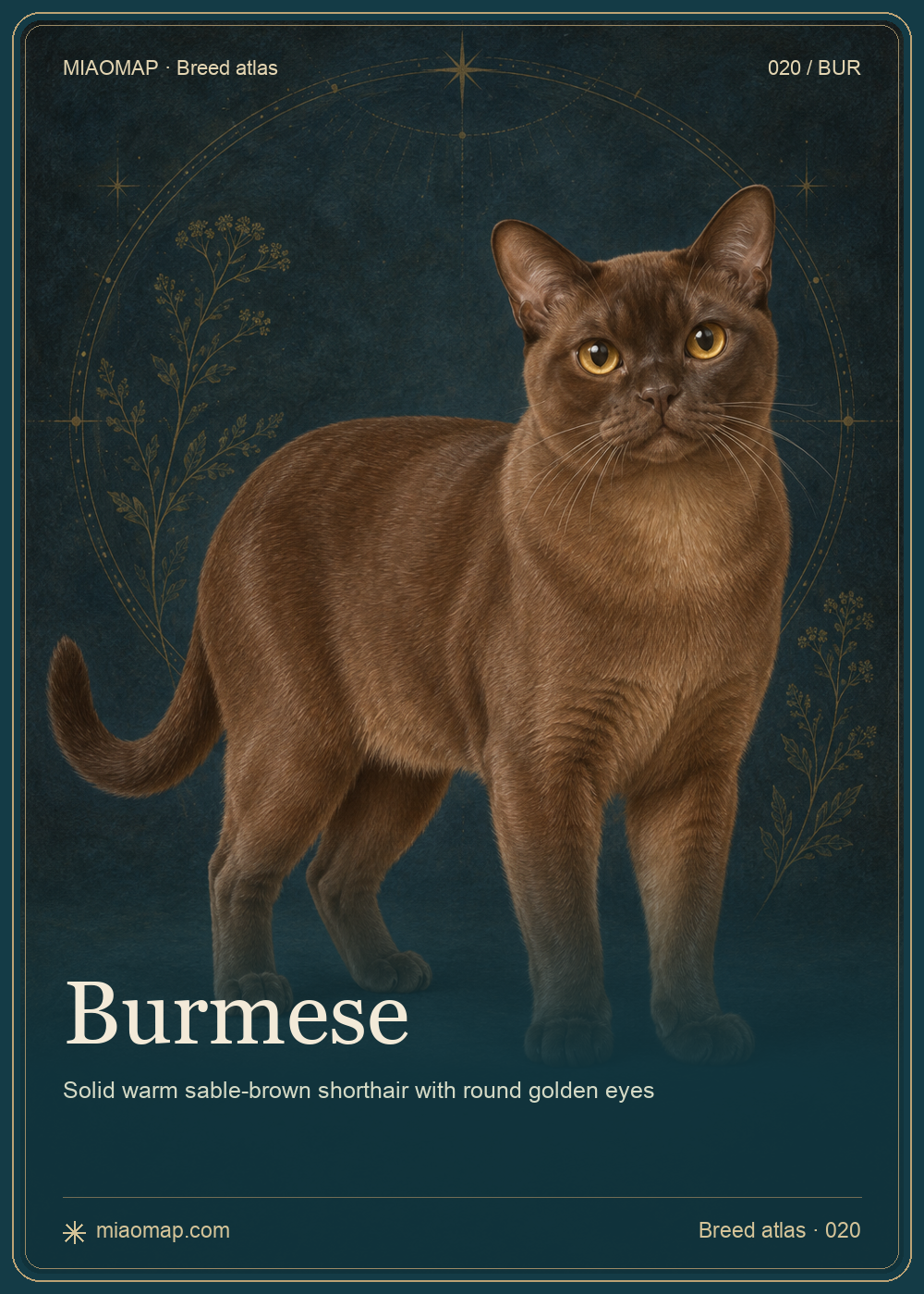
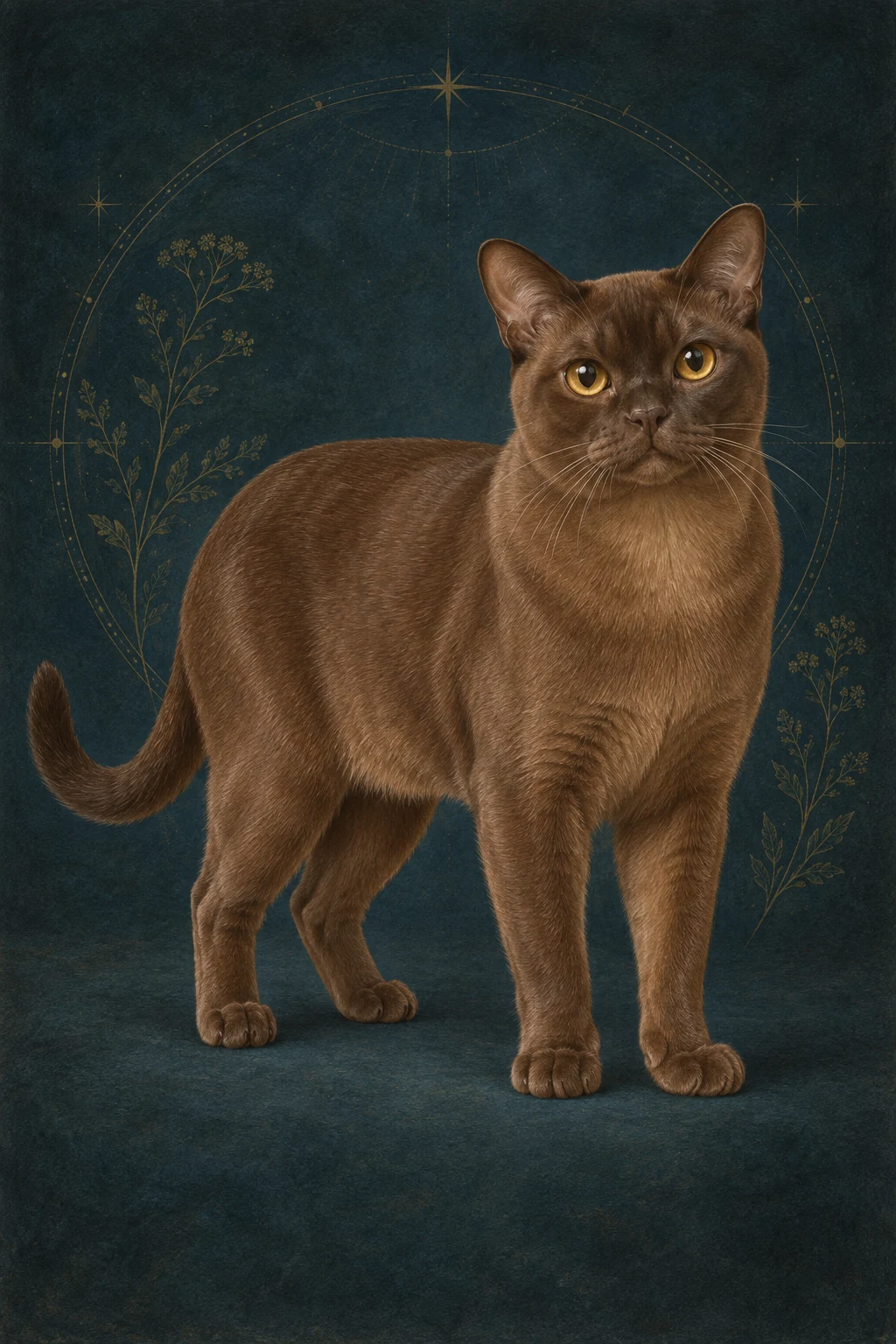
Solid warm sable-brown shorthair with round golden eyes
✳ miaomap.comBreed atlas · 020
Feline breed atlas · 020 / BUR
The Burmese combines a satin-like short coat and substantial muscle with a typically people-oriented disposition.
Move your pointer for a subtle sheen; flip the card to read its profile.
Solid warm sable-brown shorthair with round golden eyes
Modern Burmese have Southeast Asian roots, with many lines tracing to Wong Mau, a female brought to the United States in 1930. Breeding her with Siamese produced offspring that included consistently breeding dark-brown cats. Additional coat colors later emerged; these are color variants within the breed, not independently originating breeds, and accepted color ranges differ between associations.
A Burmese is medium-sized but compact, with a rounded chest and substantial muscle that can make it feel heavier than it looks. The head and broad, short muzzle have rounded contours; large eyes sit widely apart. Medium ears have rounded tips and tilt slightly forward. Proportionate legs, round paws, a straight medium-length tail and very short, sleek fur complete the outline. Appearance cannot confirm pedigree.
Burmese are often described as affectionate, curious and playful, with many enjoying following people or joining interactive games. Some live comfortably with children or dogs, but gentle, gradual introductions remain important. Sociability and comfort when alone vary individually, so adapt companionship and routines to the particular cat.
Brush gently each week with a soft rubber brush to remove loose hair; frequent bathing is usually unnecessary. Maintain a lean body condition, daily play, dental care and regular veterinary checks. Ask about diabetes in the family line, although its heritability remains uncertain. In especially short-muzzled individuals, monitor eye discomfort or breathing changes and seek veterinary assessment rather than judging health by facial shape.
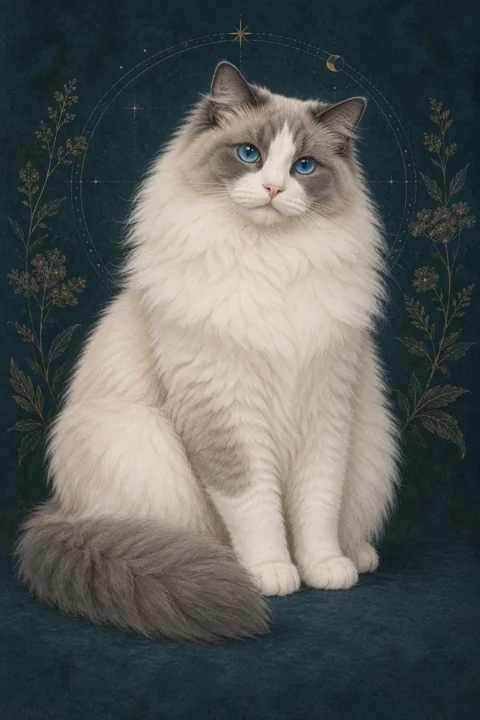
Despite similar names, these are different breeds. Burmese have very short, close-lying coats, compact muscular bodies and typically yellow-to-gold eyes. Birmans are known for longer coats, pointed coloring, blue eyes and white gloves. These features help compare appearances, but they do not establish an individual cat's pedigree.
No. CFA lists sable, champagne, blue and platinum for Burmese, while TICA's overview also describes a broader range of solid and tortoiseshell colors. Color variants do not imply separate ancestry. For an individual cat's official color designation, consult the relevant association and its registration records.
No such certainty is justified. CFA notes that some sources suggest a possible diabetes predisposition in older Burmese, but research on heritability is inconclusive. This does not mean every cat will develop it. Discuss family history, maintain an appropriate weight and arrange checkups; consult a veterinarian about changes in thirst, urination or weight.
Text is based on the association sources below. AI-assisted original illustrations depict one coat variety, not every individual. Health and care information is general and does not replace veterinary assessment.
Based on the association sources listed on each profile. Illustrations do not establish pedigree. Independently produced by miaomap, without association endorsement. Numbers are catalog IDs, not rarity ranks.
miaomap · Updated
Use our illustration creator to choose fur colors, eyes and tails, then download your own cat.