miaomap.com · Breed atlas070 / SAV
Savannah
Warm brown with black spots and gold eyes
✳ miaomap.comBreed atlas · 070
Feline breed atlas · 070 / SAV
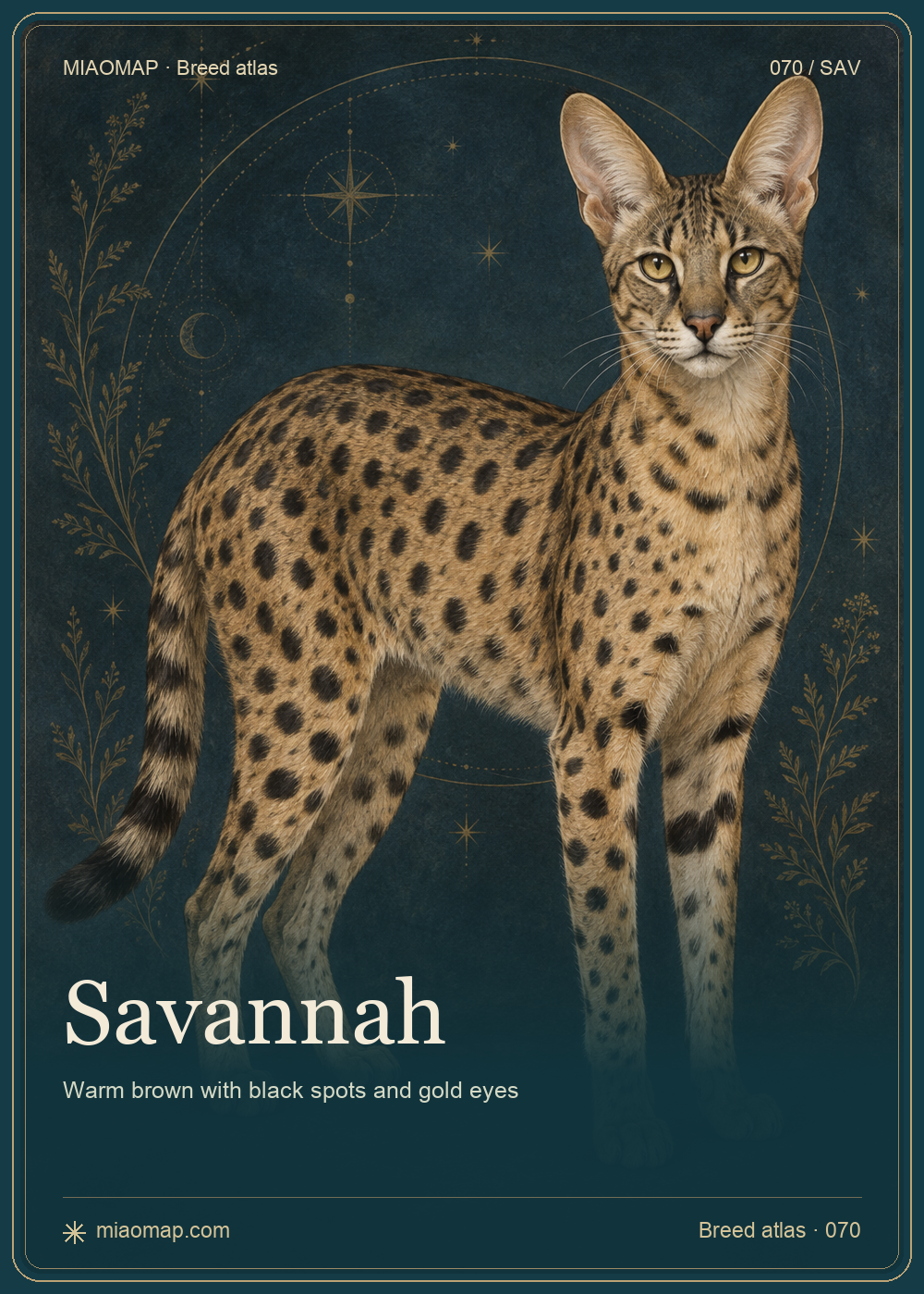
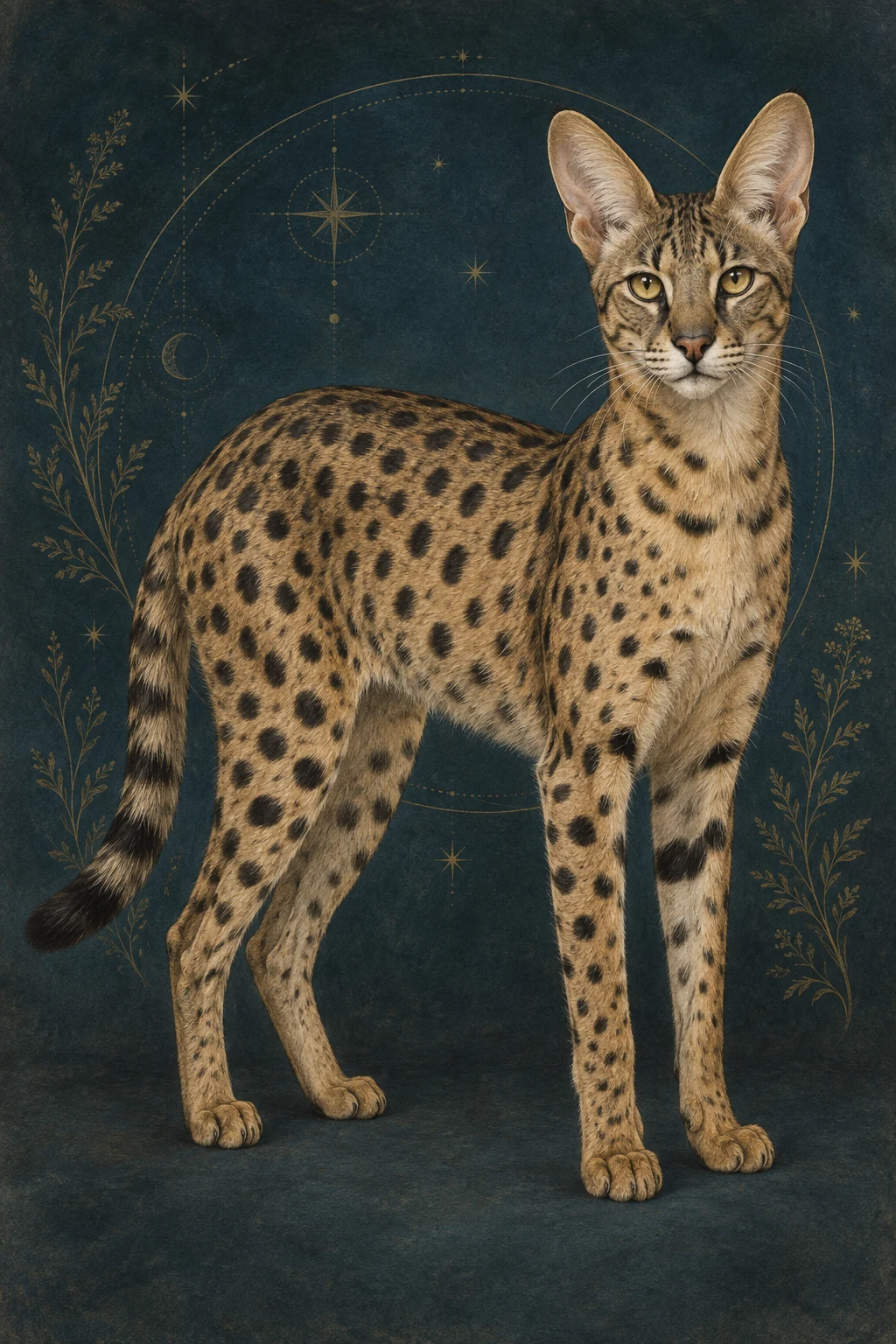
Towering ears, long legs, and bold spots give the Savannah a distinctive serval-like silhouette.
Move your pointer for a subtle sheen; flip the card to read its profile.
Warm brown with black spots and gold eyes
The Savannah originated from African serval–domestic cat crosses. The first recorded kitten, born on April 7, 1986, was named Savannah, giving the breed its name. Patrick Kelly and Joyce Sroufe later developed the breed and drafted its original TICA standard. Registration began in 2001. Brown spotted, silver spotted, black, and black smoke are coat varieties within the same breed.
The Savannah is tall, lean, and muscular, with a long neck, long legs, and large ears set high on the head. Hooded eyes with a relatively flat upper outline are distinctive. The pictured cat retains warm brown short fur, solid black spots, gold eyes, and a medium-length tail. Its elongated silhouette can suggest more weight than it actually carries.
Savannahs are often energetic, inquisitive, and adventurous, needing substantial daily interaction. Many form close family bonds, greeting people or following them while preferring control over proximity rather than prolonged lap time. Some enjoy fetch, water play, or learning harness walks. Individual temperament varies, so introduce training gradually, respect comfort signals, and offer engaging activities without assuming every cat shares these preferences.
Brush the short coat occasionally, more during shedding, and maintain dental and nail care. Provide sturdy elevated perches, interactive play, and escape-resistant housing. Feed complete balanced cat food; consult a veterinarian about weight, pyruvate kinase deficiency, progressive retinal atrophy, and cardiac assessment. Because of wild-hybrid ancestry, verify local ownership laws and generation restrictions before acquisition or relocation.
The serval is a wild African feline species; the Savannah is a domestic breed developed from serval–domestic crosses and is generally smaller. Tall ears and long limbs reflect that ancestry, but appearance cannot establish pedigree generation or determine legal ownership eligibility.
TICA lists brown spotted tabby, silver spotted tabby, black, and black smoke, so clear spots are not visible on every Savannah. Typical Savannah spots are solid, unlike the rosettes of many Bengals. These coat varieties share one breed origin.
Savannahs often jump skillfully and explore high places; some learn to open doors. Sturdy cat trees, secured window perches, and safe doors and windows provide suitable outlets. Add daily interactive play and puzzle toys, adapting challenges to the individual cat.
Text is based on the association sources below. AI-assisted original illustrations depict one coat variety, not every individual. Health and care information is general and does not replace veterinary assessment.
Based on the association sources listed on each profile. Illustrations do not establish pedigree. Independently produced by miaomap, without association endorsement. Numbers are catalog IDs, not rarity ranks.
miaomap · Updated
Use our illustration creator to choose fur colors, eyes and tails, then download your own cat.