miaomap.com · Breed atlas076 / SRXL
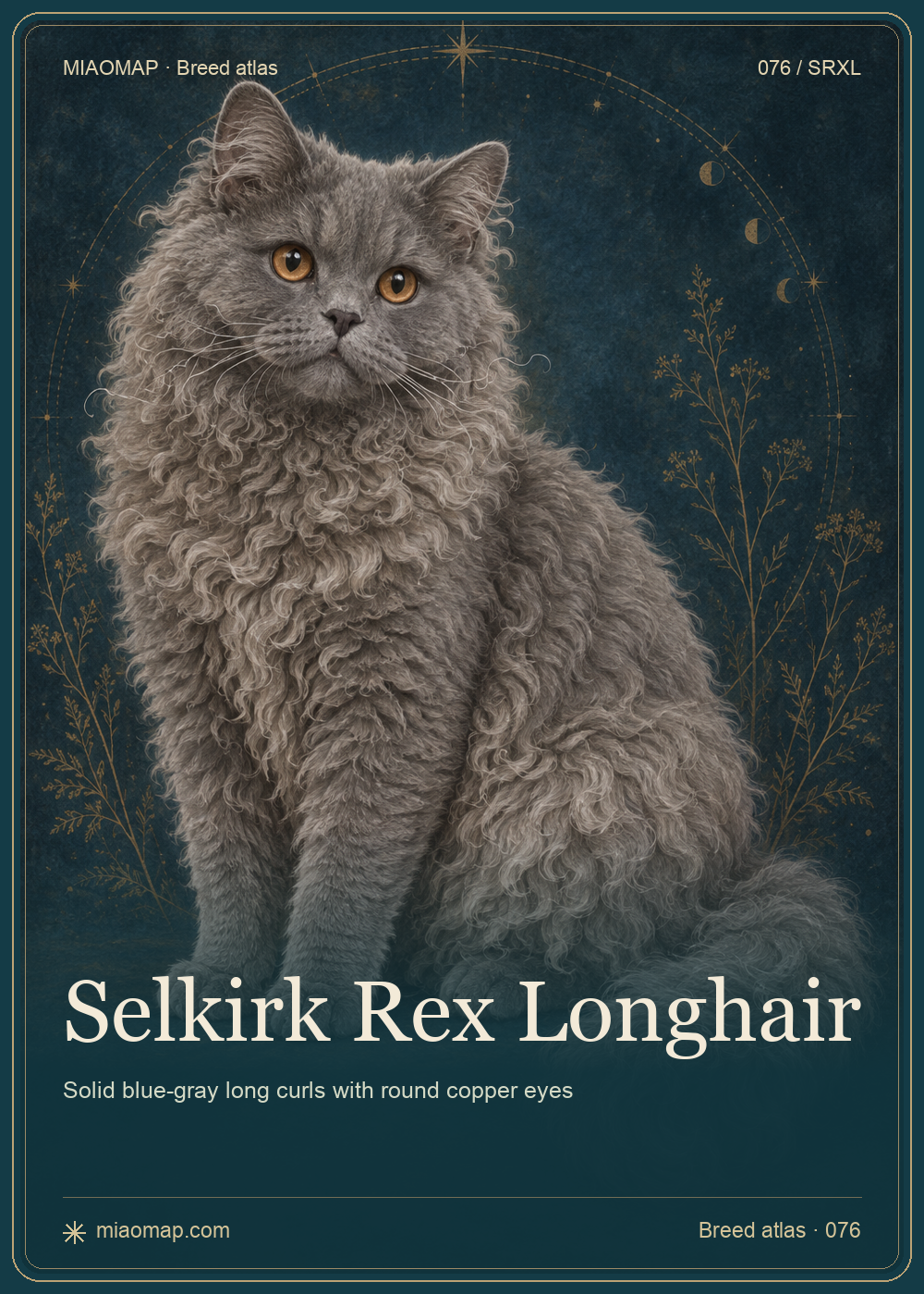
Selkirk Rex Longhair
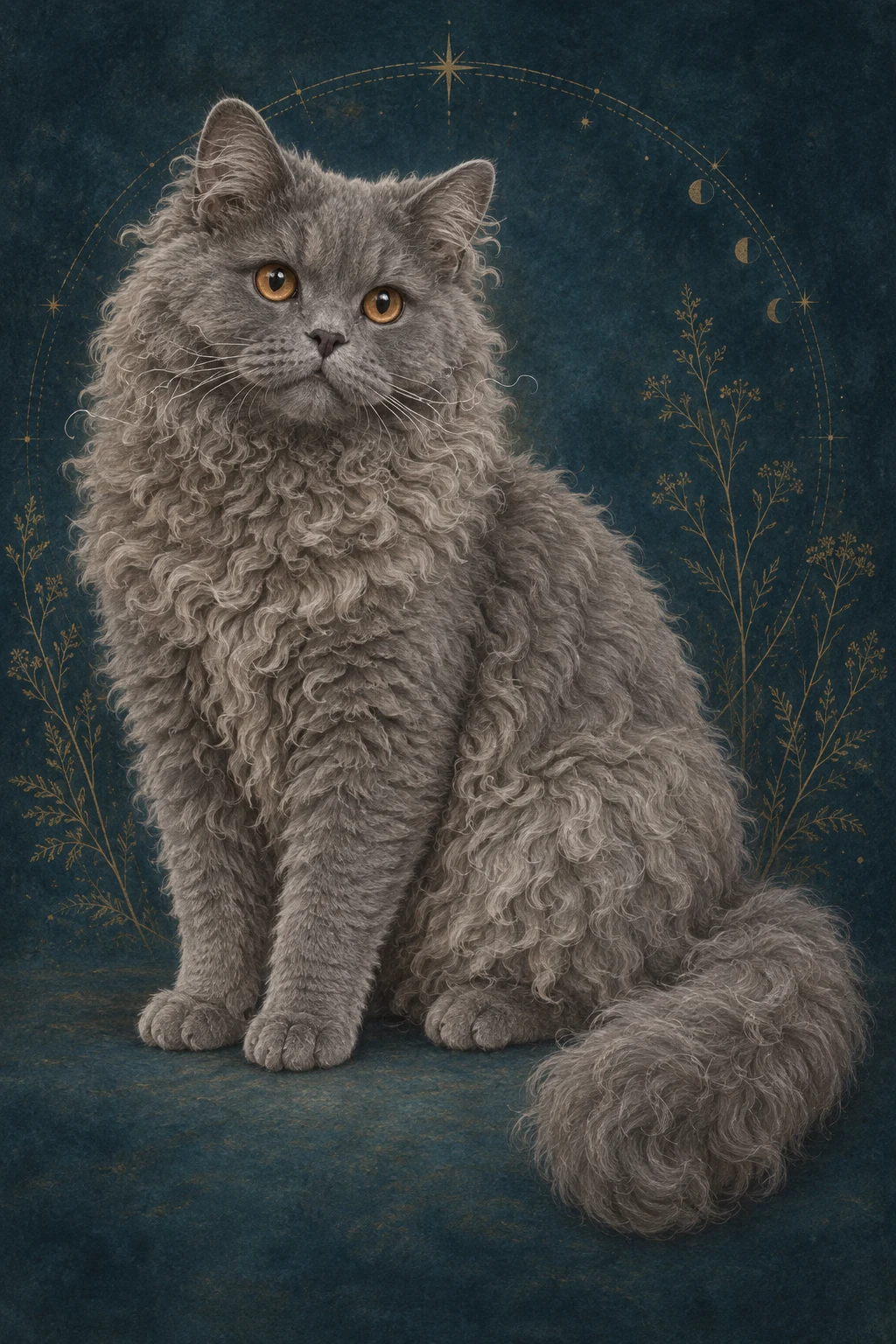
Solid blue-gray long curls with round copper eyes
✳ miaomap.comBreed atlas · 076
Feline breed atlas · 076 / SRXL
Loose, woolly curls cover a substantial body in this longhaired Selkirk variant, often appreciated for its gentle, relaxed nature.
Move your pointer for a subtle sheen; flip the card to read its profile.
Solid blue-gray long curls with round copper eyes
The Selkirk Rex traces its beginnings to Miss DePesto, a curly-coated kitten born in Montana in 1987. Breeder Jeri Newman paired her with a Persian, revealing dominant inheritance of the curl trait and her capacity to produce longhaired offspring. Longhair and shorthair belong to the same breed development, which also involved British Shorthairs, Persians and Exotic Shorthairs, rather than separate ancestral lines.
Look for a rounded head, large round eyes, medium ears set well apart and a broad muzzle. The muscular, slightly rectangular body has substantial bone and sturdy legs. Soft, dense long hair forms loose curls, especially around the neck, belly and flanks, with a full, plumed tail. Curling whiskers can add a clue, but appearance alone cannot confirm pedigree.
Selkirk Rex cats are often described as gentle, patient and relaxed, with room for playful interaction and companionship. These are tendencies, not promises for every individual. Socialization, surroundings and personal preferences matter; despite a cuddly appearance, each cat should be allowed to choose whether it enjoys being held or touched.
Gently comb the long curls with a wide-toothed comb, adjusting frequency to tangling and checking the armpits, belly, neck and tail base. Do not leave mats simply to preserve volume. Avoid pulling or excessive brushing that irritates skin or disrupts curls. Support healthy weight through daily play, and discuss health and family screening at veterinary visits; seek advice for eye or breathing concerns.
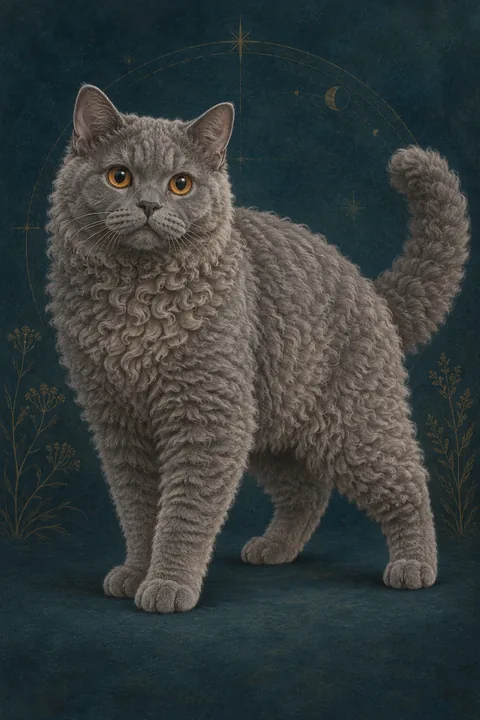
They are coat-length varieties within the same breed, not cats with separate origins. Longhairs have looser-looking curls and fuller neck and tail furnishings, while shorthairs have a dense, plush curl. Both occur in many colors, and neither coat length nor color alone establishes pedigree.
Yes. A curly coat does not mean a cat will not shed, and dense long hair can trap loose hairs and develop mats. Comb gently and adjust the schedule to the individual, especially checking the belly and armpits. Shedding varies with the cat and season; pulling mats apart can injure skin.
No. TICA describes the Selkirk curl trait as dominant, unlike the recessive curl traits of Cornish and Devon Rex cats. That does not mean every Selkirk offspring must be curly. Selkirks also generally have a more substantial build; comparing appearances cannot substitute for documented pedigree.
Text is based on the association sources below. AI-assisted original illustrations depict one coat variety, not every individual. Health and care information is general and does not replace veterinary assessment.
Based on the association sources listed on each profile. Illustrations do not establish pedigree. Independently produced by miaomap, without association endorsement. Numbers are catalog IDs, not rarity ranks.
miaomap · Updated
Use our illustration creator to choose fur colors, eyes and tails, then download your own cat.