miaomap.com · Breed atlas080 / SOK
Sokoke
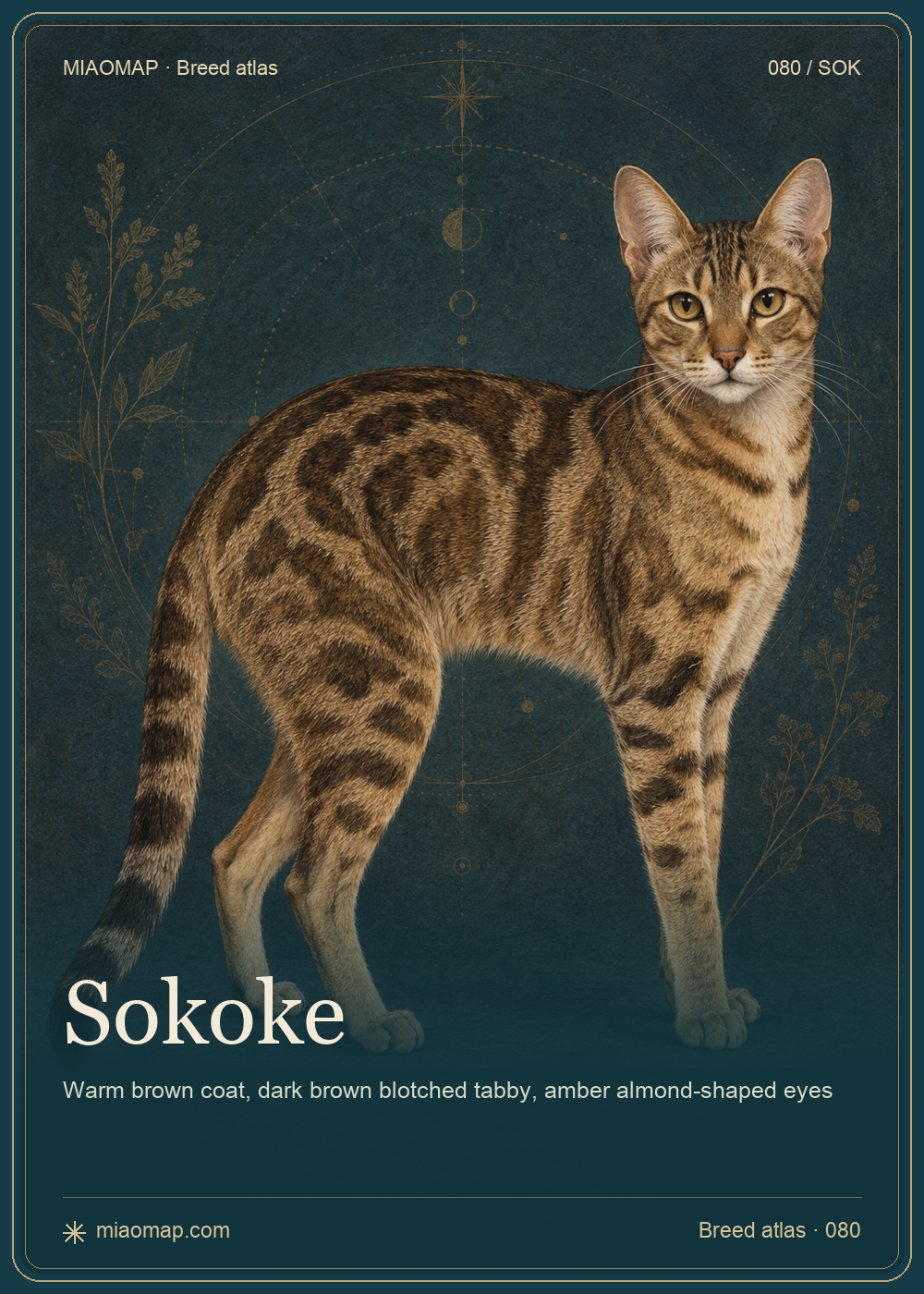
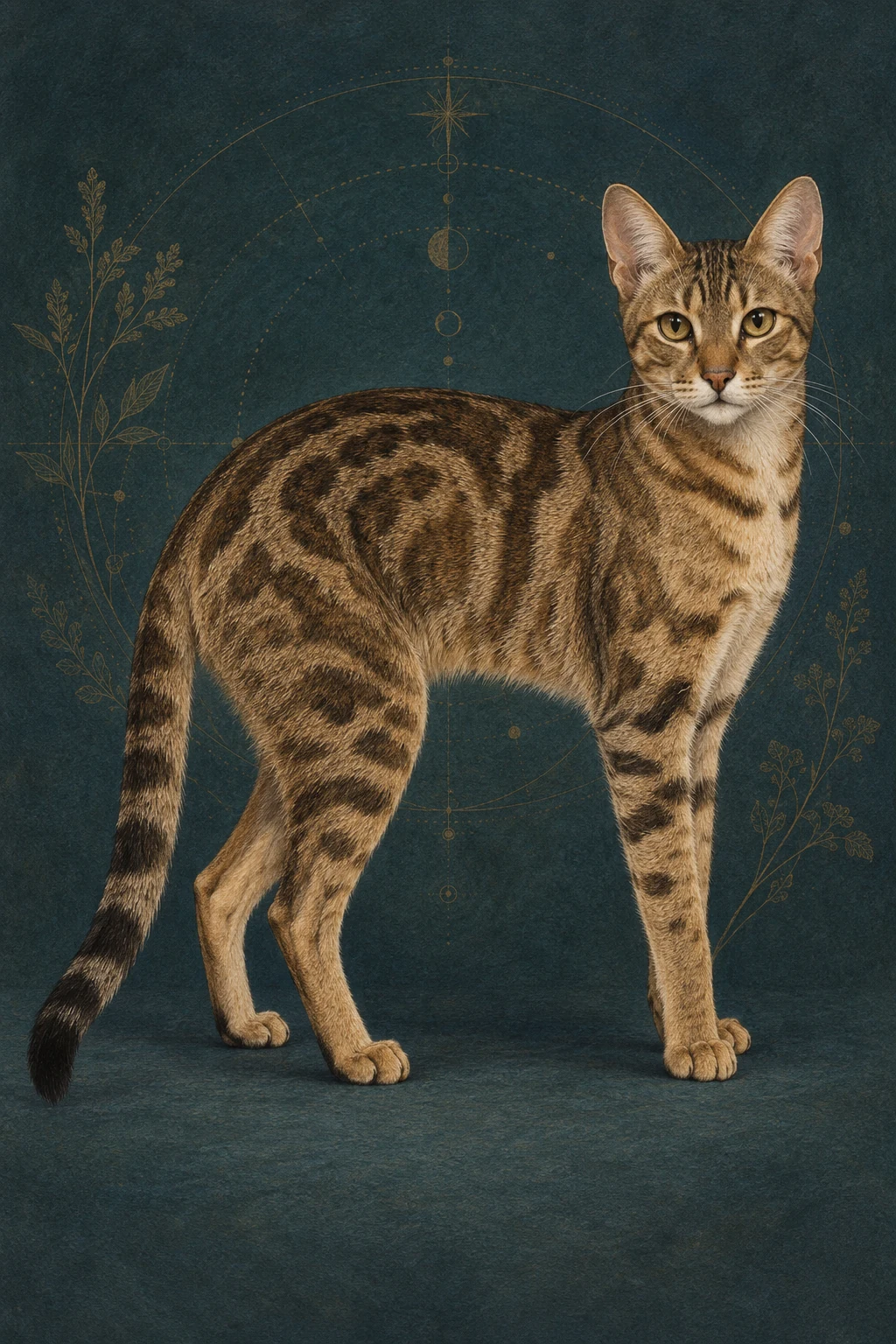
Warm brown coat, dark brown blotched tabby, amber almond-shaped eyes
✳ miaomap.comBreed atlas · 080
Feline breed atlas · 080 / SOK
A slender Kenyan shorthaired cat distinguished by intricately ticked tabby markings and an active, climbing-oriented nature.
Move your pointer for a subtle sheen; flip the card to read its profile.
Warm brown coat, dark brown blotched tabby, amber almond-shaped eyes
The Sokoke is a natural domestic breed from Kenya, named after the Arabuko Sokoke forest. Jeni Slater began breeding cats from the Watamu area in 1978, initially calling them African Shorthairs. Gloria Moeldrop brought a pair to Denmark in 1983 and later imported additional Kenyan cats. FIFe recognised the breed in 1994; its distinctive tabby coat does not indicate a separate ancestry.
Look for a medium-sized, elongated body, long legs and hind legs longer than the forelegs. The comparatively small head has a softly wedge-shaped outline, broad-based ears with gently rounded tips, and a tapering tail. The short blotched tabby coat contains agouti ticking that makes pattern centres appear hollow. Eyes usually range from amber to light green; appearance alone cannot confirm pedigree.
Sokokes are often described as energetic climbers that communicate vocally with people and companion cats. They may form strong attachments to familiar companions, making changes of home a situation to handle patiently. Affection, vocal frequency and adaptability still vary with the individual, early experiences and living environment.
Gently brush the short coat with a soft brush, adjusting frequency to actual shedding. Provide secure climbing structures, scratching surfaces and daily interactive play for this active cat. During moves or caregiver changes, retain familiar bedding and routines and allow ample adjustment time. Maintain routine veterinary checks, dental care and weight management; assess health concerns with a veterinarian rather than relying on breed labels.
The Sokoke’s blotched tabby pattern includes agouti ticking, with alternating colour bands on individual hairs. This gives the centres of larger markings a hollow appearance and adds a fine, salt-and-pepper texture, sometimes called African tabby. It is a coat feature, not independent proof of breed identity or pedigree.
FIFe describes the Sokoke as a natural domestic breed developed from cats around Watamu, Kenya, including free-living domestic cats. Its forest-derived name and striking markings do not establish wild-cat hybrid ancestry. Confirming an individual cat’s identity requires reliable breeding records, rather than geographic stories or visual resemblance alone.
FIFe notes strong bonds with people and feline companions, so adult Sokokes and older, already-bonded kittens may need longer to adjust after rehoming. Start with a quiet, secure space, familiar scents and consistent routines, then allow gradual exploration. Avoid forcing contact; the pace of adjustment remains individual.
Text is based on the association sources below. AI-assisted original illustrations depict one coat variety, not every individual. Health and care information is general and does not replace veterinary assessment.
Based on the association sources listed on each profile. Illustrations do not establish pedigree. Independently produced by miaomap, without association endorsement. Numbers are catalog IDs, not rarity ranks.
miaomap · Updated
Use our illustration creator to choose fur colors, eyes and tails, then download your own cat.