miaomap.com · Breed atlas037 / HAV
Havana
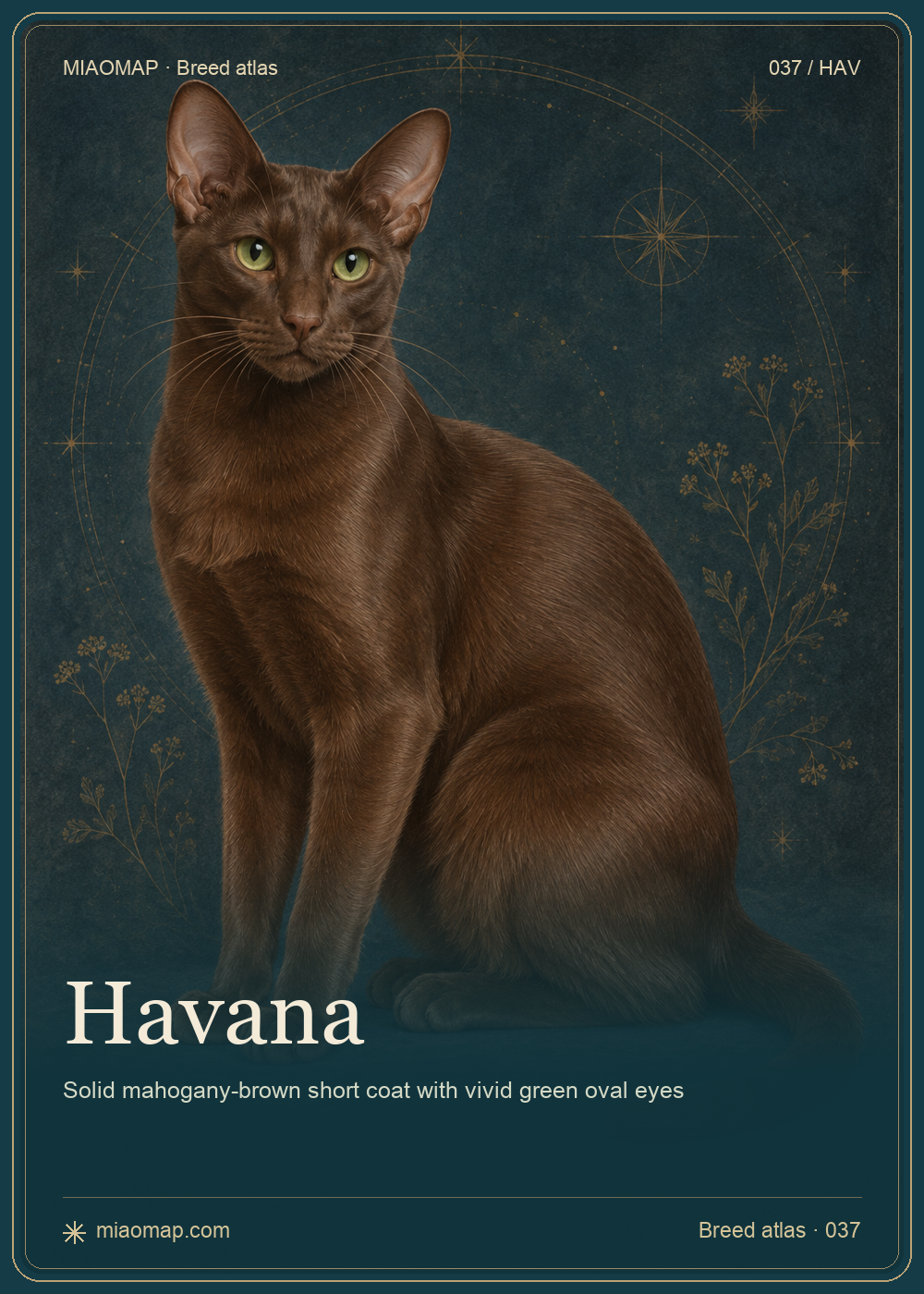
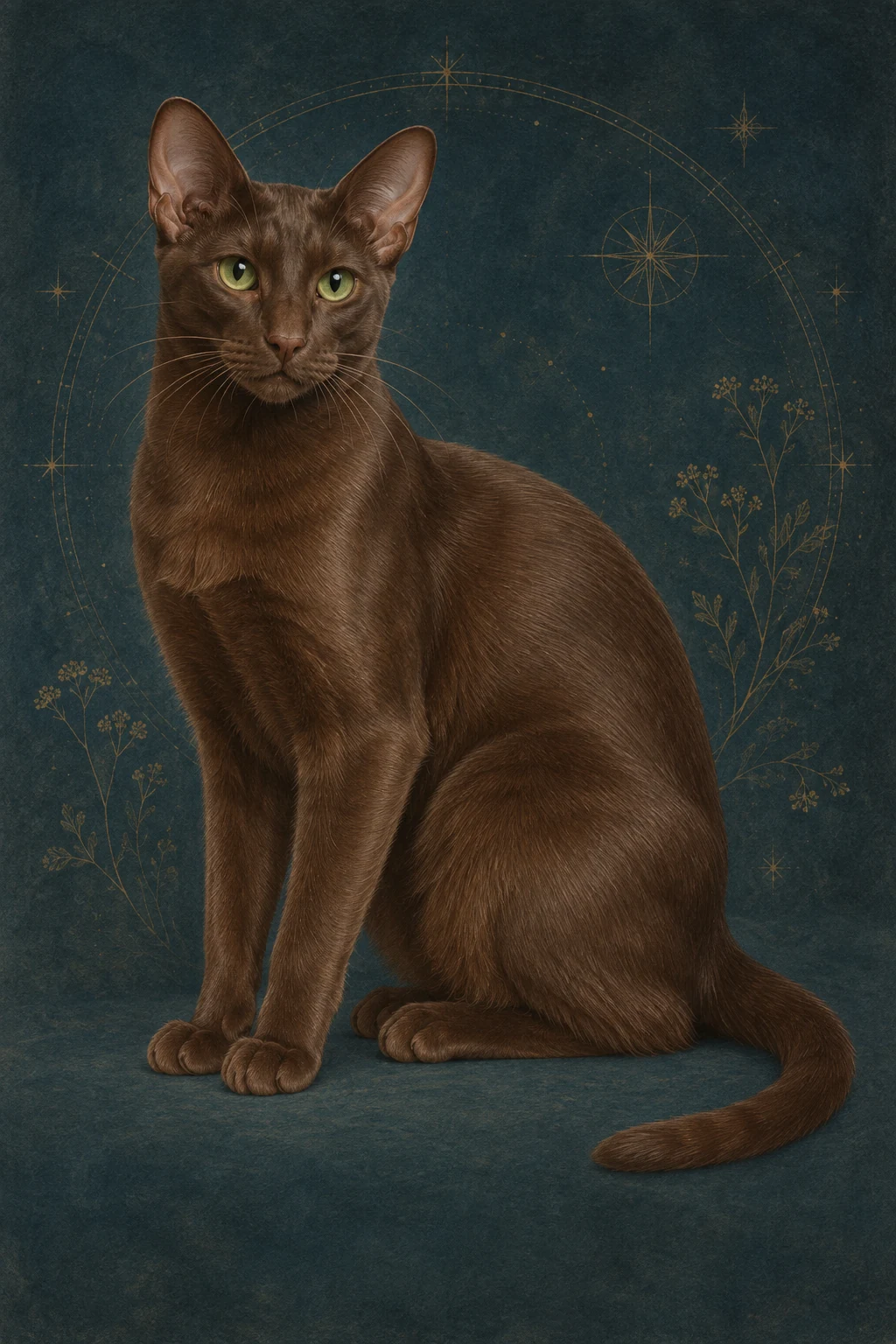
Solid mahogany-brown short coat with vivid green oval eyes
✳ miaomap.comBreed atlas · 037
Feline breed atlas · 037 / HAV
A warm brown coat, vivid green eyes and a distinctive muzzle distinguish this often people-oriented cat.
Move your pointer for a subtle sheen; flip the card to read its profile.
Solid mahogany-brown short coat with vivid green oval eyes
The modern Havana traces to British breeding efforts after World War II, including crosses between Siamese and black domestic shorthairs to produce solid brown cats. Early cats reached the United States, where breeders preserved their distinctive appearance while expanding the gene pool. TICA uses Havana and CFA uses Havana Brown; these names do not imply unrelated ancestry, and association standards should be checked separately.
A representative brown Havana has a medium, firm, moderately elongated body, straight legs and compact oval paws. Its head is longer than wide, with a distinctive muzzle narrowed behind prominent whisker pads and a noticeable stop in profile. Large, round-tipped ears tilt forward; oval eyes are green. The glossy brown short coat has brown whiskers, and the medium-length, slender tail tapers.
Havanas are often described as affectionate, curious and playful, sometimes using a paw to touch people or investigate objects. Interactive play and regular companionship can be valuable, but individuals vary: some are outgoing, while others are shy or favor one person. Introductions to children and other pets should remain gradual and respectful.
Gently brush the smooth short coat with a soft brush, adjusting frequency to actual shedding; routine bathing is usually unnecessary. Maintain nail trims, dental care and veterinary checkups, with interactive play, climbing opportunities and weight monitoring. CFA describes regulated outcrossing to increase genetic diversity. Ask about pedigree records and breeding-cat health screening, without treating these measures as a guarantee of individual health.
The names alone do not indicate separate ancestry. TICA uses Havana, while CFA uses Havana Brown; the supplied history traces British solid-brown breeding efforts and subsequent American development. When comparing individual cats, consult the relevant association’s standard and pedigree records rather than assuming every requirement is identical from the name.
No. A representative Havana also has a distinctive narrowing behind the whisker pads, a visible profile stop and large forward-tilted ears, but other cats can have brown coats or green eyes. Appearance can suggest resemblance, not confirm pedigree; reliable pedigree documentation and, where appropriate, registration records are needed.
CFA describes the short, silky coat as not generally prone to heavy shedding, but shedding still occurs and varies by cat and season. Gentle soft-brush grooming usually covers basic coat care, without frequent routine baths. Sudden changes in shedding or skin condition warrant veterinary advice rather than simply more bathing.
Text is based on the association sources below. AI-assisted original illustrations depict one coat variety, not every individual. Health and care information is general and does not replace veterinary assessment.
Based on the association sources listed on each profile. Illustrations do not establish pedigree. Independently produced by miaomap, without association endorsement. Numbers are catalog IDs, not rarity ranks.
miaomap · Updated
Use our illustration creator to choose fur colors, eyes and tails, then download your own cat.