miaomap.com · Breed atlas085 / TON
Tonkinese
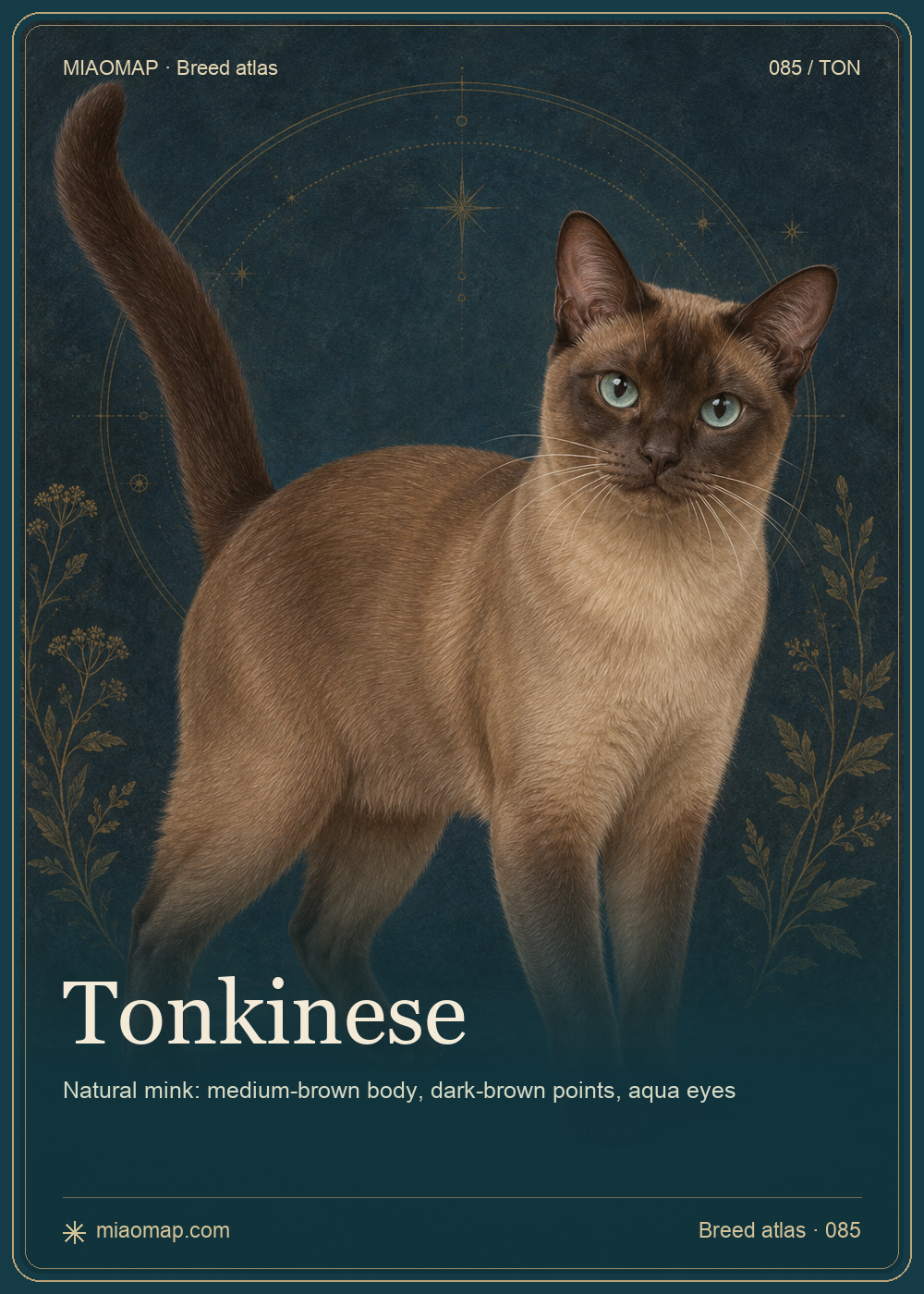
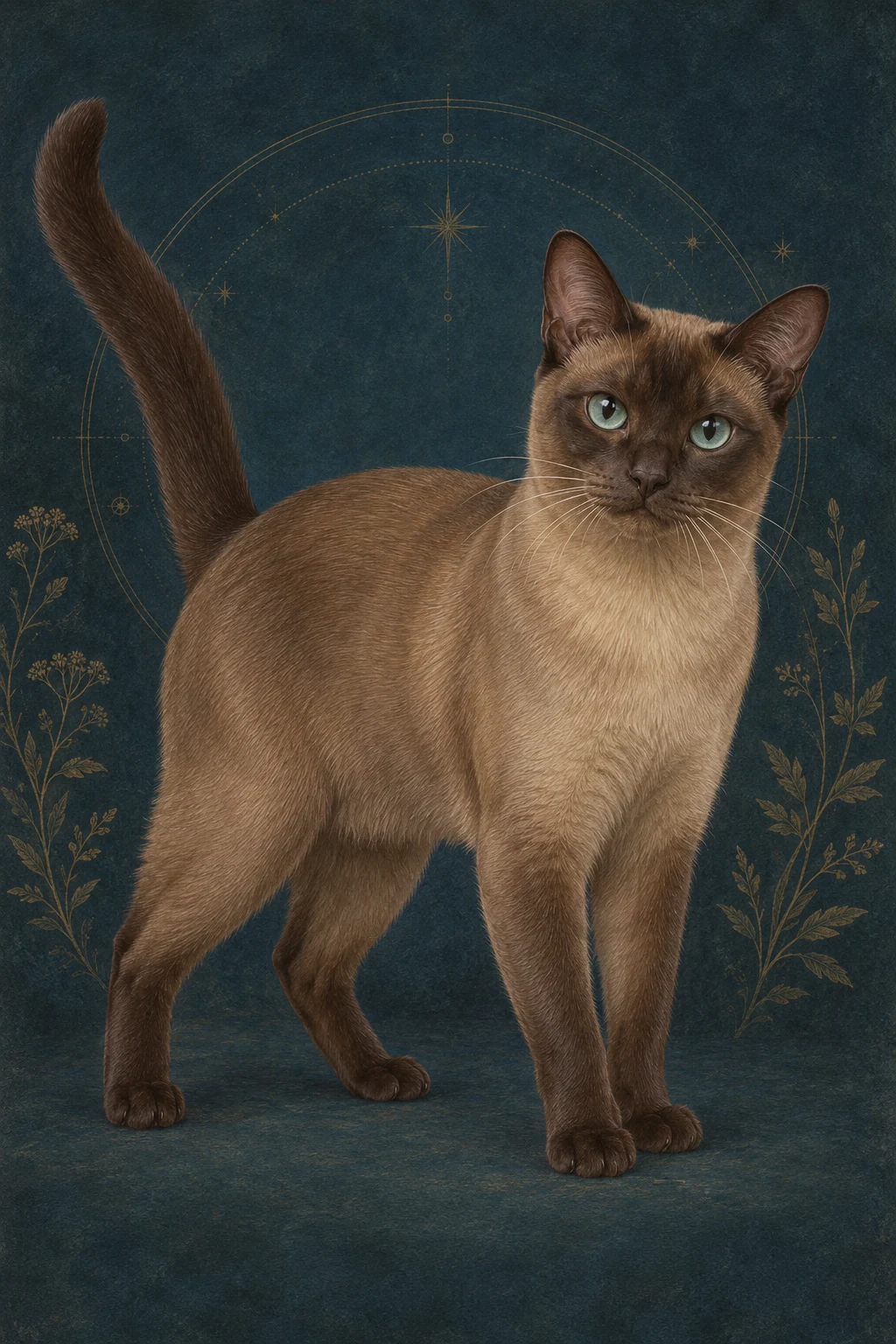
Natural mink: medium-brown body, dark-brown points, aqua eyes
✳ miaomap.comBreed atlas · 085
Feline breed atlas · 085 / TON
The Tonkinese combines balanced muscular proportions with a silky short coat and often enjoys joining everyday family activities.
Move your pointer for a subtle sheen; flip the card to read its profile.
Natural mink: medium-brown body, dark-brown points, aqua eyes
Developed from Siamese and Burmese cats, the modern Tonkinese was shaped by breeders in Canada and the United States. CFA history links much of its ancestry to Wong Mau, brought to America in 1930 and also associated with the Burmese foundation. Today's Tonkinese is an established breed; mink, solid and pointed coats are pattern varieties within it, not cats of separate ancestry.
A Tonkinese has a medium-length, muscular body that is neither stocky nor extremely slender. The head forms a softly modified wedge, with a blunt muzzle and medium ears featuring broad bases and oval tips. Open almond-shaped eyes, slightly longer hind legs, oval paws and a tapering tail complete the outline. Its close-lying short coat is silky; this portrait shows natural mink with aqua eyes.
Tonkinese are often described as people-oriented, curious and active, with an interest in interactive play and following household activities. Some are noticeably vocal. These tendencies do not guarantee an outgoing or cuddly individual: age, early experiences and home conditions matter. Respect each cat's preferences for companionship, handling and quiet retreat.
Gently groom with a soft rubber brush, increasing frequency when shedding rises; the silky short coat rarely needs routine bathing. Provide daily interactive play, climbing opportunities and quiet resting places, with portions adjusted to body condition. CFA notes a tendency toward gingivitis in older Tonkinese, so introduce cat-safe toothbrushing early and arrange veterinary dental checks. Seek advice for bad breath, drooling or altered eating.
Tonkinese originated from Siamese and Burmese breeding but is now an established breed of its own. Its standard calls for a balanced midpoint between very slender and compact body types, with moderate length and firm muscles. Head shape, coat pattern and eye color offer clues, but appearance cannot confirm pedigree; reliable ancestry records are needed.
Mink combines moderate contrast between body and darker extremities with aqua eyes. Pointed cats have stronger contrast against a pale body and blue eyes. Solid cats show little contrast and green to yellow-green eyes. These are patterns within one breed, not separate breeds; kittens' coat and eye colors may still be developing.
CFA mentions a tendency toward gingivitis in older Tonkinese, but this does not mean every cat will develop it or allow diagnosis by breed. Build a gradual toothbrushing routine with cat-safe toothpaste and schedule veterinary oral examinations. Persistent bad breath, drooling, mouth discomfort or changes in eating warrant veterinary advice.
Text is based on the association sources below. AI-assisted original illustrations depict one coat variety, not every individual. Health and care information is general and does not replace veterinary assessment.
Based on the association sources listed on each profile. Illustrations do not establish pedigree. Independently produced by miaomap, without association endorsement. Numbers are catalog IDs, not rarity ranks.
miaomap · Updated
Use our illustration creator to choose fur colors, eyes and tails, then download your own cat.