miaomap.com · Breed atlas032 / EMAU
Egyptian Mau
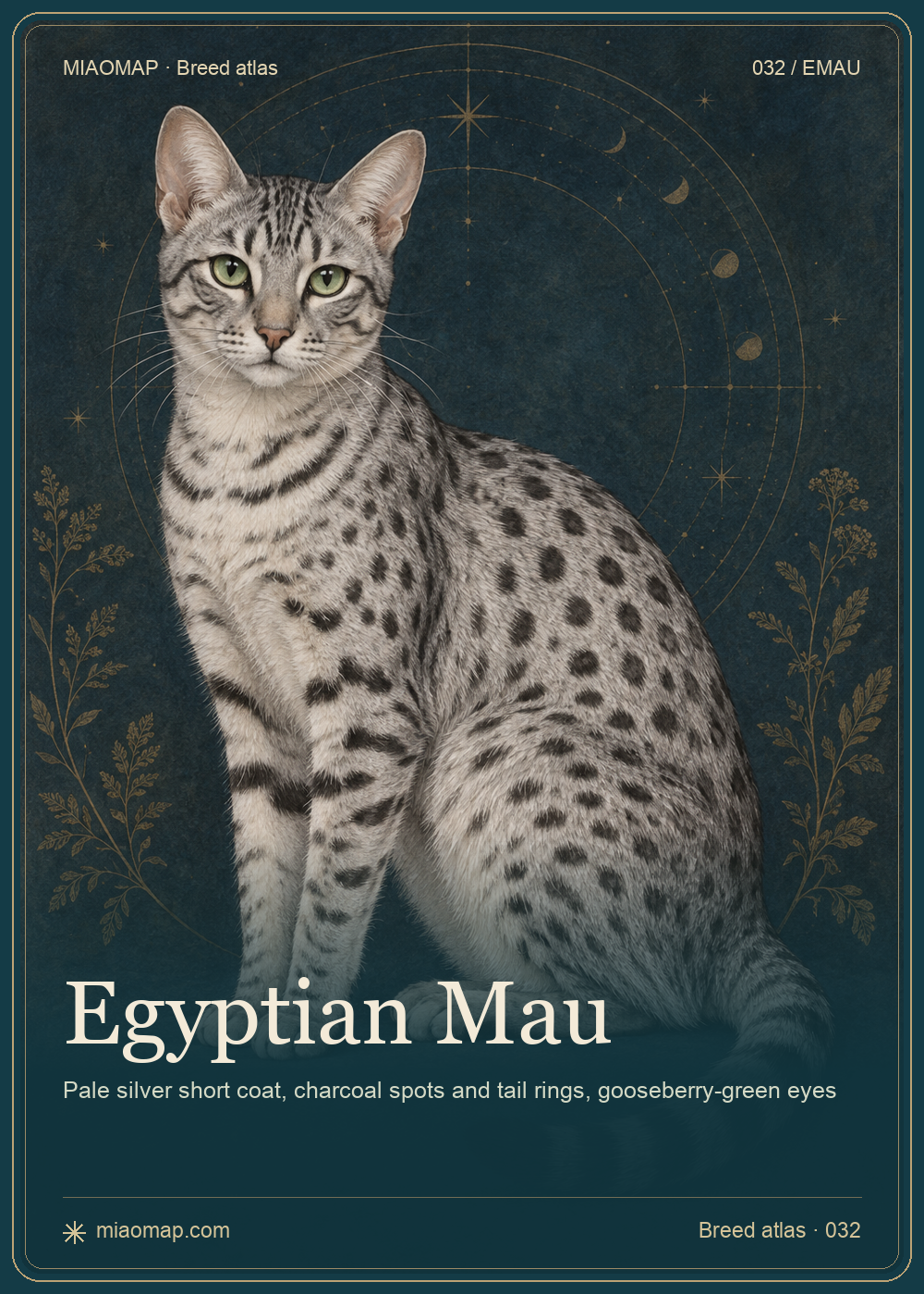
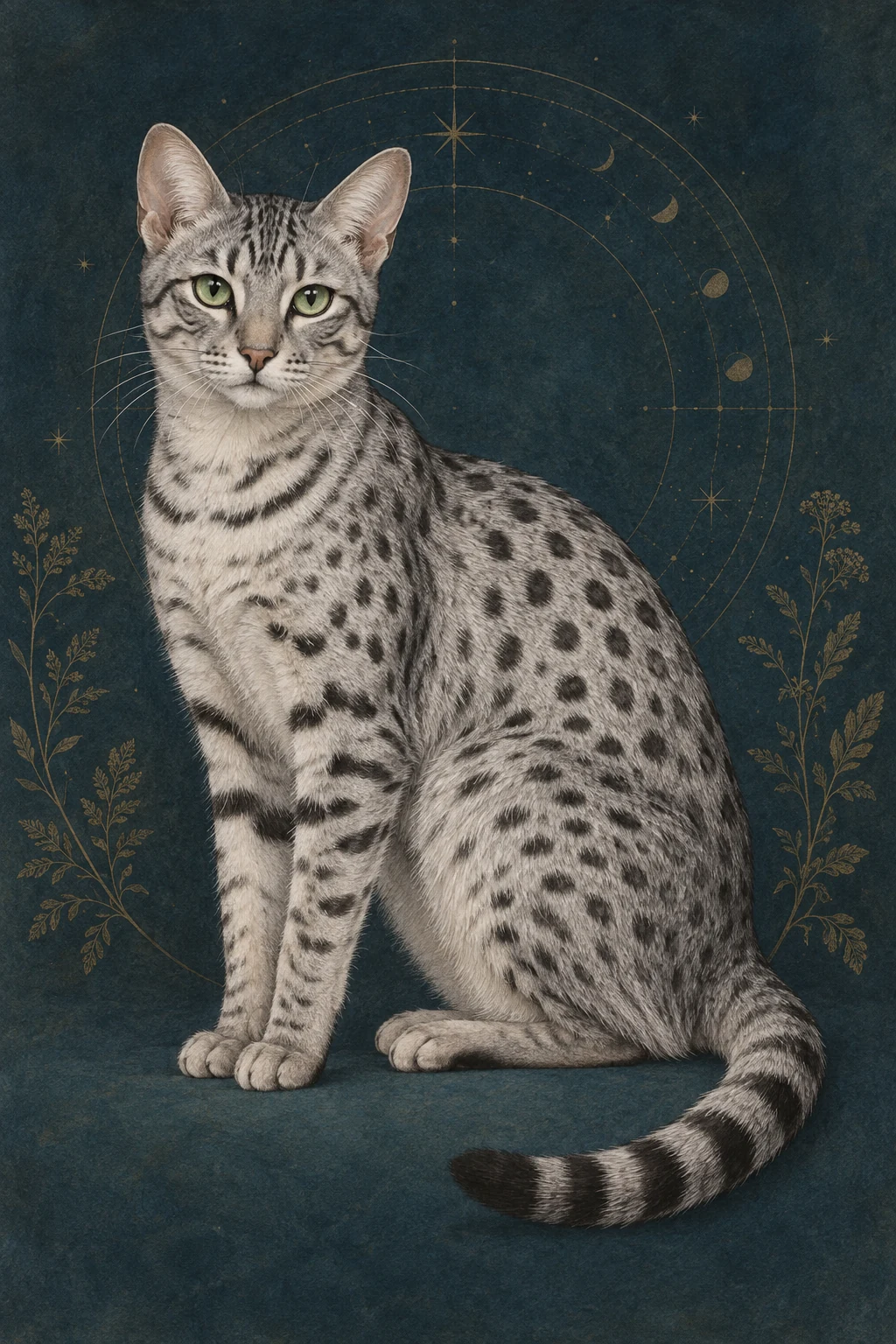
Pale silver short coat, charcoal spots and tail rings, gooseberry-green eyes
✳ miaomap.comBreed atlas · 032
Feline breed atlas · 032 / EMAU
Natural spots, green eyes and a graceful, muscular frame make the Egyptian Mau distinctive.
Move your pointer for a subtle sheen; flip the card to read its profile.
Pale silver short coat, charcoal spots and tail rings, gooseberry-green eyes
The Egyptian Mau is historically associated with spotted cats of Egypt, although resemblance to ancient images does not establish an uninterrupted pedigree. Modern breeding is linked to Nathalie Troubetskoy in Rome; she brought three Maus to the United States in 1956. Silver, bronze and black smoke are coat colors within the same breed, not breeds with separate ancestry.
Look for a softly rounded wedge-shaped head, medium-to-large ears with broad bases, and large, slightly slanted almond eyes that become gooseberry green in adults. Dark facial lines create a concerned expression. The muscular, medium-long body has longer hind legs, a loose flank-to-hind-leg skin flap, and a tapering tail with a thick base. The short coat carries irregularly scattered spots.
Egyptian Maus are often described as active, observant and closely attached to familiar people. Some enjoy interactive games and communicate with soft voices or chirps, while others are reserved around strangers or startled by sudden noise. Individual temperament varies; introduce new situations gradually and let the cat choose when to engage.
Comb gently each week, provide secure climbing spaces, and offer daily interactive play alongside quiet retreats from sudden noise. Ask about family health records and testing for pyruvate kinase deficiency. CFA also notes urinary stone disease as a concern; discuss hydration and urinary health with a veterinarian, and seek veterinary attention for changes in urination rather than attempting a diagnosis yourself.
No. The Egyptian Mau is known for natural spotting, but spots alone cannot establish breed or pedigree. A rounded wedge head, adult green eyes and longer hind legs offer additional clues. Silver, bronze and black smoke belong to the same breed; reliable pedigree or registration documents are needed to confirm ancestry.
Not necessarily. Eye color changes as kittens mature, with gooseberry green being the adult standard. CFA allows a transition, expecting visible green by eight months and full green by eighteen months. These are breed-standard expectations, not a medical diagnostic rule, and eye color alone cannot verify pedigree.
CFA mentions pyruvate kinase deficiency, an inherited condition that can cause anemia, and urinary stone disease. Ask about family health history and applicable test results, and discuss hydration and urinary health with your veterinarian. Not every Mau is affected, and genetic testing is not available for every relevant condition.
Text is based on the association sources below. AI-assisted original illustrations depict one coat variety, not every individual. Health and care information is general and does not replace veterinary assessment.
Based on the association sources listed on each profile. Illustrations do not establish pedigree. Independently produced by miaomap, without association endorsement. Numbers are catalog IDs, not rarity ranks.
miaomap · Updated
Use our illustration creator to choose fur colors, eyes and tails, then download your own cat.