miaomap.com · Breed atlas088 / TANG
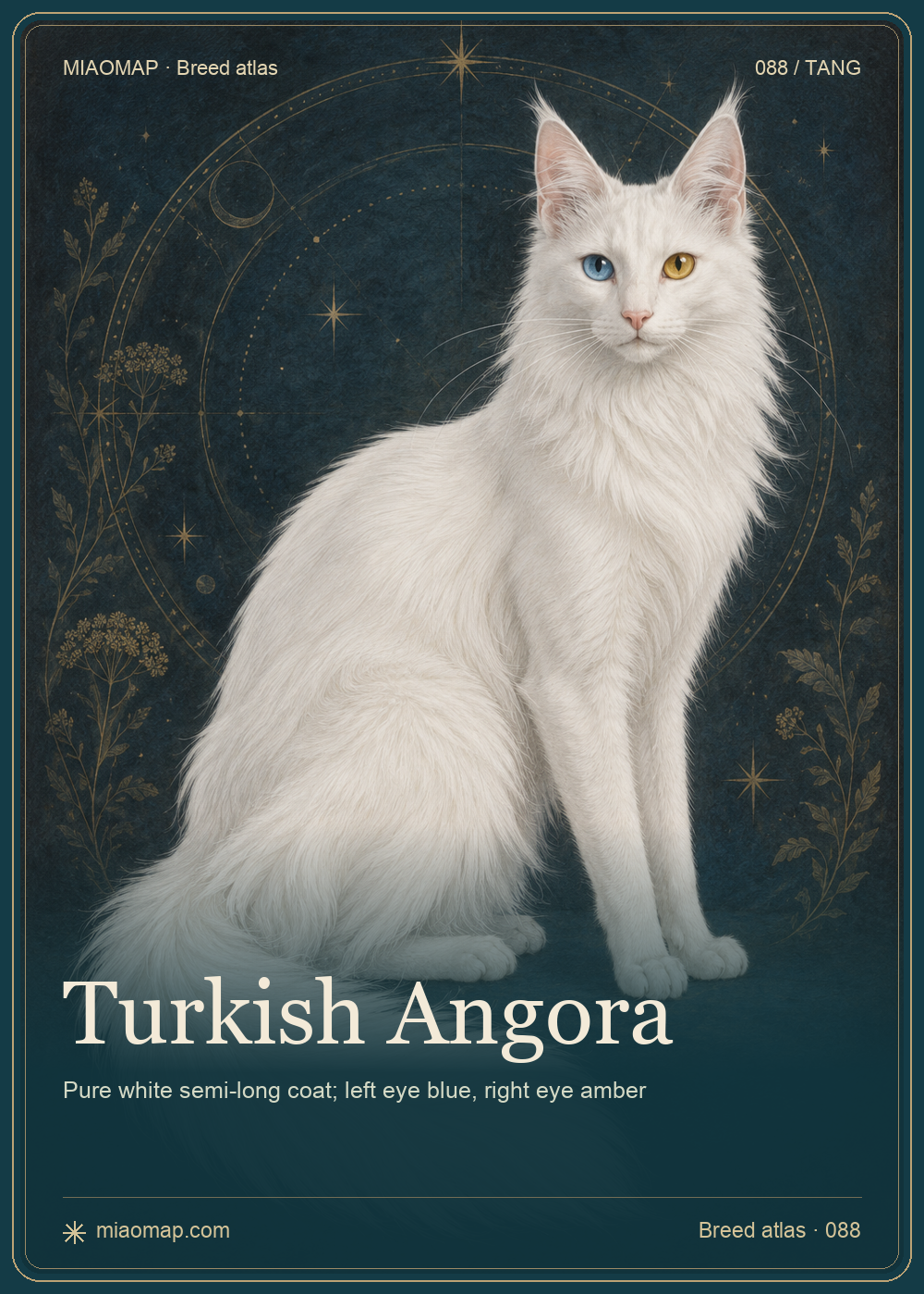
Turkish Angora
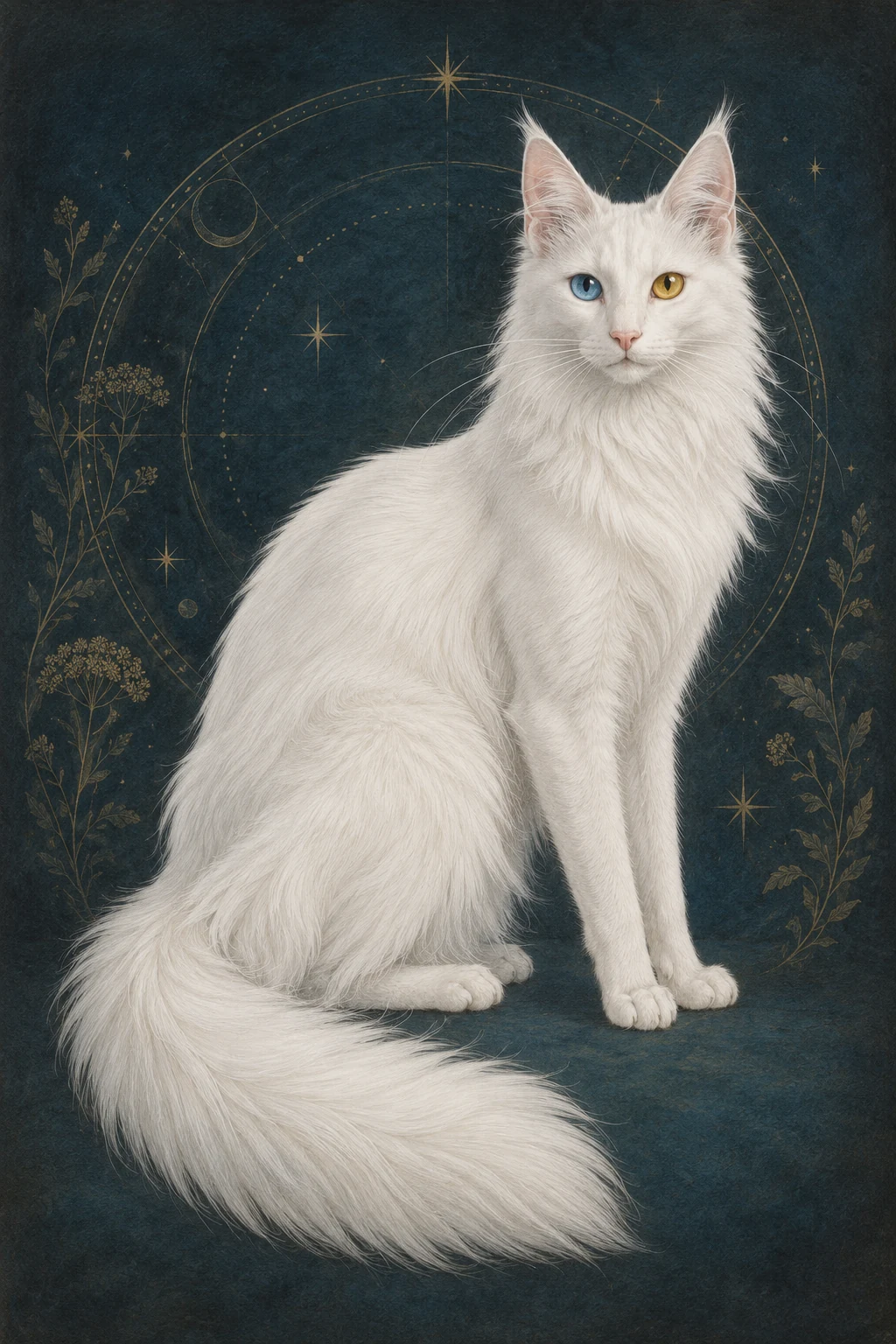
Pure white semi-long coat; left eye blue, right eye amber
✳ miaomap.comBreed atlas · 088
Feline breed atlas · 088 / TANG
A silky semi-long coat and a slender, muscular frame give this Turkish breed its graceful presence.
Move your pointer for a subtle sheen; flip the card to read its profile.
Pure white semi-long coat; left eye blue, right eye amber
The Turkish Angora is an old natural breed associated with Turkey’s Ankara region. Its European history became intertwined with Persian breeding, while preservation breeding in Turkey helped maintain the breed. White cats were especially emphasized in early programs, but today many colors and patterns occur. White and colored Angoras are coat varieties of the same breed, not separate ancestral breeds.
Look for a smooth wedge-shaped head, large upright ears set high, and large eyes with a slight upward slant. The body is long, finely boned and muscular, with hind legs longer than the front legs. Fine, silky fur becomes fuller at the ruff, hindquarters and long tapering tail. These features suggest breed type, but appearance cannot confirm pedigree.
Turkish Angoras are often described as curious, active and interested in household activities. Many enjoy climbing, interactive play and companionship. Some form a particularly close bond with one person, but affection, tolerance of solitude, and comfort with children or other animals depend on the individual, early experiences and home environment.
Comb the silky coat gently and regularly, adjusting frequency for seasonal shedding and age, and check underarms and hindquarters for tangles. Provide secure climbing spaces, daily interactive play, and routine dental and veterinary care. White cats can have congenital hearing loss, particularly those with blue eyes; discuss hearing assessment or BAER testing with a veterinarian rather than judging by eye color alone.
No. White is a familiar variety, but the breed also includes many solid colors, tabby patterns and combinations with white. Eyes may be blue, green, amber or odd-colored. Odd eyes are not required, and neither a white coat nor a particular eye color proves Turkish Angora pedigree.
A Turkish Angora typically has a slender body, long legs, large ears, a smooth wedge-shaped head and a silky coat with little undercoat. Persians generally have a more compact build, denser coat and shorter face. Their breeding histories are connected, but they are distinct breeds; pedigree requires reliable records, not appearance alone.
No. White cats can have congenital hearing loss, with blue-eyed individuals warranting particular attention, but coat and eye color cannot determine hearing ability. Ask a veterinarian about assessment and, when appropriate, BAER testing. For a cat with confirmed hearing impairment, a secure indoor environment and visual cues can support everyday care.
Text is based on the association sources below. AI-assisted original illustrations depict one coat variety, not every individual. Health and care information is general and does not replace veterinary assessment.
Based on the association sources listed on each profile. Illustrations do not establish pedigree. Independently produced by miaomap, without association endorsement. Numbers are catalog IDs, not rarity ranks.
miaomap · Updated
Use our illustration creator to choose fur colors, eyes and tails, then download your own cat.