miaomap.com · Breed atlas023 / CHRX
Chartreux
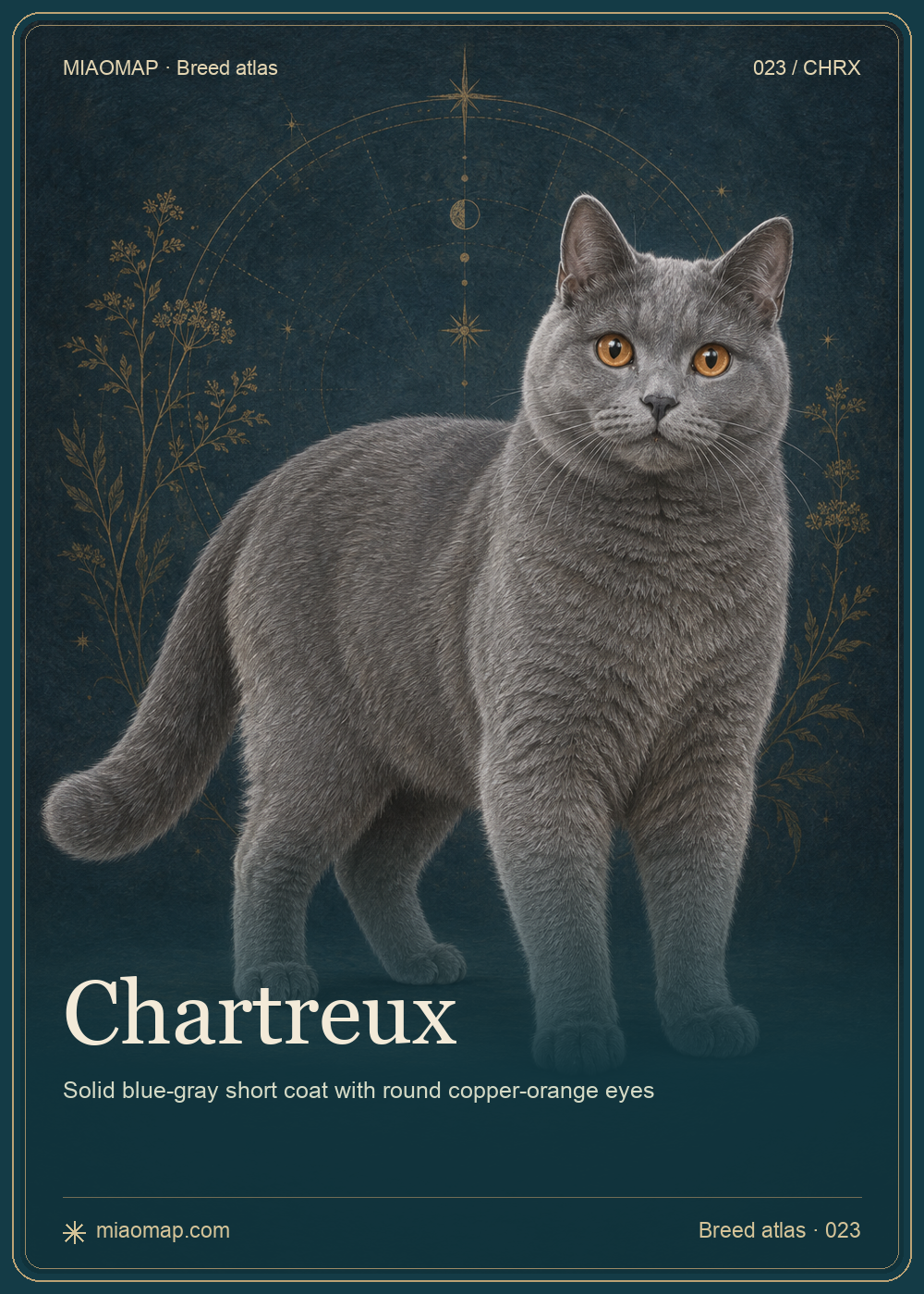
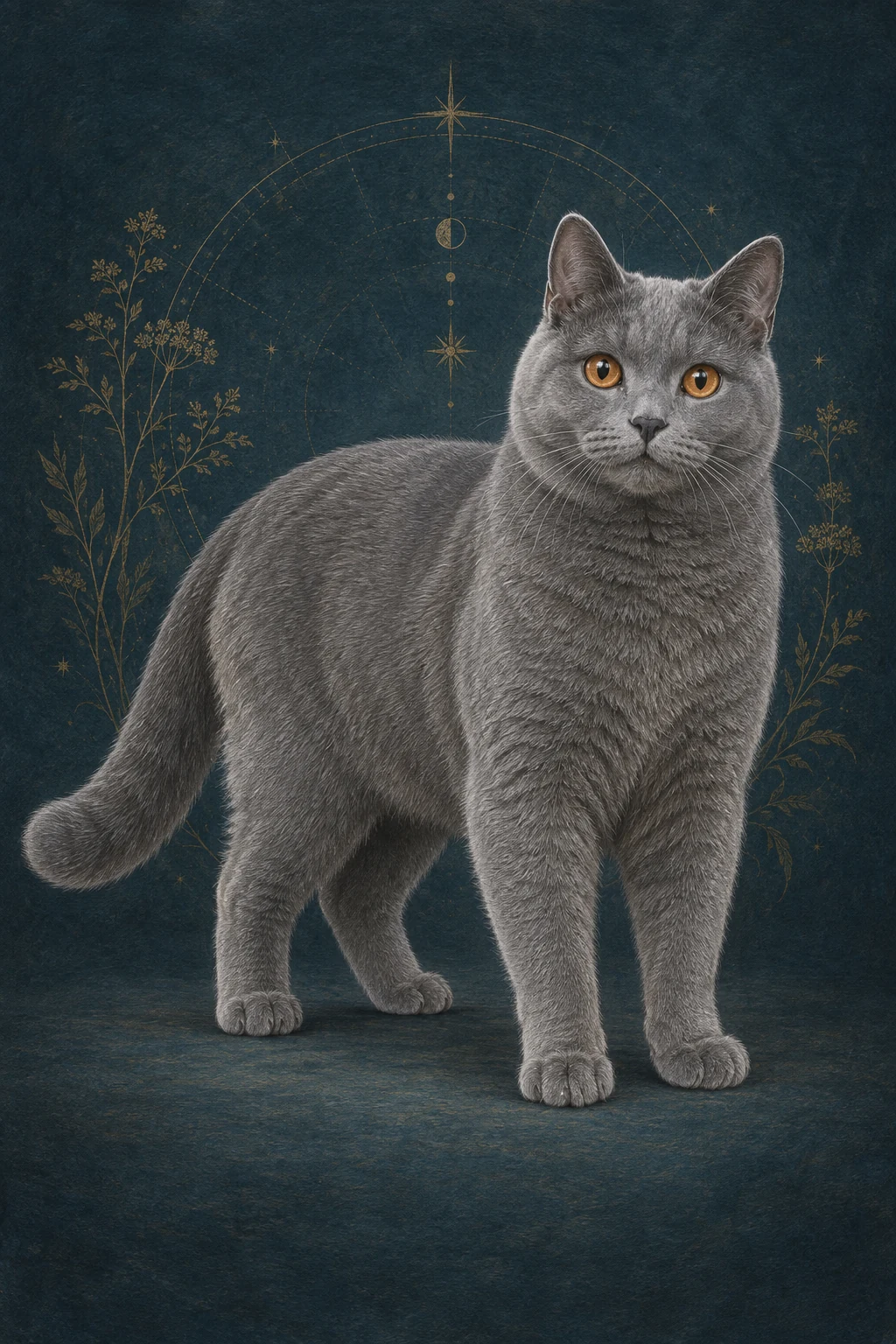
Solid blue-gray short coat with round copper-orange eyes
✳ miaomap.comBreed atlas · 023
Feline breed atlas · 023 / CHRX
A French blue-gray shorthair distinguished by a woolly coat, warm-colored round eyes, and a gently smiling expression.
Move your pointer for a subtle sheen; flip the card to read its profile.
Solid blue-gray short coat with round copper-orange eyes
French blue cats appear in literature from the sixteenth century, while selective breeding of Chartreux began in France in the 1920s from naturally occurring blue-cat colonies. Earlier origins and the breed name remain uncertain; monastery stories are legends. Chartreux and British Shorthairs are distinct breeds, despite historical crossing and a period of shared standards in Europe.
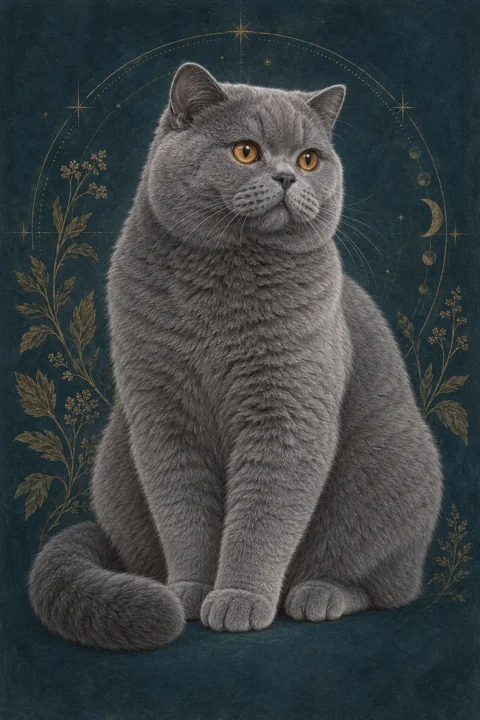
Look for broad shoulders, a deep chest, and substantial muscle, contrasted with relatively fine legs. The broad, rounded head narrows toward a small muzzle, with whisker pads suggesting a smile. Medium ears stand high and upright; rounded eyes range from gold to copper. Dense blue-gray short fur has a woolly undercoat, and the moderate-length tail tapers to an oval tip.
Chartreux are often described as gentle, attentive, and adaptable, with relatively quiet voices but an interest in interactive play and familiar routines. Some follow family members or retrieve toys. These are tendencies, not promises: social experience, age, and individual preferences influence how each cat seeks company.
Gently comb the dense undercoat with a wide-spaced comb, increasing grooming during spring and autumn shedding; routine baths are usually unnecessary. Use measured meals, interactive play, and body-condition checks to limit excess weight. Patellar luxation has been reported in some Chartreux, so discuss screening with a veterinarian. Changes in gait or jumping warrant professional assessment rather than assumptions about the cause.
No. They are distinct breeds, although European breeding history included crossing and a period of shared standards. Chartreux typically have a woolly coat and a narrower muzzle that suggests a smile. Blue-gray coloring or photographs alone cannot confirm breed identity or pedigree; reliable pedigree records are needed.
The breed's coat is solid blue-gray, with variation in shade, and adult eyes range from gold to copper rather than green. Kittens may show faint tabby markings that usually diminish as they grow. These features help explain the breed's appearance, but none independently proves a cat's pedigree.
Attention is worthwhile, but problems are not inevitable. Mature Chartreux can gain excess weight, and patellar luxation has been reported in some individuals. Maintain suitable body condition, offer daily play, and discuss knee examinations with a veterinarian. Limping, reduced jumping, or changed movement needs assessment, not a breed-based diagnosis.
Text is based on the association sources below. AI-assisted original illustrations depict one coat variety, not every individual. Health and care information is general and does not replace veterinary assessment.
Based on the association sources listed on each profile. Illustrations do not establish pedigree. Independently produced by miaomap, without association endorsement. Numbers are catalog IDs, not rarity ranks.
miaomap · Updated
Compare appearance and care needs to find a cat that fits your routine.
Breed comparisons ↗Use our illustration creator to choose fur colors, eyes and tails, then download your own cat.