Look beyond blue-gray fur: compare shape, coat and care
British Shorthairs and Chartreux can both have blue-gray short fur, but they are distinct breeds. The British Shorthair emphasizes a round head, full cheeks, strong legs and a plush coat; the Chartreux combines a narrowing muzzle, relatively fine legs and a woolly undercoat. These are useful appearance clues, not proof of ancestry. Blue is only one of many British Shorthair colors, whereas the Chartreux coat is solid blue-gray. This comparison connects those differences to grooming and interaction choices, while treating personality descriptions as tendencies rather than promises.
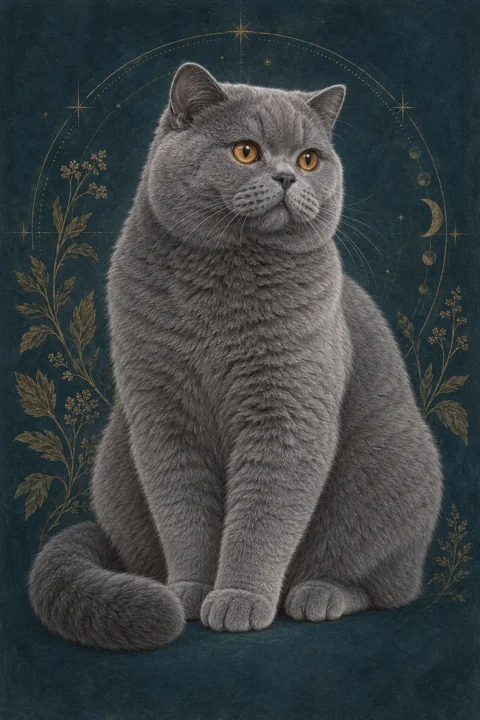
A round head and full cheeks are prominent features; consider them alongside the broad chest and strong legs rather than judging by fur color alone.
The broad, rounded head narrows toward a small muzzle, with whisker pads suggesting a smile; medium ears sit high and stand upright.
Eyes
Eyes are large and round, with color varying by coat color. Neither blue-gray fur nor a single eye color is enough to identify the breed.
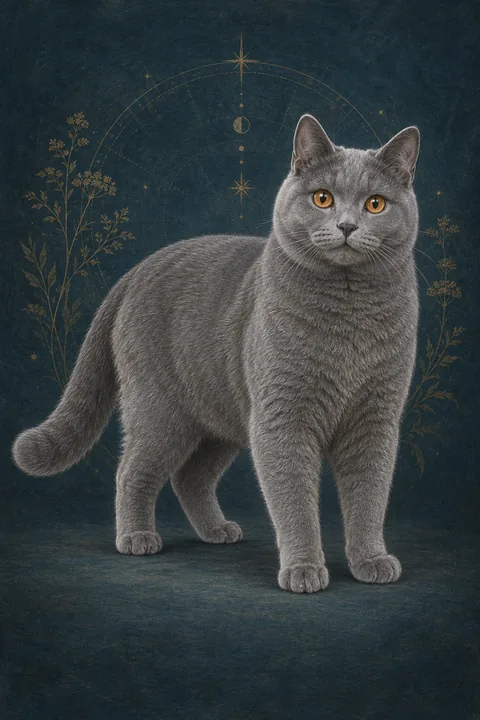
Rounded adult eyes range from gold to copper, not green. This helps explain the breed's appearance but cannot independently establish pedigree.
Coat texture
The short coat is exceptionally dense and plush. Blue is iconic, but other solid colors, bicolors and tabby patterns also occur.
The short coat is solid blue-gray with varying shades and a dense, woolly undercoat; texture offers a more specific comparison clue than color alone.
Body structure
A sturdy body, broad chest and strong legs characterize the build. Compare this overall shape together with the round head and full cheeks.
Broad shoulders, a deep chest and substantial muscle contrast with relatively fine legs. That body-to-leg proportion is a useful distinction when comparing appearance.
Interaction
Generally quiet and easygoing, with interest in family activities, but often reluctant to be carried. Let the individual cat approach and respect its contact preferences.
Often gentle, attentive and adaptable, with interest in interactive play and familiar routines. Some follow people or retrieve toys; these tendencies are not guarantees.
Grooming routine
Brush regularly and increase frequency as needed during shedding. Encourage play and monitor body condition; a short coat does not remove the need for grooming.
Gently use a wide-spaced comb on the undercoat, more often during spring and autumn shedding. Routine baths are usually unnecessary; use measured meals, play and body-condition checks.
Choosing for your everyday life
Choose around daily interaction and coat care, not a preferred shade of blue. If you enjoy a cat beside you without expecting frequent carrying, the British Shorthair's generally quiet, easygoing tendencies may suit that expectation; still respect the individual cat's wishes. Chartreux often enjoy interactive play and familiar routines, and some follow people or retrieve toys, but neither behavior is guaranteed. Plan regular brushing for the British Shorthair and gentle wide-spaced combing for the Chartreux, with extra attention during shedding. Both need play and body-condition monitoring. For Chartreux, also discuss knee examinations with a veterinarian, especially if movement changes.
Breed descriptions are generalizations; personality, size and health needs vary. Consult a veterinarian about health concerns.
Common questions before choosing a cat
Can blue-gray fur and a photograph distinguish these breeds?
Not reliably. A British Shorthair's round head, full cheeks and plush coat, or a Chartreux's narrowing muzzle, woolly undercoat and relatively fine legs, provide appearance clues rather than proof of breed or ancestry. Adult Chartreux eyes are gold to copper, while British Shorthair eye color varies with coat color. Consider these features together, but do not treat any as conclusive. Reliable pedigree records are needed to establish pedigree.
How does daily care differ, and what about Chartreux knees?
British Shorthairs need regular brushing, increased as needed during shedding. Chartreux benefit from gentle wide-spaced combing, especially in spring and autumn; routine baths are usually unnecessary. Both need play and body-condition monitoring. Patellar luxation has been reported in some Chartreux, so discuss knee examinations with a veterinarian without assuming every cat will develop it. Limping, reduced jumping or changed movement warrants professional assessment, not a breed-based diagnosis.
Is a Chartreux just a blue British Shorthair, and does a blue portrait show every coat option?
No. They are distinct breeds despite historical crossing and a period of shared standards in Europe. British Shorthairs have multiple colors and patterns, including other solids, bicolors and tabbies, so a blue portrait is only one example, not the full range. The Chartreux coat is solid blue-gray, with variation in shade. Their shared blue-gray appearance neither makes them the same breed nor establishes an individual cat's pedigree.
Sources and production notes
Text is based on the association sources below. AI-assisted original illustrations depict one coat variety, not every individual. Health and care information is general and does not replace veterinary assessment.
Based on the association sources listed on each profile. Illustrations do not establish pedigree. Independently produced by miaomap, without association endorsement. Numbers are catalog IDs, not rarity ranks.
miaomap · Updated
Meet a breed. Create your own cat.
Use our illustration creator to choose fur colors, eyes and tails, then download your own cat.