Beyond Blue-Gray Fur: How British Shorthairs and Russian Blues Differ
“Blue cat” describes a blue-gray appearance, not a breed identity on its own. A blue British Shorthair and a Russian Blue may look similar at first, but head shape and body proportions offer more useful clues. British Shorthairs emphasize round heads, full cheeks and broad chests; Russian Blues have moderate wedge-shaped heads and long, muscular bodies with fine bone structure. Green adult eyes and silver-tipped fur further characterize Russian Blues, while British Shorthair eye color varies with coat color. This comparison connects those clues to grooming, play and handling preferences, without treating appearance as pedigree proof or temperament as guaranteed.
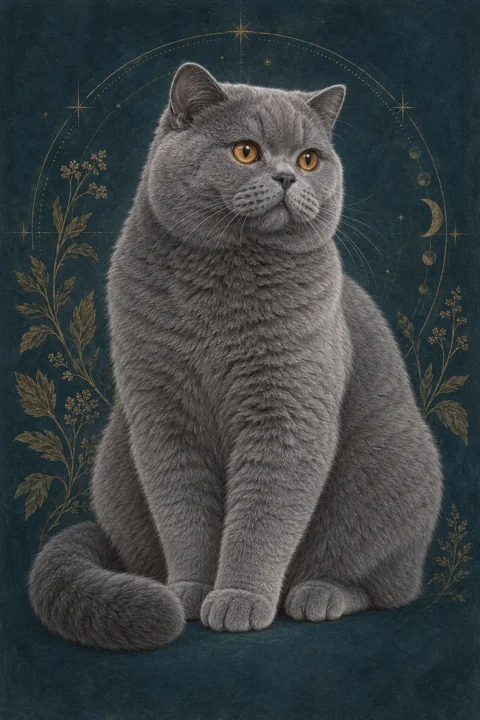
A round head and full cheeks create the rounded facial outline. Consider these alongside the broad chest and sturdy build, rather than blue-gray coloring alone.
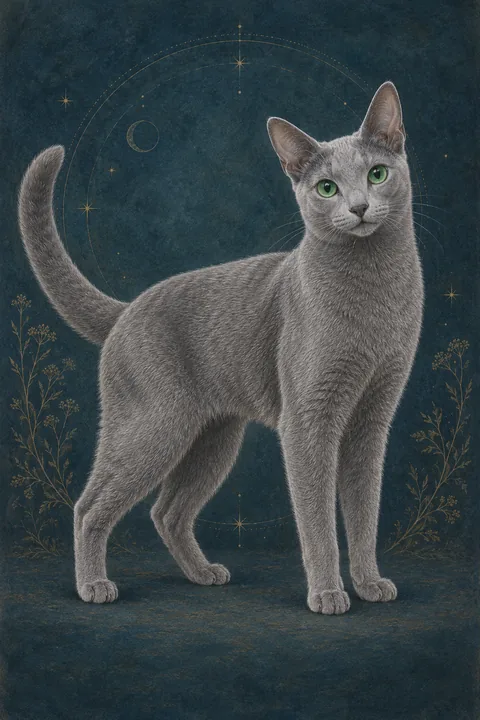
The head is a moderate wedge with a flat upper skull. A straight nose forms an angled profile; large ears are broad-based and set apart.
Eyes
Eyes are large and round, with color varying by coat color. No single eye color identifies every British Shorthair or establishes breed identity on its own.
Widely spaced, nearly round eyes are vivid green in adults. Kitten eyes can change from yellow toward green, so age matters when interpreting this feature.
Coat texture
The short coat is exceptionally dense and plush. Blue is iconic, but other solids, bicolors and tabbies occur; a blue example does not represent every color.
The dense, upright short double coat is evenly blue, with silver-tipped guard hairs. This combination offers identification clues, but cannot prove pedigree.
Body structure
A sturdy body, broad chest and strong legs define the build. Read the rounded head and full cheeks together with these body proportions.
A medium-sized, long muscular body has fine bone structure and long legs. Small rounded paws and a long tapering tail complete the elongated outline.
Interaction
Often quiet and easygoing, with interest in family activities, but not necessarily happy being carried. These are tendencies; respect each cat's handling preferences.
Often quiet and playful, sometimes cautious with unfamiliar people. Some seek close companionship once comfortable, but individual preferences and social experience shape behavior.
Grooming routine
Weekly brushing often helps manage loose fur; increase during shedding as needed. Encourage play, monitor body condition and respect preferences about being held.
Gently comb two or three times monthly, adjusting to shedding. Measure meals, offer daily interactive play, and provide quiet resting places and gradual introductions.
Choosing for your everyday life
If you are comparing round faces and sturdy proportions, the British Shorthair's full cheeks and broad chest match that description; for a longer outline and silver-tipped fur, look to the Russian Blue. Practical care differs too: British Shorthairs often start with weekly brushing, increased during shedding, while Russian Blues usually need gentle combing two or three times monthly, adjusted to loose hair. Do not equate British Shorthair affection with wanting to be carried. Russian Blues may need gradual introductions to unfamiliar people. Both need play, body-condition management and quiet retreats. Base your choice on the individual cat's behavior and handling preferences, not blue coloring alone.
Breed descriptions are generalizations; personality, size and health needs vary. Consult a veterinarian about health concerns.
Common questions before choosing a cat
How can I compare a blue British Shorthair and a Russian Blue in photos?
Compare head shape and proportions before color: British Shorthairs have round heads, full cheeks, broad chests and strong legs; Russian Blues have moderate wedge-shaped heads, widely set large ears and long, fine-boned bodies. Green adult eyes and silver-tipped fur add Russian Blue clues. However, other cats can look similar. Photos cannot confirm pedigree; registered identity requires reliable pedigree and registration documents.
How do grooming and interaction routines differ between these breeds?
British Shorthairs often benefit from weekly brushing, increased during shedding; Russian Blues usually have gentle combing two or three times monthly, adjusted to actual loose hair. Both need play and body-condition management. For interaction, British Shorthair companionship does not imply enjoying being carried, while Russian Blues may need gradual introductions to unfamiliar people. Let the individual cat's comfort determine the pace.
Does “blue cat” mean either breed, and are both exclusively blue?
No. “Blue cat” describes blue-gray appearance, not proof of either breed. British Shorthairs include other solids, bicolors and tabbies, so a blue portrait is only one example. CFA and TICA standards describe Russian Blues as blue shorthairs, but that does not make every blue cat a Russian Blue. Both can shed despite having short coats.
Sources and production notes
Text is based on the association sources below. AI-assisted original illustrations depict one coat variety, not every individual. Health and care information is general and does not replace veterinary assessment.
Based on the association sources listed on each profile. Illustrations do not establish pedigree. Independently produced by miaomap, without association endorsement. Numbers are catalog IDs, not rarity ranks.
miaomap · Updated
Meet a breed. Create your own cat.
Use our illustration creator to choose fur colors, eyes and tails, then download your own cat.