miaomap.com · Breed atlas069 / RBL
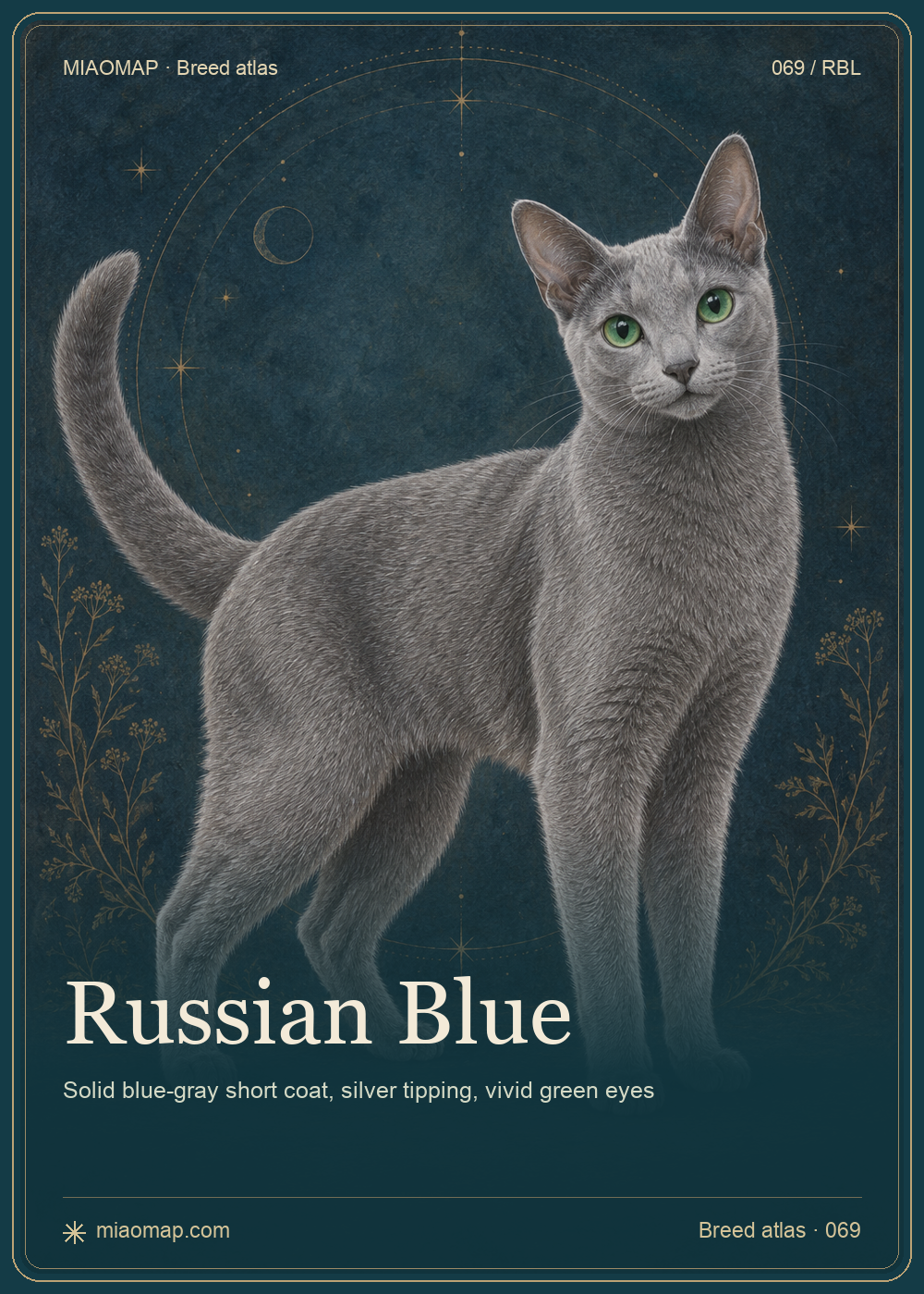
Russian Blue
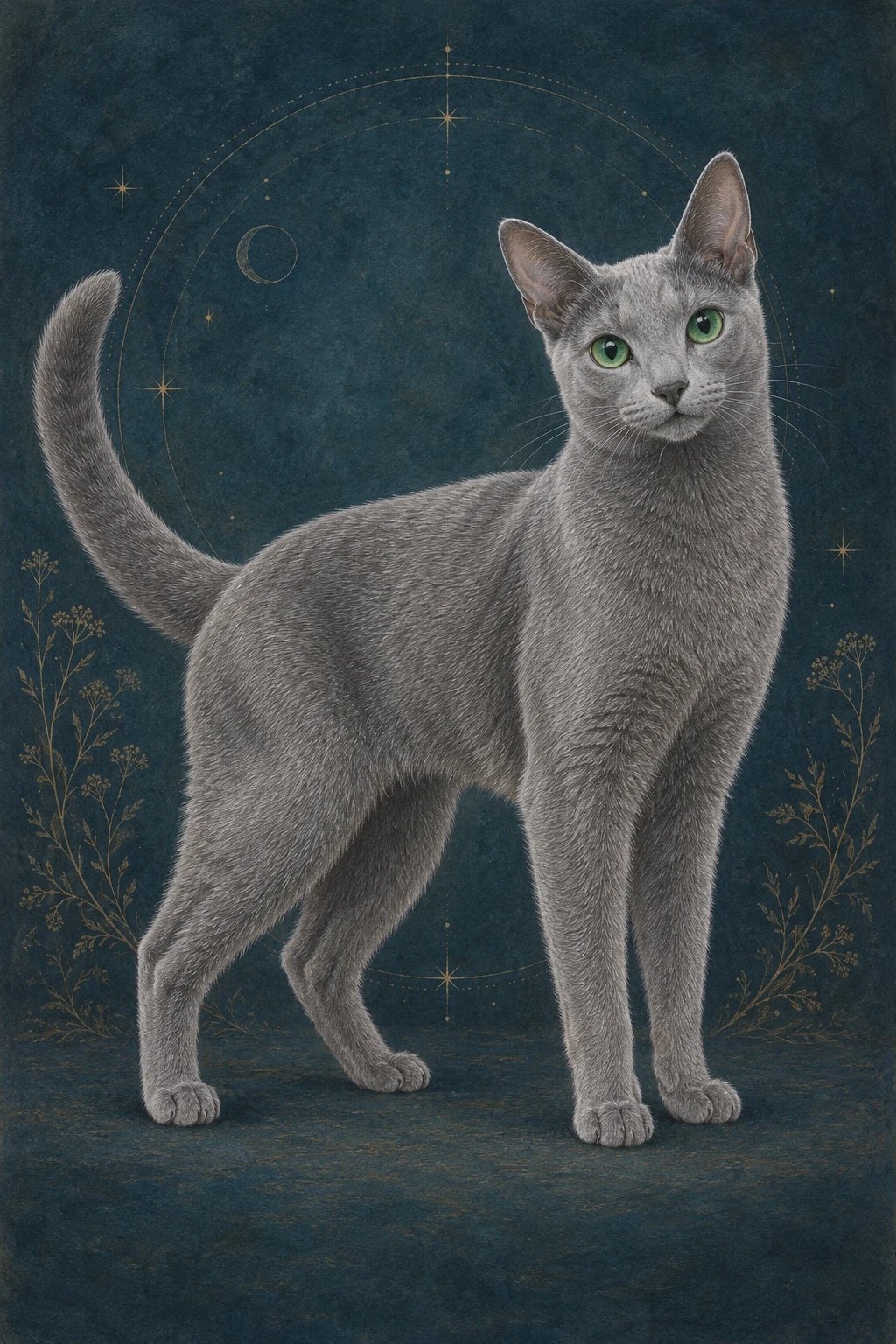
Solid blue-gray short coat, silver tipping, vivid green eyes
✳ miaomap.comBreed atlas · 069
Feline breed atlas · 069 / RBL
Silver-tipped fur and green eyes distinguish this graceful cat with a dense short coat.
Move your pointer for a subtle sheen; flip the card to read its profile.
Solid blue-gray short coat, silver tipping, vivid green eyes
The Russian Blue is believed to come from the Archangel Isles of northern Russia, although early written records are limited. Sailors are thought to have brought these cats to Britain, where they appeared at early shows as Archangel Cats. Scandinavian and later American breeders helped shape the modern breed. The supplied CFA and TICA standards describe a blue shorthair, not every blue-colored cat.
Look for a moderate wedge-shaped head, a flat upper skull, and a straight nose forming an angled profile with the forehead. Large, broad-based ears and nearly round green adult eyes sit well apart. The long, firm body has fine-boned legs, small rounded paws, and a tapering long tail. Dense, upright short double fur is evenly blue with silver-tipped guard hairs.
Russian Blues are often described as quiet and playful, sometimes cautious with unfamiliar people. Once comfortable, some seek close companionship and enjoy puzzle toys or interactive games. These are tendencies, not promises: social experience, household conditions, and individual preferences matter. Let each cat approach new people at its own pace.
Gently comb the dense double coat to remove loose hair; CFA suggests two or three sessions monthly, adjusted to actual shedding. Trim claws and check ears, eyes, and teeth regularly. Measure meals and offer daily interactive play to support a healthy weight. Provide quiet resting places and gradual introductions. Routine veterinary care remains important even without a confirmed breed-specific disease.
No. A dense silver-tipped short double coat, wedge-shaped head, widely set large ears, and long graceful body are useful clues, but other cats can share similar features. Appearance or photographs cannot establish pedigree. Confirming registered breed identity requires reliable pedigree and registration documents rather than coat color alone.
Yes. The supplied TICA standard describes kitten eyes changing from yellow toward green, while vivid green is the adult standard. The intensity and distribution of green develop with maturity, so one stage of kitten eye color should not determine breed identity. Eye development also cannot replace pedigree documentation.
Yes; a short coat still sheds. CFA suggests combing two or three times a month, with frequency adjusted to shedding and the cat's tolerance. Gentle combing removes loose hairs from the dense double coat. Frequent bathing is usually unnecessary; persistent greasiness, skin changes, or unusual hair loss merit veterinary advice.
Text is based on the association sources below. AI-assisted original illustrations depict one coat variety, not every individual. Health and care information is general and does not replace veterinary assessment.
Based on the association sources listed on each profile. Illustrations do not establish pedigree. Independently produced by miaomap, without association endorsement. Numbers are catalog IDs, not rarity ranks.
miaomap · Updated
Compare appearance and care needs to find a cat that fits your routine.
Breed comparisons ↗Use our illustration creator to choose fur colors, eyes and tails, then download your own cat.