Start with muzzle and head shape, then compare coat care
Maine Coons and Norwegian Forest Cats can both have substantial bodies, furnished ears and long, bushy tails, so those shared features are not the most useful starting point. Focus instead on the Maine Coon’s square muzzle and the Norwegian Forest Cat’s triangular head with a straight brow-to-nose profile. Their coats also call for different attention: the Maine Coon’s longer belly and hind-leg fur needs checking, while the Norwegian Forest Cat’s double coat needs regular combing and extra attention during spring shedding. These are typical features, not a way to establish pedigree from a photograph.
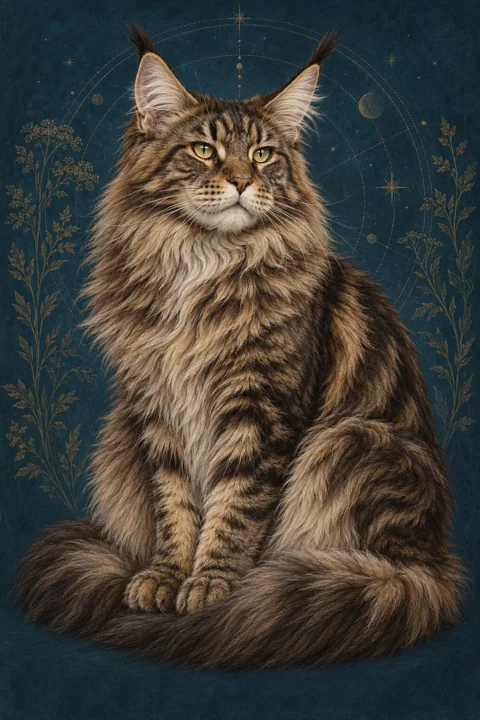
A square muzzle and large, furnished ears are typical clues. CFA describes a smooth, slightly concave profile, contrasting with the Norwegian Forest Cat’s straight profile.
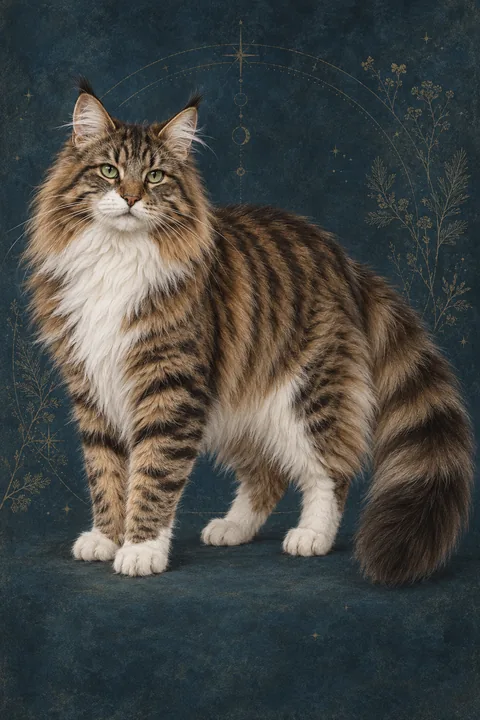
A balanced triangular head and straight brow-to-nose profile are key clues. Ears have broad bases and abundant furnishings; tip tufts are not essential.
Coat texture
The shaggy semi-long coat is shorter at the shoulders and longer underneath and on the hind legs, with a long plumed tail and often tufted paws.
Dense insulating underfur sits beneath longer, water-resistant guard hairs. Coat density changes seasonally, with a prominent neck ruff, hind-leg britches and bushy tail.
Body structure
Large and substantial, with a rectangular body and slow maturation. Full growth may take about three years; individual size varies.
A substantial, muscular frame has hind legs longer than the front legs and large tufted paws. Full physical development can take approximately five years.
Interaction
Generally described as friendly, intelligent and sociable, sometimes communicating with chirps or trills. Do not assume every individual is a quiet “gentle giant.”
Often described as intelligent, independent and friendly. They may prefer nearby company without constant holding; many enjoy elevated spaces and occasional energetic play.
Grooming routine
Comb two or three times weekly, checking the belly and hind legs for mats. Provide sturdy climbing furniture and litter boxes suited to the cat’s size.
Use a metal comb regularly, increasing attention during spring shedding. Check armpits, belly and britches; provide stable climbing structures and watch for weight changes hidden by fur.
Health and welfare
Ask breeders about heart and hip screening, and discuss individual concerns with a veterinarian. Body condition matters more than pursuing extreme weight.
Hypertrophic cardiomyopathy and glycogen storage disease have been reported. Request relevant screening records and discuss follow-up with a veterinarian; screening cannot guarantee lifelong health.
Choosing for your everyday life
Choose around the care you can sustain, not just the face you prefer. For a Maine Coon, plan on combing two or three times weekly, checking the belly and hind legs, and providing sturdy, size-appropriate climbing furniture and litter boxes. For a Norwegian Forest Cat, plan regular metal-comb sessions with additional checks during spring shedding, plus stable climbing structures. Maine Coons are generally described as sociable; Norwegian Forest Cats may enjoy nearby company without always wanting to be held. Meet the individual and ask for the relevant health screening records for each breed. Neither a temperament description nor screening guarantees a particular outcome.
Breed descriptions are generalizations; personality, size and health needs vary. Consult a veterinarian about health concerns.
Common questions before choosing a cat
Can face shape and side-view photos distinguish these breeds?
Photos help compare typical features, but cannot establish pedigree. Maine Coons have a square muzzle and a smooth, slightly concave profile under CFA standards. Norwegian Forest Cats have a balanced triangular head and straight brow-to-nose profile. Both may have ear furnishings and bushy tails, making these weaker clues. Consider the whole structure and use reliable registration records to confirm pedigree.
How should grooming routines differ in practice?
For a Maine Coon, schedule combing two or three times weekly, with particular checks of the longer belly and hind-leg fur. For a Norwegian Forest Cat, use a metal comb regularly and increase attention as the dense winter coat gives way to a lighter summer coat in spring. Check armpits, belly and britches. The records do not establish that either breed is always easier to groom; consider both routine time and seasonal extra care.
Does being a large, fluffy cat mean either breed is quiet and cuddly?
No. Maine Coons are generally described as friendly and sociable, but may communicate with chirps and trills rather than being uniformly quiet. Norwegian Forest Cats are often described as friendly and independent; enjoying family proximity does not mean always wanting to be held or sit on laps. Learn how the individual interacts, and provide suitable activity and resting spaces rather than expecting a particular temperament from size or fluffiness.
Sources and production notes
Text is based on the association sources below. AI-assisted original illustrations depict one coat variety, not every individual. Health and care information is general and does not replace veterinary assessment.
Based on the association sources listed on each profile. Illustrations do not establish pedigree. Independently produced by miaomap, without association endorsement. Numbers are catalog IDs, not rarity ranks.
miaomap · Updated
Meet a breed. Create your own cat.
Use our illustration creator to choose fur colors, eyes and tails, then download your own cat.