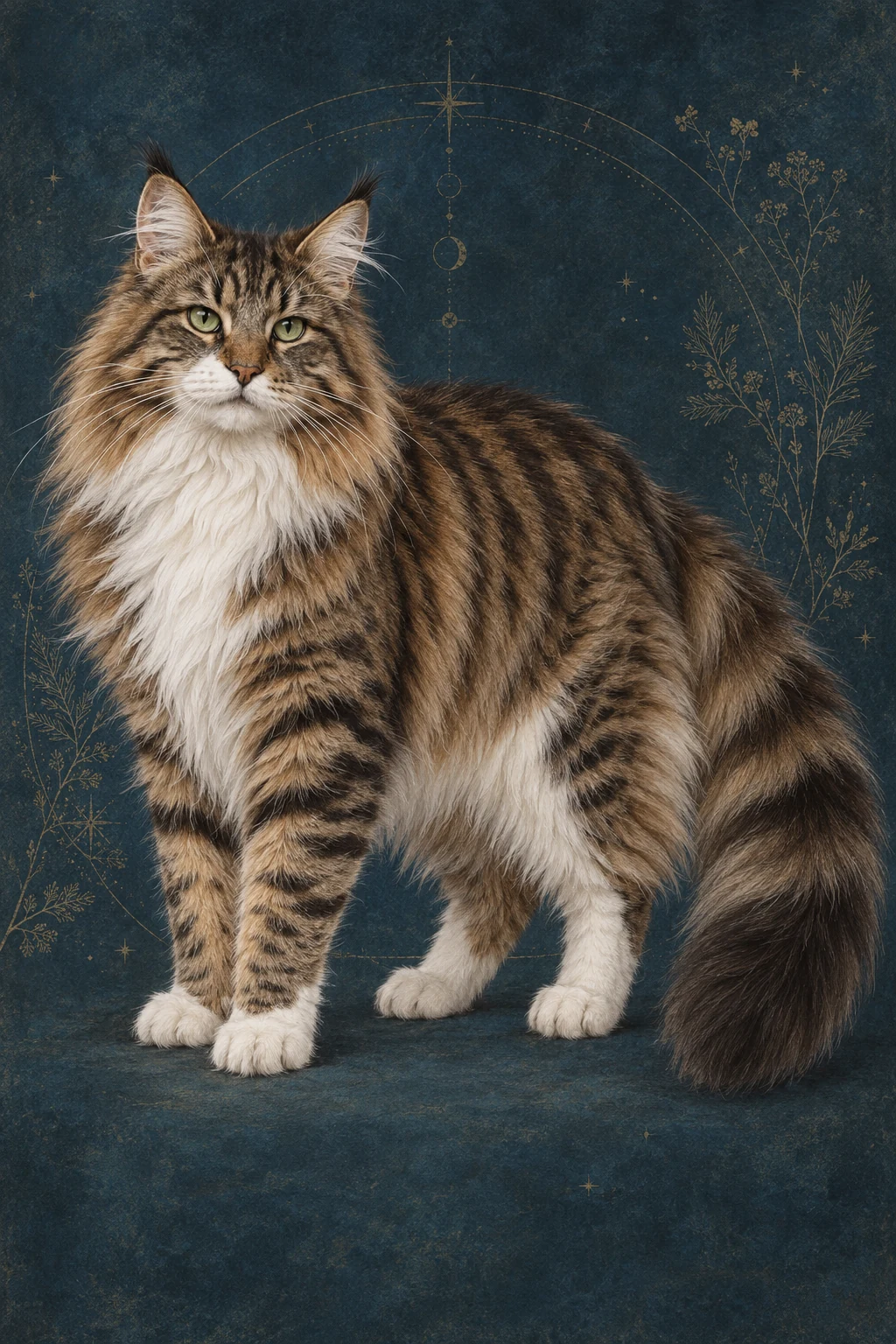
miaomap.com · Breed atlas061 / NFO
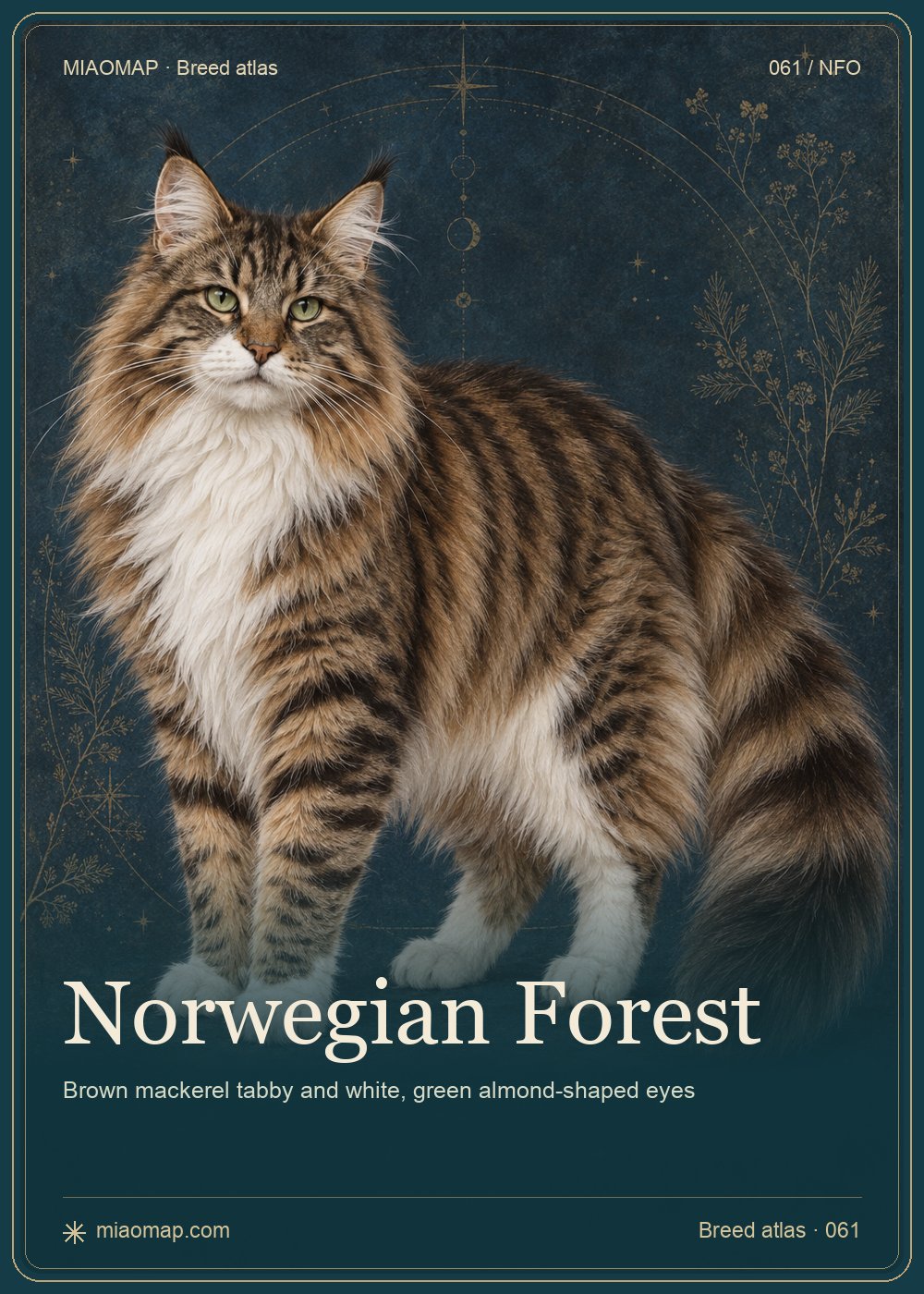
Norwegian Forest
Brown mackerel tabby and white, green almond-shaped eyes
✳ miaomap.comBreed atlas · 061
Feline breed atlas · 061 / NFO
A triangular face, sweeping bushy tail and dense double coat define this sturdy climber from Norway.
Move your pointer for a subtle sheen; flip the card to read its profile.
Real recording · Individual purr example · Short audio sample
Recording source: TSP-Talk · Freesound ↗ · CC0 · Open the recording
Brown mackerel tabby and white, green almond-shaped eyes
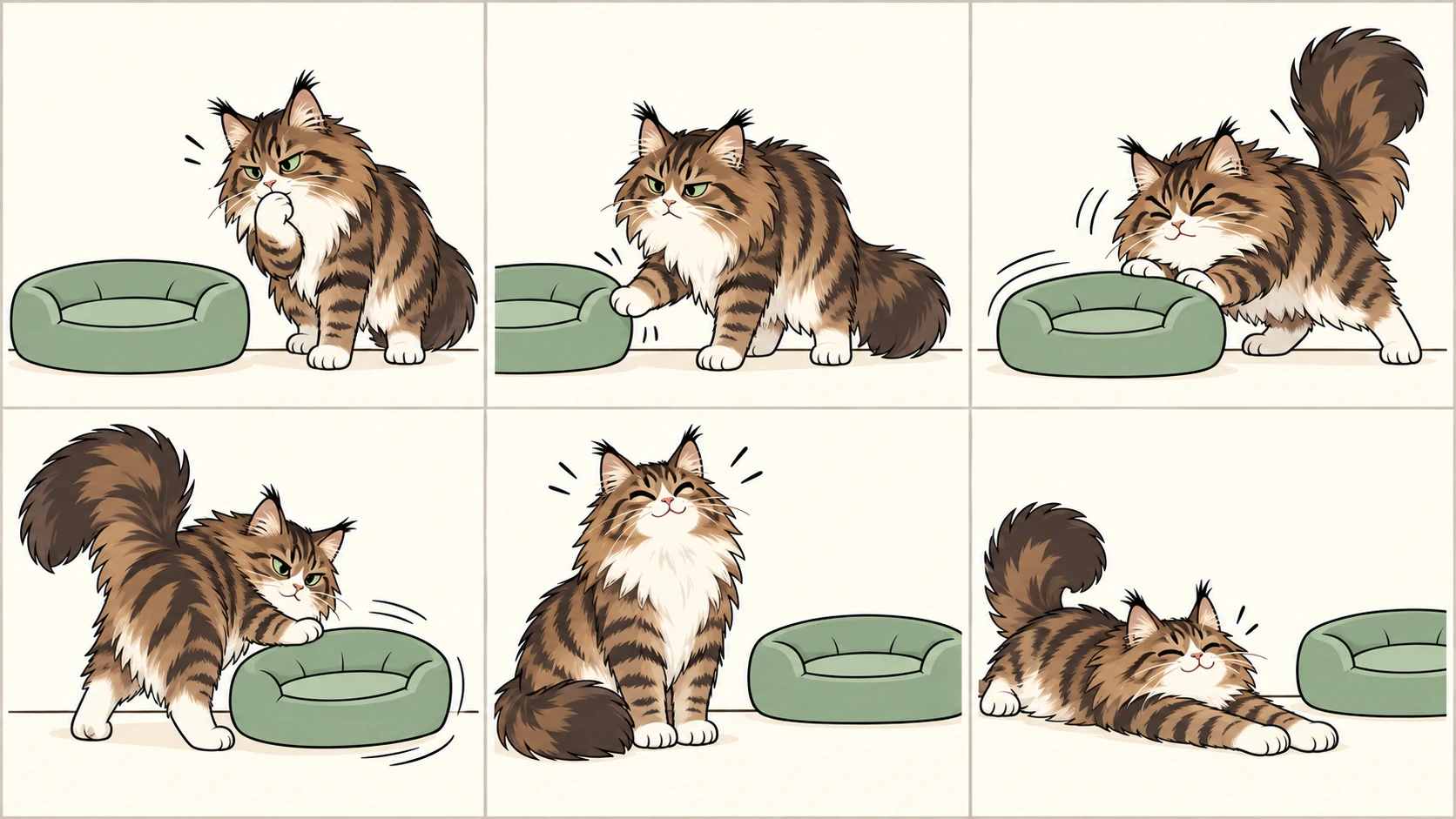
The same Norwegian Forest Cat painstakingly pushes a soft cushion into position, then chooses the bare floor it left behind. Six wordless beats tell a fictional joke, not a fixed breed behavior.
The Norwegian Forest Cat developed in Norway, although its earliest origins remain uncertain. Its sturdy body and insulating, water-resistant coat reflect adaptation to Scandinavian conditions and a history associated with farm rodent control. Norse legends are cultural stories, not proof of ancestry. Modern breeding preserves these features; tabby, solid and white-marked coats are variations within the same breed, not separate ancestral lines.
Look for a balanced triangular head, a straight brow-to-nose profile and large, slightly slanted almond eyes. Broad-based ears carry abundant furnishings; lynx-like tips may occur but are not essential. The substantial, muscular body has longer hind legs and large tufted paws. Long guard hairs cover dense underfur, with a prominent ruff, full hind-leg britches and a long, bushy tail.
Norwegian Forest Cats are often described as intelligent, independent and friendly. They may enjoy staying near their family without always wanting to be held or sit on laps. Many appreciate elevated spaces and occasional energetic play. Socialization, age and environment shape each individual, so introductions to children or other animals should be gradual.
Comb the double coat regularly with a metal comb, increasing attention during spring shedding and wherever tangles develop. Offer stable climbing structures, play and measured meals to support a suitable body condition. Hypertrophic cardiomyopathy and glycogen storage disease have been reported in the breed; request relevant screening records and discuss individual monitoring with a veterinarian. Do not let abundant fur conceal weight changes.
A Norwegian Forest Cat typically has a triangular head and a straight brow-to-nose profile, while a Maine Coon is associated with a squarer muzzle and a longer rectangular body. Both can be large, with furnished ears and bushy tails. Appearance overlaps, so photographs or physical traits cannot confirm a pedigree.
Yes, they shed, with extra grooming often needed as the dense winter coat gives way to a lighter summer coat. Their double coat combines insulating underfur with longer, water-resistant guard hairs. Density varies by season and individual. Comb regularly and check armpits, belly and britches rather than assuming the coat cannot mat.
Full physical development can take approximately five years; slow maturation is not a reason to keep increasing food. Hypertrophic cardiomyopathy and glycogen storage disease have been reported. Ask about family history, cardiac screening and relevant genetic test records, then discuss individual follow-up with a veterinarian. Screening does not guarantee lifelong freedom from disease.
Text is based on the association sources below. AI-assisted original illustrations depict one coat variety, not every individual. Health and care information is general and does not replace veterinary assessment.
Based on the association sources listed on each profile. Illustrations do not establish pedigree. Independently produced by miaomap, without association endorsement. Numbers are catalog IDs, not rarity ranks.
miaomap · Updated
MIAOMAP / NORWEGIAN FOREST / 061
Meet the Norwegian Forest Cat in six scenes and share eight moods.
This Norwegian Forest Cat keeps the profile’s brown mackerel tabby-and-white coat, green almond-shaped eyes, triangular head and long bushy tail. The comic presents breed facts; stickers and the silent comic are character fiction, not promises about any individual cat’s temperament.
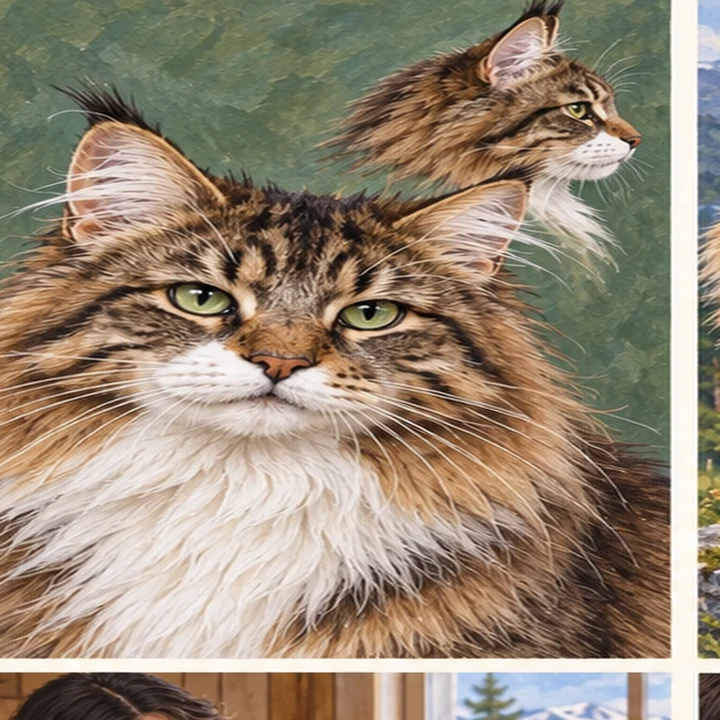
A balanced triangular head, straight brow-to-nose profile and furnished broad-based ears are identification clues; appearance alone cannot confirm pedigree.
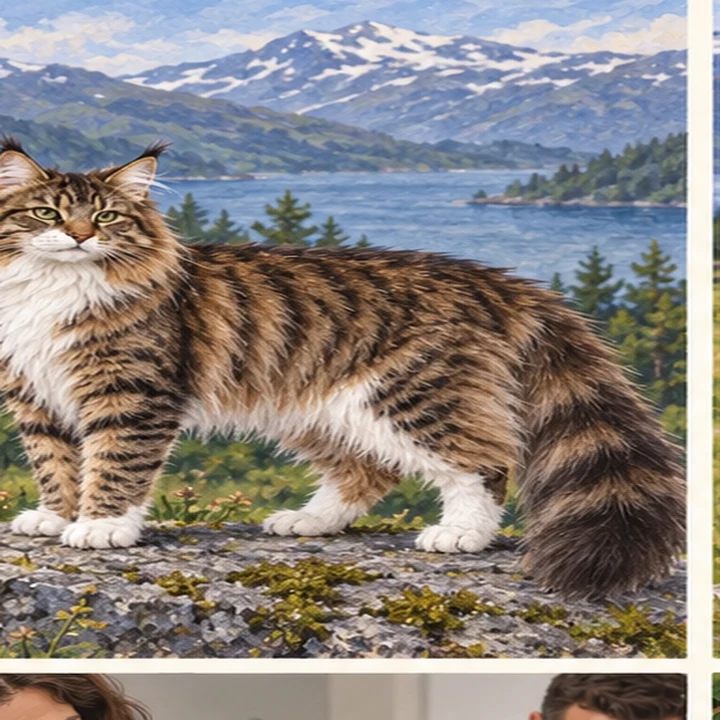
Longer hind legs, large tufted paws and slow maturation accompany a substantial frame. The semi-long double coat varies seasonally, with a ruff, hind-leg britches and long bushy tail; this character is brown mackerel tabby and white.
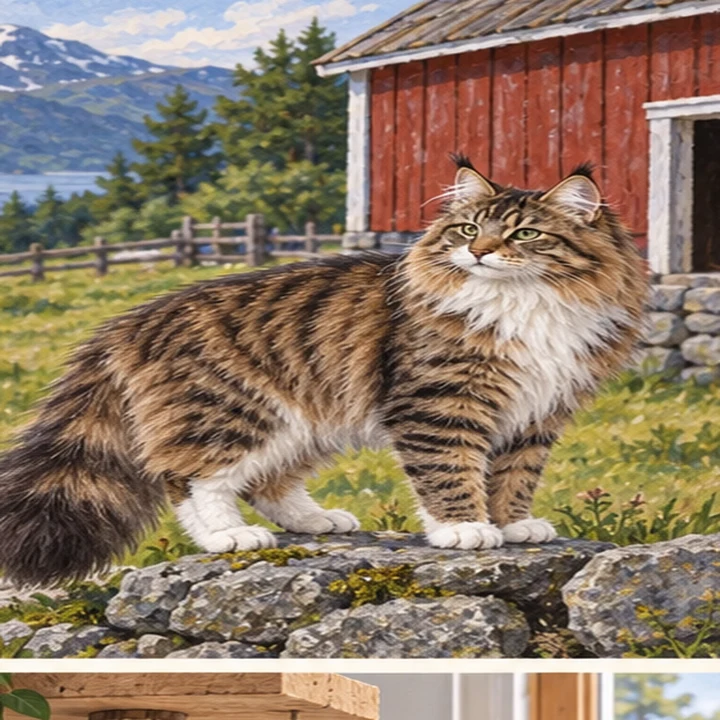
Earliest origins remain uncertain, with a history associated with farm rodent control. The sturdy body and insulating, water-resistant coat reflect Scandinavian adaptation; Norse legends are not ancestry evidence.
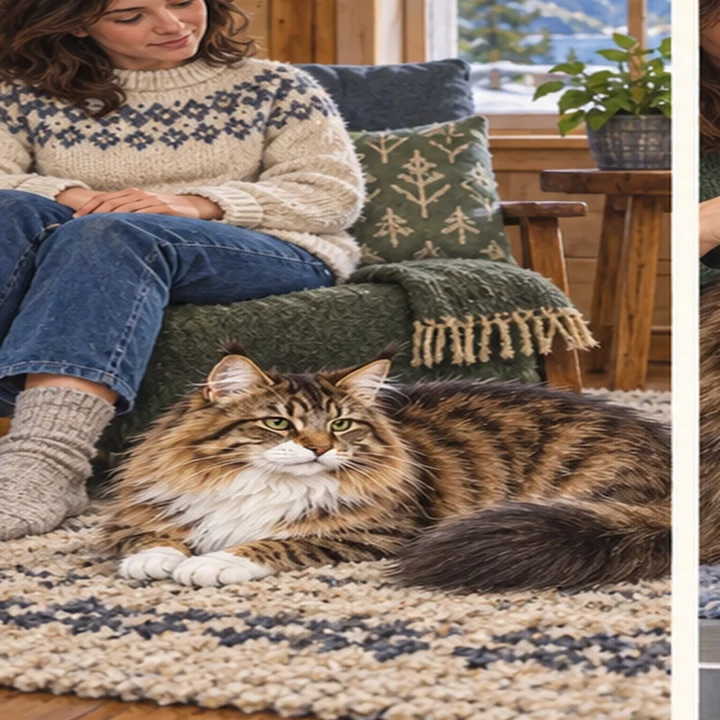
Some individuals enjoy staying near family without wanting to be held or sit on laps. Respect this cat’s choices, and introduce children or other animals gradually.
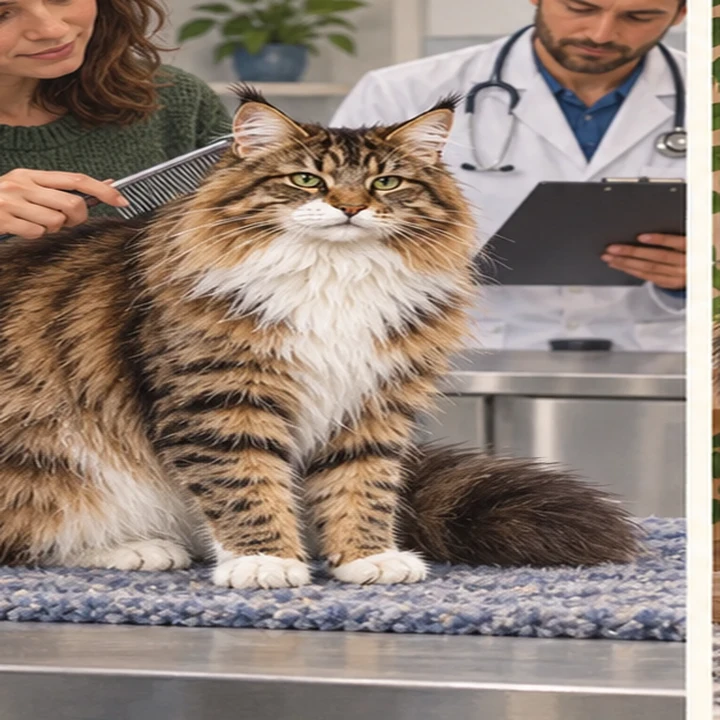
Use a metal comb regularly, with extra checks during spring shedding and at the armpits, belly and britches. Hypertrophic cardiomyopathy and glycogen storage disease have been reported; request screening records and discuss monitoring with a vet. Screening cannot guarantee lifelong health.
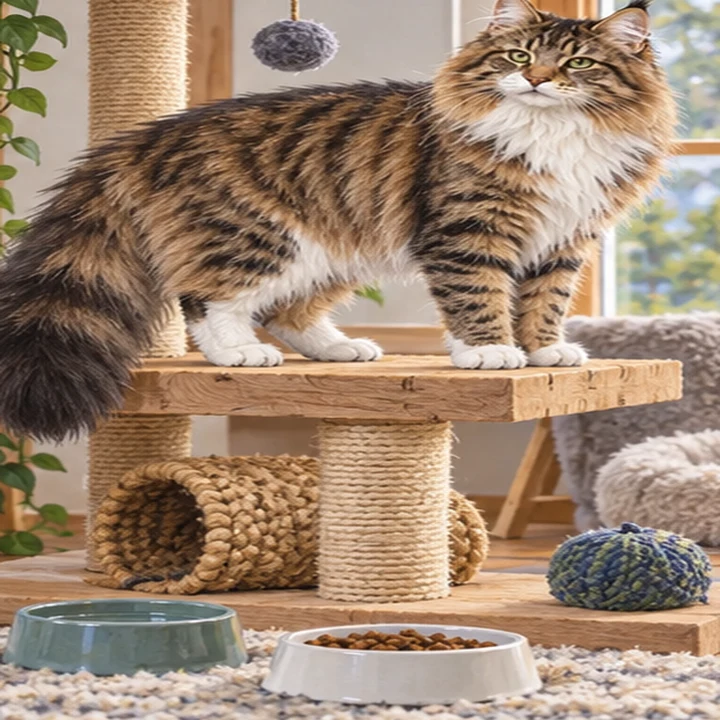
Provide stable climbing structures, play and measured meals. Watch for weight changes hidden by abundant fur; slow maturation is not a reason to keep increasing food.
Eight transparent PNG stickers, available individually or as a set. The textless edition works across languages and leaves room for your own captions.
Original miaomap artwork, illustrated with AI assistance. Free for personal chats, avatars and non-commercial sharing; credit miaomap.com when reposting. Commercial use, resale or redistribution of the asset pack requires permission. Breed content uses only the supplied verified profile; no association endorsement.
Compare appearance and care needs to find a cat that fits your routine.
Compare the Maine Coon’s square muzzle with the Norwegian Forest Cat’s triangular head and straight profile, plus grooming routines and screening questions.
Compare triangular Norwegian Forest and rounded Siberian features, coat care and screening questions, plus why these records do not support hypoallergenic claims.
Pure AI fantasy. Please don’t take it seriously.
Use our illustration creator to choose fur colors, eyes and tails, then download your own cat.