miaomap.com · Breed atlas031 / DON
Donskoy
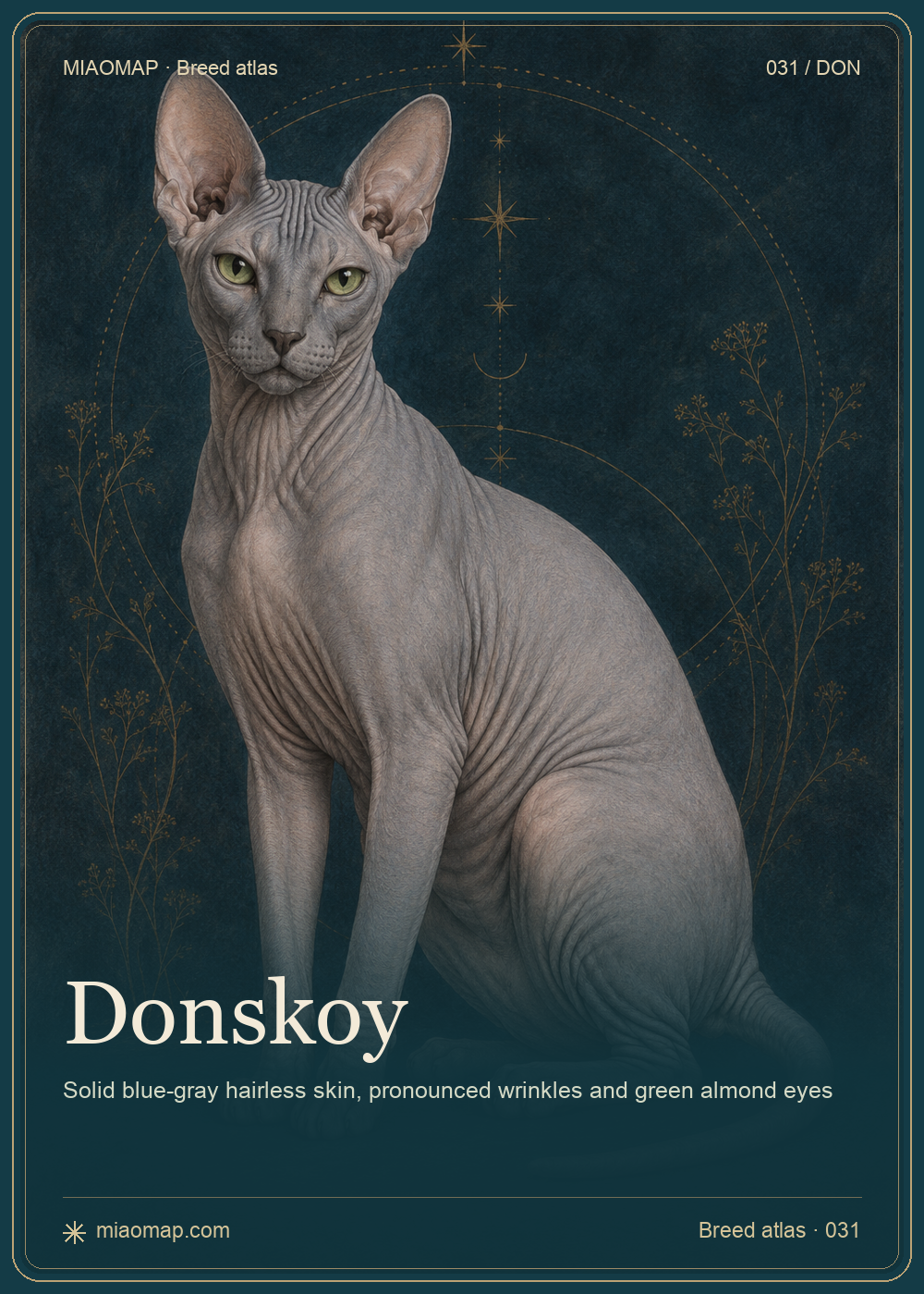
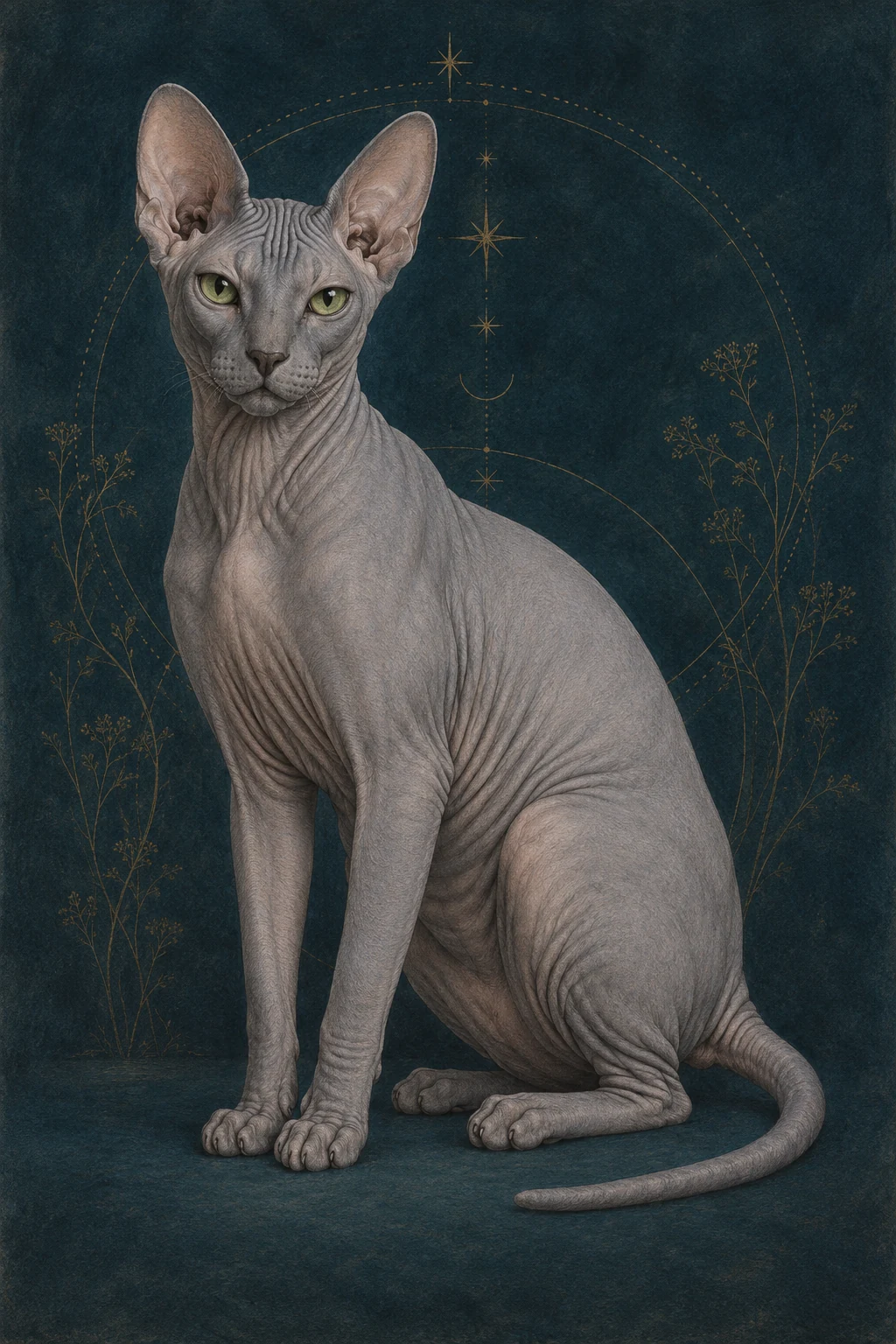
Solid blue-gray hairless skin, pronounced wrinkles and green almond eyes
✳ miaomap.comBreed atlas · 031
Feline breed atlas · 031 / DON
A Russian breed distinguished by wrinkled skin, large ears and several distinct coat types.
Move your pointer for a subtle sheen; flip the card to read its profile.
Solid blue-gray hairless skin, pronounced wrinkles and green almond eyes
The Donskoy traces its history to Varvara, a rescued cat found in Rostov-on-Don, Russia, in 1987. She progressively lost her coat, and similar changes in some offspring became the basis for breed development. Also called the Don Sphynx, the breed has a hair-loss trait described by TICA as dominant. Its four coat types are variations within one breed, not separate ancestries.
Look for a wedge-shaped head, defined cheekbones, large upright ears and almond-shaped eyes. The medium-sized body is muscular, with a broad chest and gently rounded abdomen. Hind legs are slightly longer than forelegs; toes are elongated, and the medium-long tail tapers. Pronounced skin folds accompany coats ranging from completely bare to brush-haired. Appearance alone cannot establish pedigree.
Donskoys are often described as active, curious and companionship-oriented, with many enjoying involvement in household activities. Interactive play and opportunities to explore can support their activity needs. Affection, tolerance of children and acceptance of other pets vary individually; use gradual introductions, respect boundaries and provide quiet places to retreat.
Hairless Donskoys need gentle removal of skin oils and bathing tailored to the individual with veterinary guidance; excessive washing may irritate skin. Keep bedding clean and inspect ears and skin folds regularly. Provide warm, draft-free resting places and avoid strong sun; ask a veterinarian before using sunscreen. Persistent redness, sores or discomfort warrant veterinary attention, alongside routine dental, nail and preventive care.
Rubber Bald cats are born bare and remain so. Flocked cats have a fine, suede-like covering that may disappear. Velour cats gradually lose coat, sometimes retaining hair in limited areas. Brush cats retain more hair, sometimes with bare patches. These are coat types within one breed, with individual variation.
No. Although also called the Don Sphynx, the Donskoy is distinct from the breed commonly called Sphynx, with documented origins in Rostov-on-Don, Russia. TICA describes the Donskoy hair-loss trait as dominant. A hairless appearance alone does not establish breed identity; reliable pedigree records are needed to confirm ancestry.
Yes. Some Donskoys may develop fine seasonal hair, but this usually offers insufficient protection against severe cold and does not replace skin protection. Provide warm indoor resting areas and avoid prolonged cold or strong sunlight. If sunscreen is needed, ask a veterinarian rather than applying a human product without advice.
Text is based on the association sources below. AI-assisted original illustrations depict one coat variety, not every individual. Health and care information is general and does not replace veterinary assessment.
Based on the association sources listed on each profile. Illustrations do not establish pedigree. Independently produced by miaomap, without association endorsement. Numbers are catalog IDs, not rarity ranks.
miaomap · Updated
Use our illustration creator to choose fur colors, eyes and tails, then download your own cat.