miaomap.com · Breed atlas034 / EUR
European Shorthair
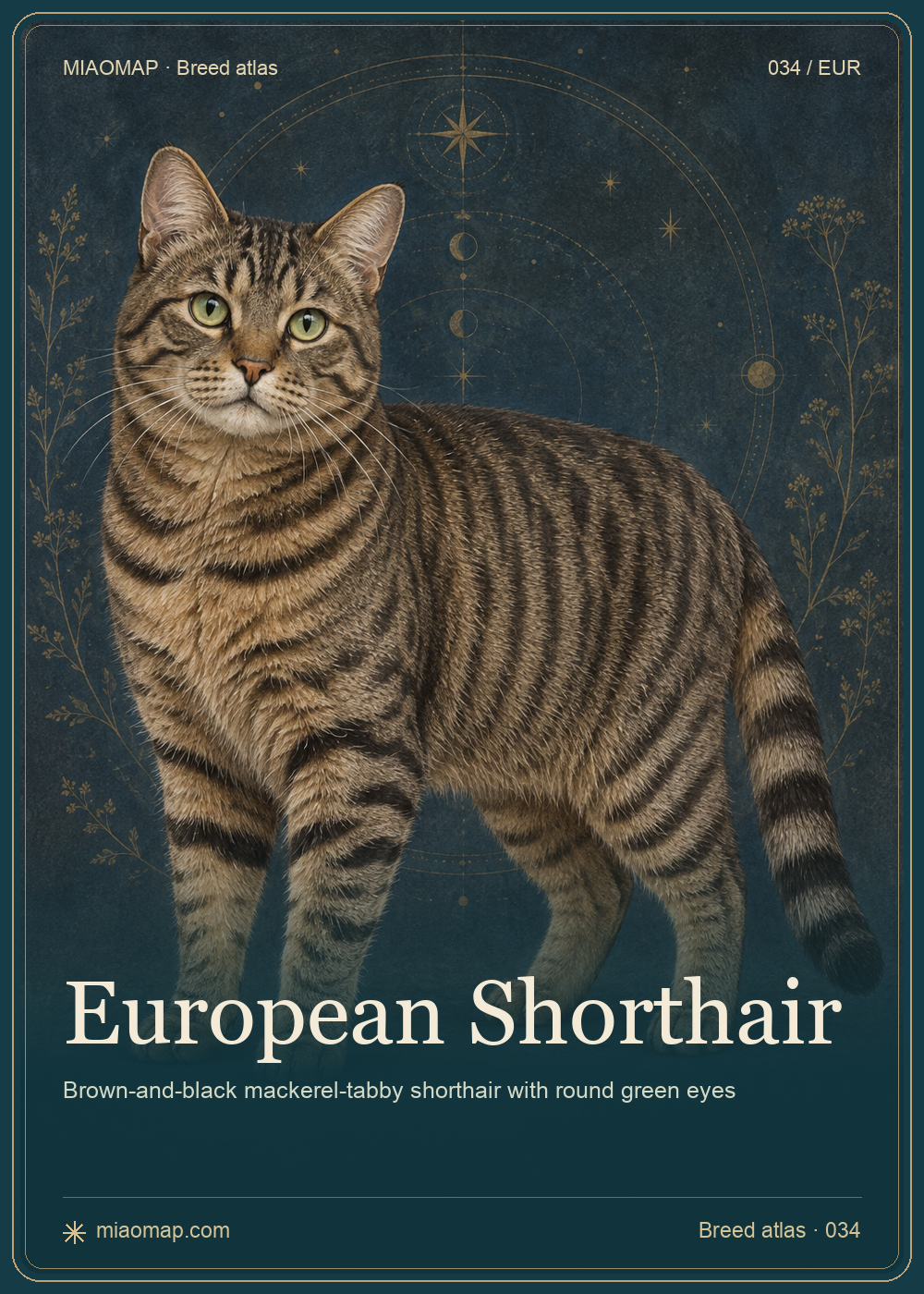
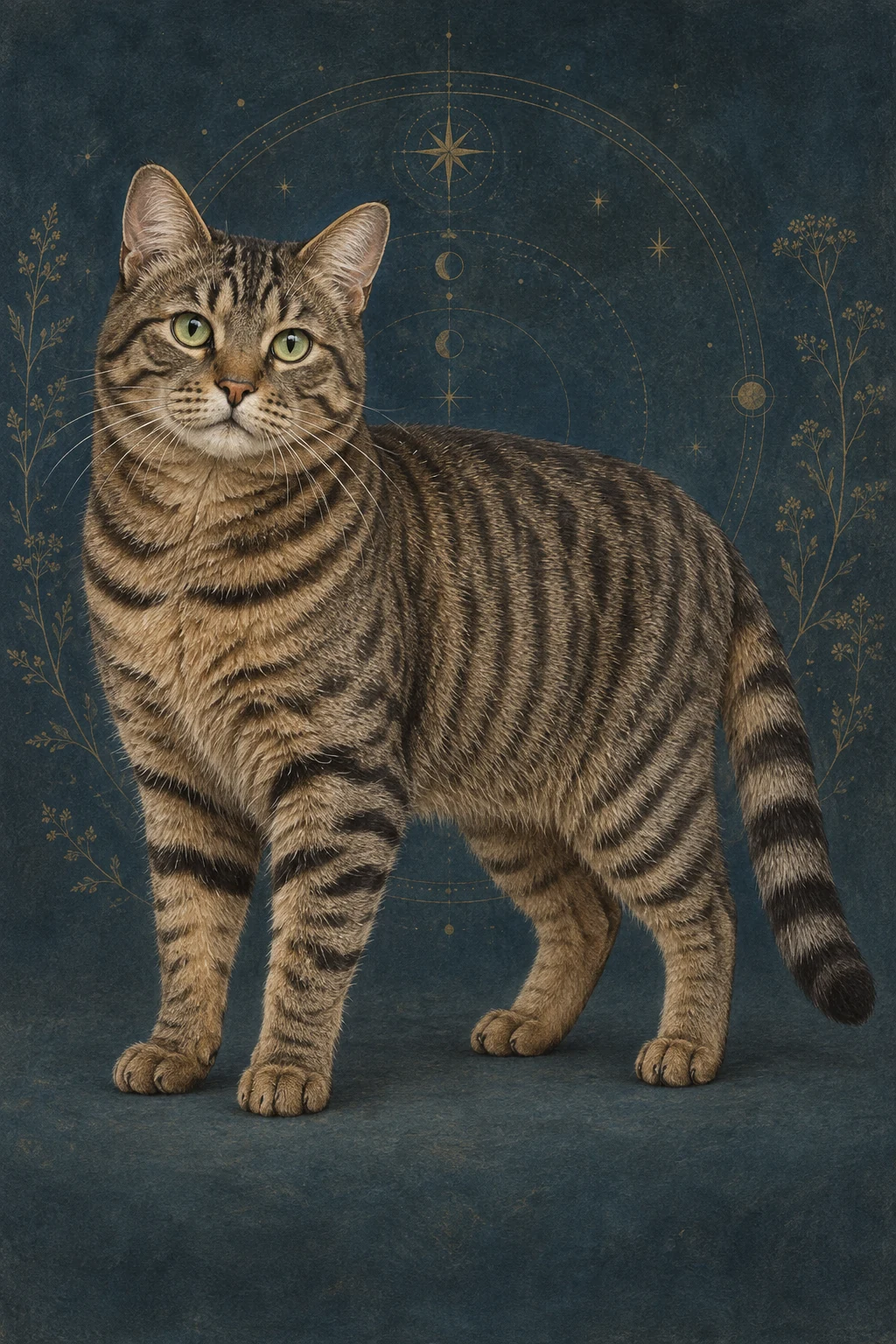
Brown-and-black mackerel-tabby shorthair with round green eyes
✳ miaomap.comBreed atlas · 034
Feline breed atlas · 034 / EUR
The European Shorthair preserves the balanced outline of European domestic cats with a robust, supple body and glossy short coat.
Move your pointer for a subtle sheen; flip the card to read its profile.
Brown-and-black mackerel-tabby shorthair with round green eyes
The European Shorthair is based on the naturally developed domestic-cat type of Europe. FIFe's standard emphasizes preserving its robust, supple anatomy rather than reshaping it through crosses with other breeds. Solid, tabby, smoke and white-patterned coats are varieties within the same breed, not separate lineages. Similar-looking domestic shorthairs cannot be identified as pedigreed Europeans by appearance alone.
A medium-to-large, muscular body has a developed chest without becoming overly cobby or slender. The face looks rounded but is slightly longer than wide, with a straight nose and firm chin. Medium, widely spaced upright ears have gently rounded tips. Open, rounded eyes sit slightly obliquely. Sturdy medium-length legs, round paws, a tapering medium-length tail and dense, springy short fur complete the outline.
The European Shorthair's physical standard cannot predict every cat's personality. Individuals may enjoy chasing games, exploring or quiet company, while social experience, age and surroundings influence behavior. Let the cat choose the pace of interaction, provide hiding places and regular play, and avoid assuming every individual enjoys being held or readily accepts other pets.
Brush the short coat gently each week, increasing frequency when shedding becomes noticeable. Offer daily interactive play, scratching surfaces and safe climbing opportunities to support muscle and a suitable weight; adjust food portions to the individual. Maintain dental and nail care and routine veterinary checks. A robust appearance does not guarantee freedom from illness, so persistent changes in appetite, activity or grooming deserve veterinary advice.
Not exactly. The breed draws on Europe's natural domestic-cat type but has a defined conformation standard and pedigree records. An ordinary domestic shorthair may look very similar in build or coloring. Appearance, European birthplace or tabby markings alone cannot establish breed identity; reliable documentation is needed to confirm pedigree.
The European standard calls for a robust but non-cobby body, a face slightly longer than wide, medium-length legs and dense, springy, glossy fur. British Shorthairs generally present a more compact, rounded outline. These are differences in breed type, not a reliable standalone identification test; a particular cat's pedigree still requires documentation.
No. FIFe permits several coat varieties, including solid, tortoiseshell, smoke, tabby, silver tabby and specified white-patterned varieties. Permitted eye colors depend on the coat variety, including green, amber, and blue or odd eyes in certain white or high-white varieties. This page's brown-and-black mackerel tabby with green eyes is only one representative appearance.
Text is based on the association sources below. AI-assisted original illustrations depict one coat variety, not every individual. Health and care information is general and does not replace veterinary assessment.
Based on the association sources listed on each profile. Illustrations do not establish pedigree. Independently produced by miaomap, without association endorsement. Numbers are catalog IDs, not rarity ranks.
miaomap · Updated
Use our illustration creator to choose fur colors, eyes and tails, then download your own cat.