miaomap.com · Breed atlas039 / HLS
Highlander Shorthair
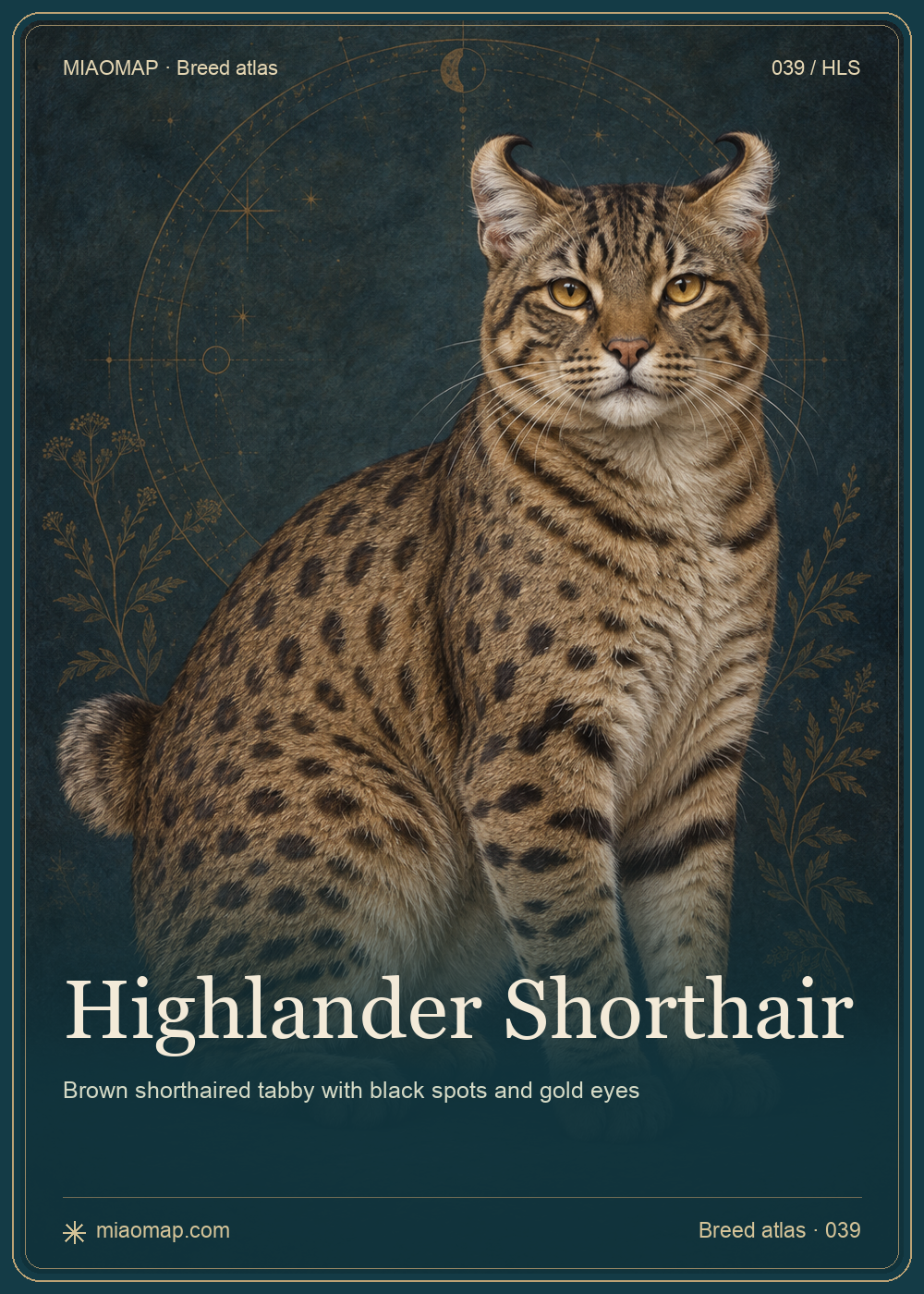
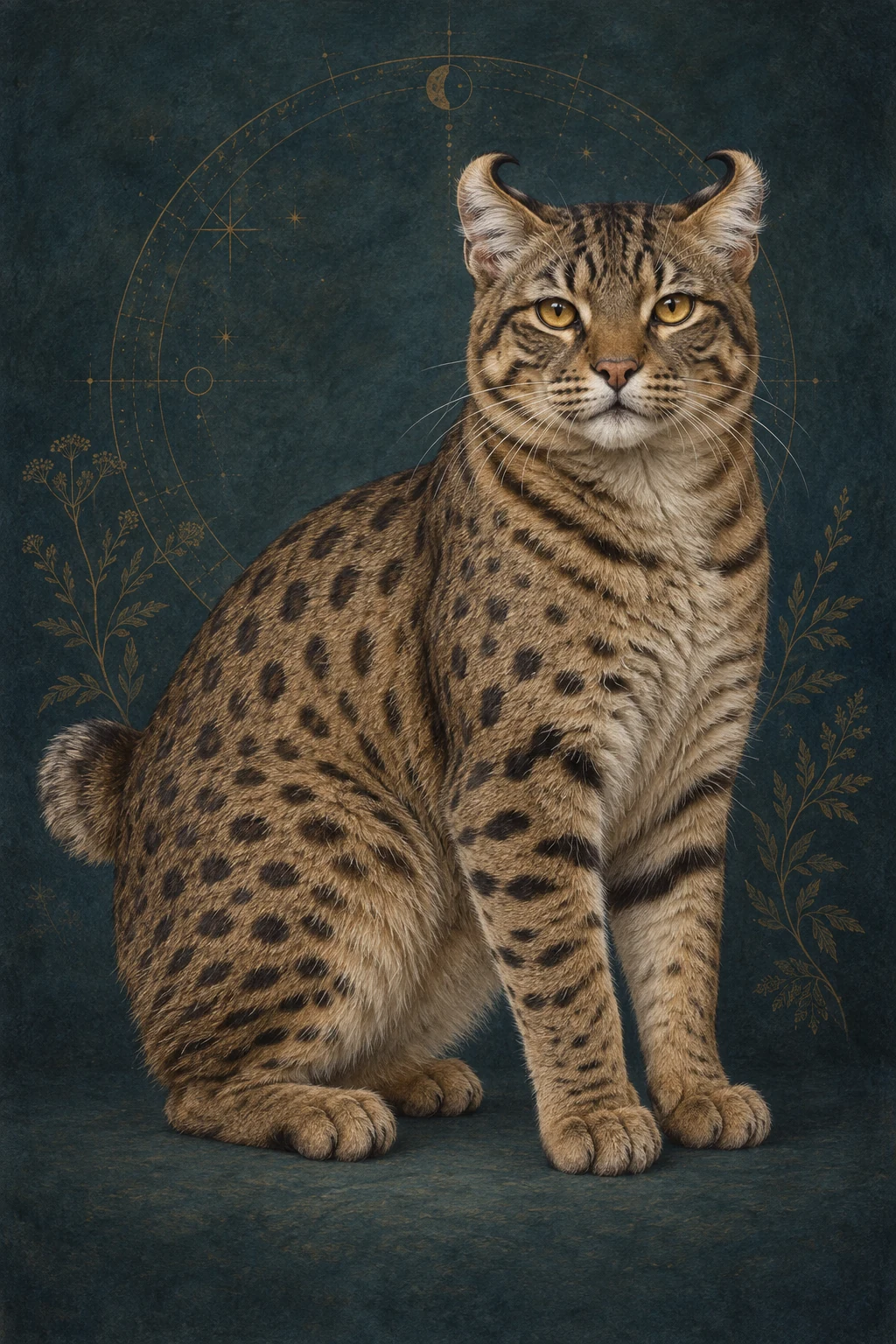
Brown shorthaired tabby with black spots and gold eyes
✳ miaomap.comBreed atlas · 039
Feline breed atlas · 039 / HLS
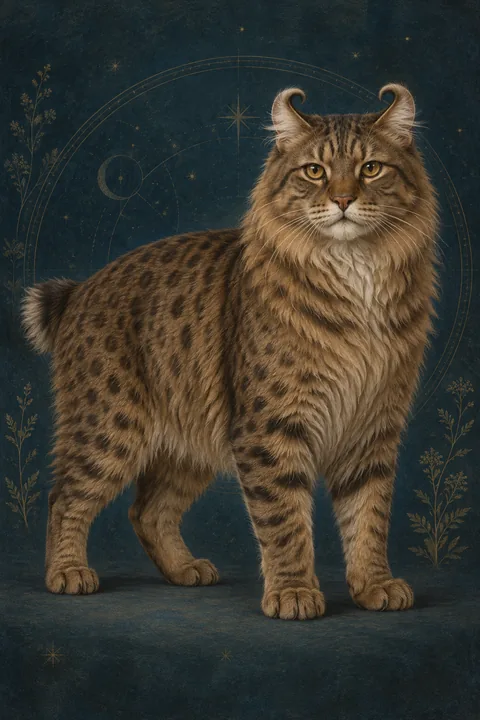
Backward-curled ear tips, a naturally short tail, and a substantial build give the Highlander Shorthair a distinctive outline.
Move your pointer for a subtle sheen; flip the card to read its profile.
Brown shorthaired tabby with black spots and gold eyes
The Highlander Shorthair belongs to the American-developed Highlander family, sharing its origins with the longhaired variety. Development began in 2004 to create a domestic cat with a powerful big-cat appearance, and the Highlander name was adopted in 2005. Foundation cats were selected from the domestic gene pool rather than an existing recognized breed; coat length does not indicate separate ancestry.
The pictured shorthair has a brown coat with black spots and gold eyes, retaining its muscular build, normal-length legs, and naturally short tail. Highlander features include a long, sloping forehead, broad nose, boxy muzzle, and strong chin. Wide-based ears stand upright, with a loose backward curl in their upper third; slightly flattened oval eyes are set obliquely.
Highlanders are described as playful, energetic cats that enjoy human company, sometimes greeting people at the door or showing off to visitors. They tend to be relatively quiet vocally while enthusiastic about chasing games and physical activity. Offer regular play, exploration, and quiet rest, respecting voluntary contact; individual temperament, early experiences, and socialization still shape each cat’s behavior.
Brush the short coat gently each week, increasing frequency during heavier shedding. Check curled ears for debris or irritation without straightening them. Provide sturdy climbing furniture and daily interactive play. Feed complete, balanced cat food and consult a veterinarian about portions and body condition. Handle the natural bobtail gently; pain, altered gait, or toileting difficulty warrants veterinary assessment.
No. They belong to the same Highlander family and share development history, loosely curled ears, muscular bodies, and naturally short tails. Their main difference is coat length; short coats still need routine grooming, and appearance alone cannot establish pedigree.
No. The Highlander’s upper ear third curls loosely backward, while Scottish Fold ears fold forward. The Scottish Fold trait is linked to osteochondrodysplasia affecting cartilage and bone; distinctive ear shapes alone do not establish identical risks in another breed.
The Highlander’s tail is naturally short, not surgically docked. It can range from about one inch to hock length and is thick and articulated, sometimes with kinks or curls. Handle it gently without attempting to straighten it; tenderness needs veterinary assessment.
Text is based on the association sources below. AI-assisted original illustrations depict one coat variety, not every individual. Health and care information is general and does not replace veterinary assessment.
Based on the association sources listed on each profile. Illustrations do not establish pedigree. Independently produced by miaomap, without association endorsement. Numbers are catalog IDs, not rarity ranks.
miaomap · Updated
Use our illustration creator to choose fur colors, eyes and tails, then download your own cat.