miaomap.com · Breed atlas082 / SPH
Sphynx
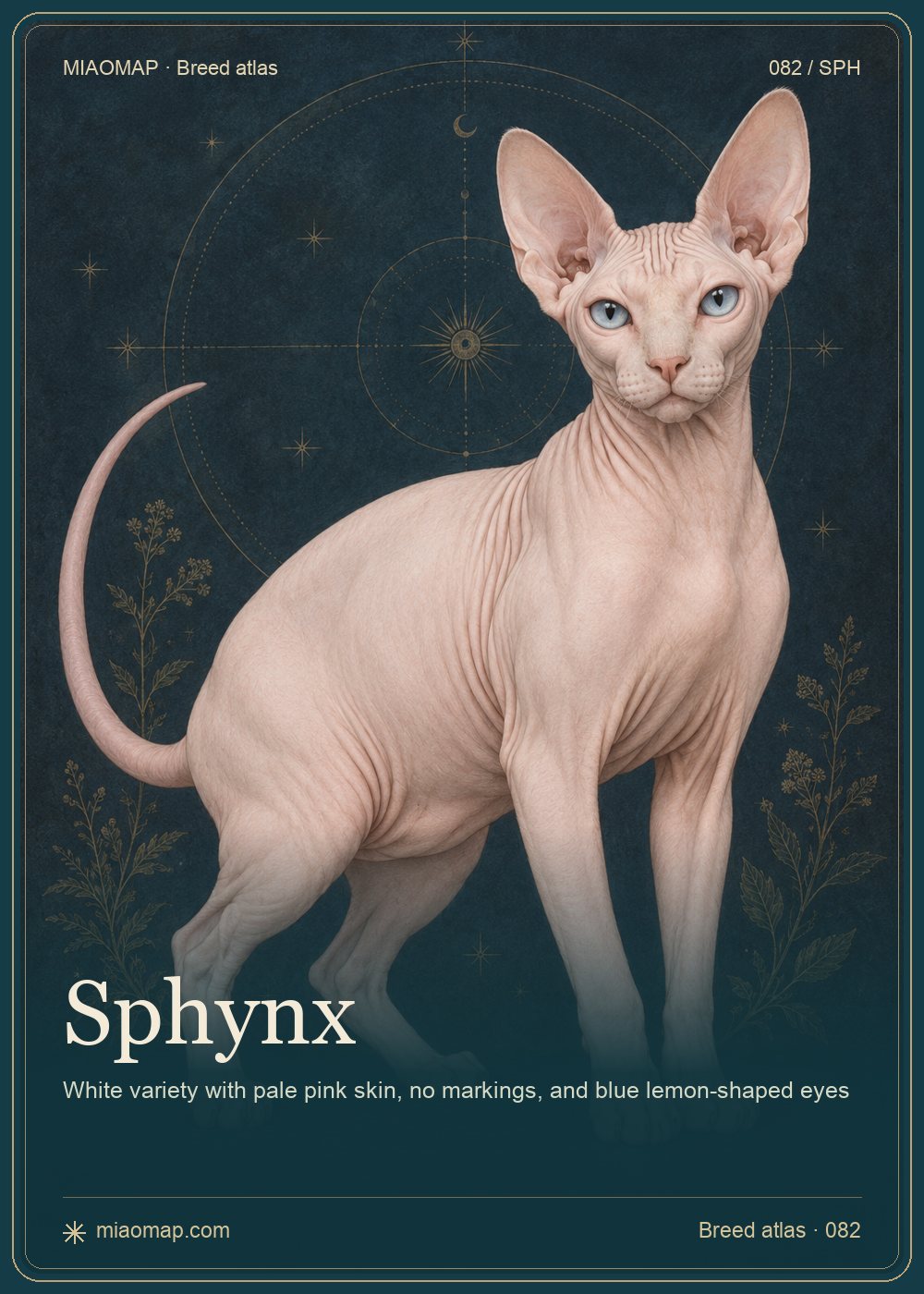
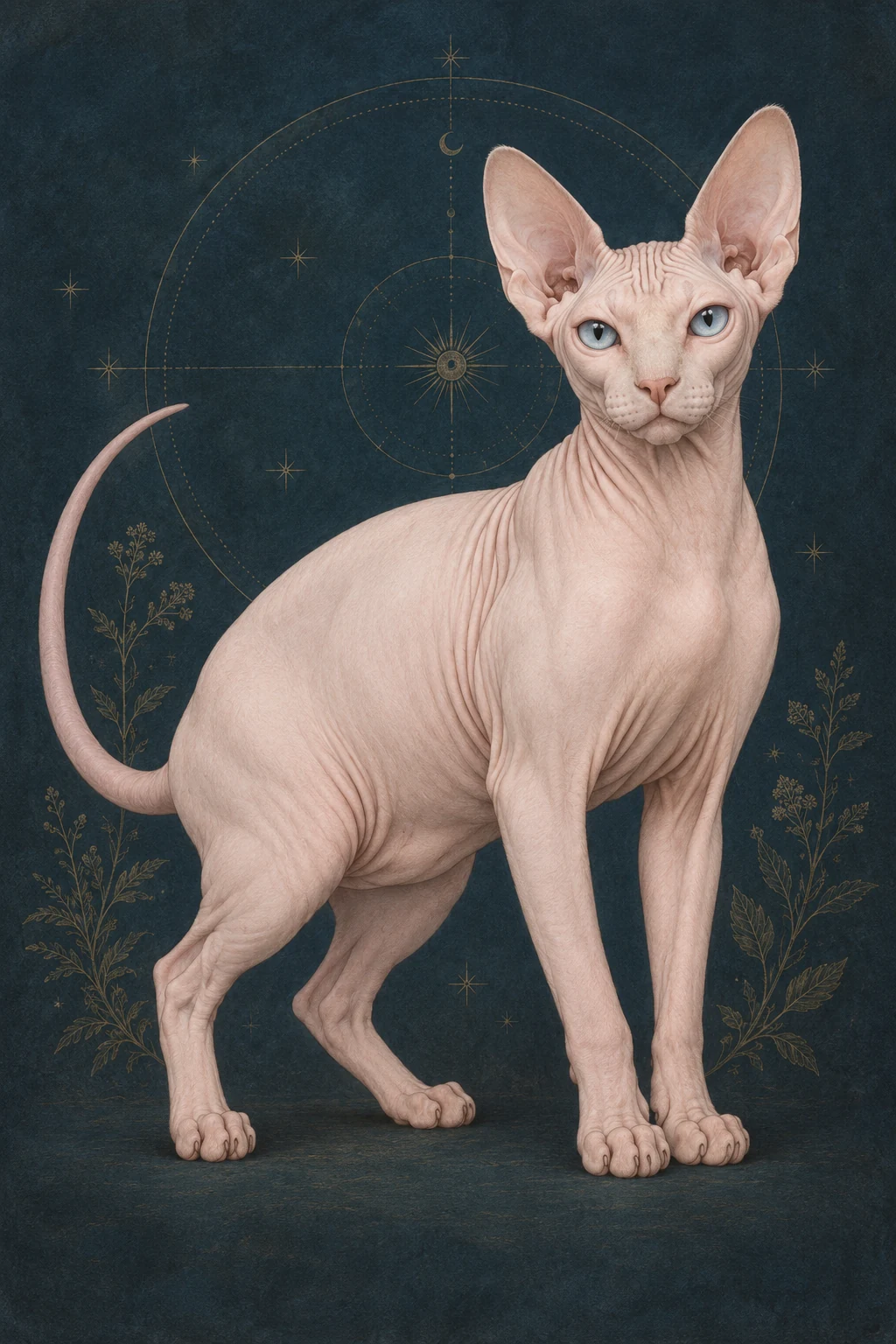
White variety with pale pink skin, no markings, and blue lemon-shaped eyes
✳ miaomap.comBreed atlas · 082
Feline breed atlas · 082 / SPH
Nearly bare skin, oversized ears, and a rounded belly distinguish this often people-oriented cat.
Move your pointer for a subtle sheen; flip the card to read its profile.
White variety with pale pink skin, no markings, and blue lemon-shaped eyes
The modern Sphynx developed from naturally hairless cats, including a kitten born in Toronto, Canada, in 1966. Later Minnesota hairless lines and outcrosses involving coated cats, including American Shorthairs and Devon Rex, contributed to its development. Its characteristic hairlessness is associated with recessive inheritance. Different skin colors and patterns are varieties within the breed, not separate ancestral breeds.
Look for a rounded modified-wedge head, prominent cheekbones, large lemon-shaped eyes, and very large upright ears with broad bases. The medium-sized body is muscular, with a broad chest and rounded abdomen. Hind legs are slightly longer than forelegs; toes are long, and the slender tail tapers. Fine down and head or shoulder wrinkles may be present. Appearance cannot confirm pedigree.
Sphynx cats are often described as active, curious, and interested in human company. Some follow household members, vocalize for attention, or settle close for warmth. Sociability and tolerance of handling vary between individuals. Offer interactive play, quiet retreat spaces, and gentle contact, allowing each cat to build trust at its own pace.
Tailor gentle washing or bathing to skin oil buildup, using veterinarian-recommended products rather than overcleaning. Check ears and nail folds, provide warm bedding, and limit cold and strong sun exposure; do not improvise with human sunscreen. Maintain dental care and veterinary visits. Breed references identify hypertrophic cardiomyopathy and hereditary myopathy among concerns; discuss appropriate screening rather than judging health by appearance.
A Sphynx appears nearly hairless but may carry fine down and short hair on the nose, ear edges, feet, or tail. The absence of a full coat does not remove cat allergens, and sensitive people may still react. Do not assume suitability for an allergic household; discuss individual circumstances with a medical professional.
The supplied CFA and TICA standards describe large upright ears, proportionate legs, and a full-length tail, excluding structural changes such as curled or folded ears and shortened legs. Hairlessness alone therefore does not establish conformity to the breed standard. Appearance also cannot confirm pedigree; consult reliable registration and ancestry records.
A fixed weekly bath is not a rule for every individual. Skin oil buildup and tolerance vary, so agree on gentle cleaning frequency with a veterinarian and check ears and nail folds. Provide warm bedding and avoid cold or strong sunlight. Persistent redness, itching, or skin lesions warrant veterinary advice rather than simply more bathing.
Text is based on the association sources below. AI-assisted original illustrations depict one coat variety, not every individual. Health and care information is general and does not replace veterinary assessment.
Based on the association sources listed on each profile. Illustrations do not establish pedigree. Independently produced by miaomap, without association endorsement. Numbers are catalog IDs, not rarity ranks.
miaomap · Updated
Use our illustration creator to choose fur colors, eyes and tails, then download your own cat.