miaomap.com · Breed atlas015 / BEN
Bengal
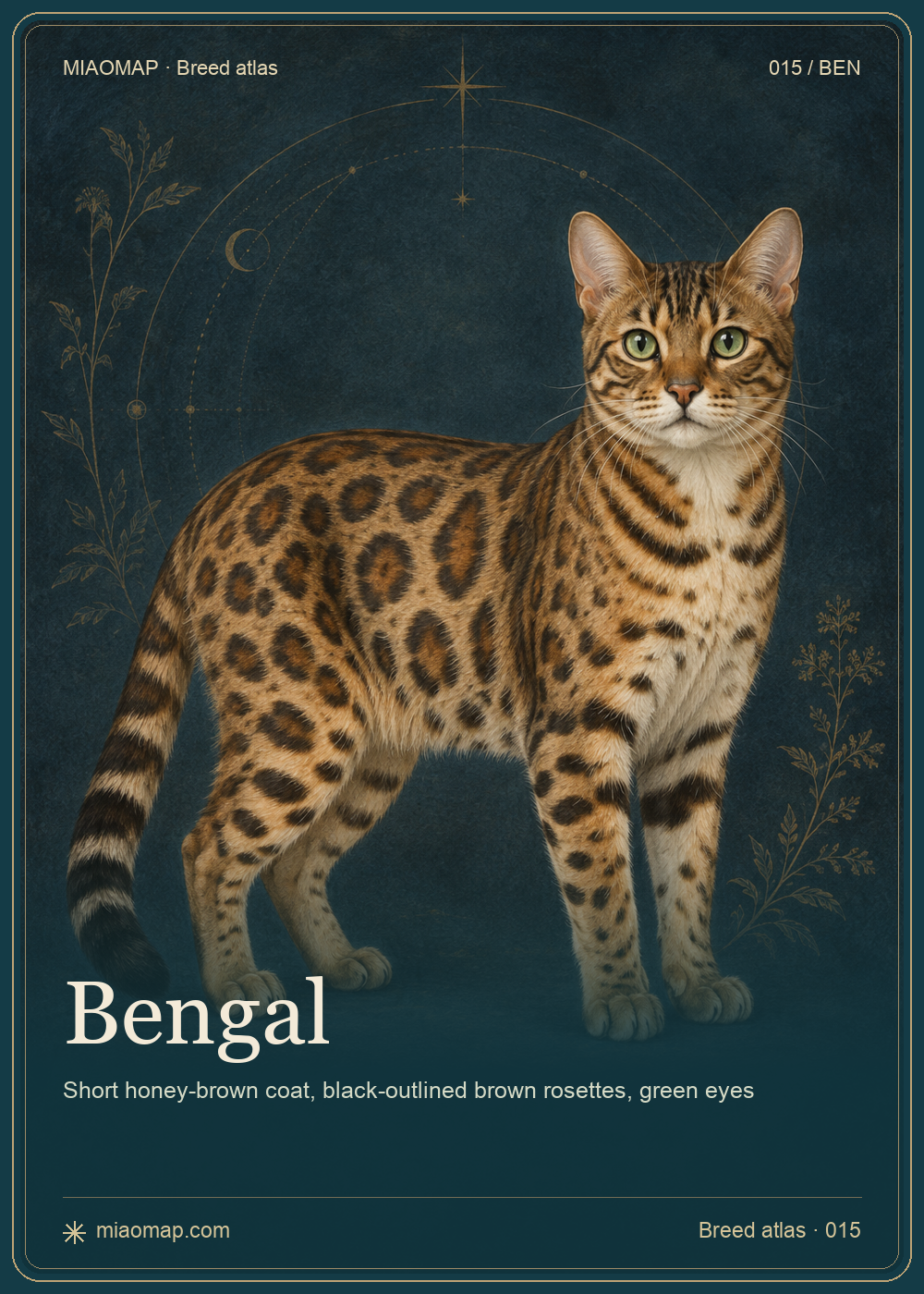
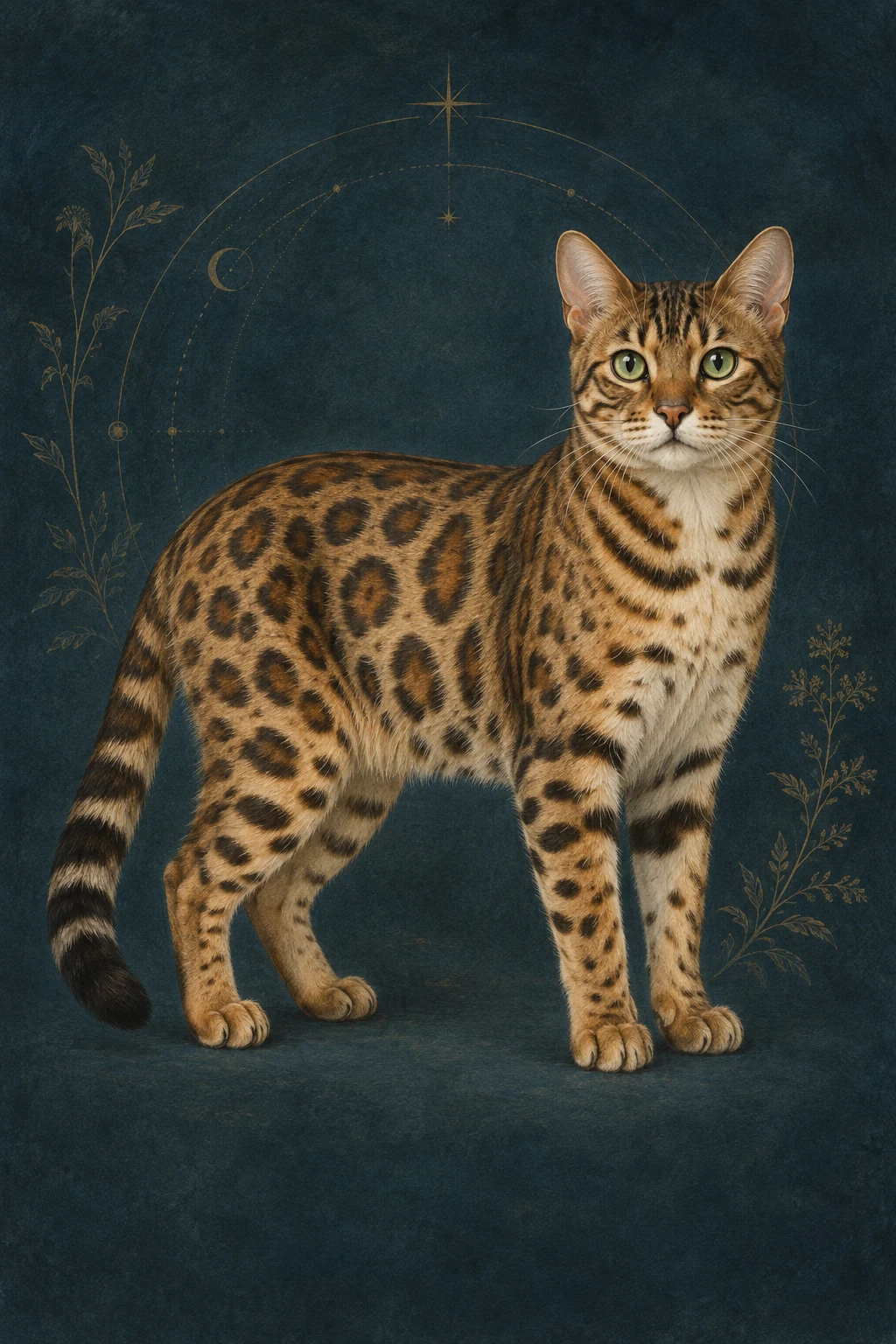
Short honey-brown coat, black-outlined brown rosettes, green eyes
✳ miaomap.comBreed atlas · 015
Feline breed atlas · 015 / BEN
Bold markings, a muscular silhouette and a typically curious nature make the Bengal distinctive.
Move your pointer for a subtle sheen; flip the card to read its profile.
Short honey-brown coat, black-outlined brown rosettes, green eyes
Developed in the United States, the Bengal traces its ancestry to crosses between domestic cats and Asian leopard cats. Jean Mill's 1963 cross and later cats from Willard Centerwall's breeding program contributed to its development. Subsequent breeding emphasized companion temperament and wild-looking markings. Shorthaired and longhaired Bengals are related coat variants; rosetted and marbled patterns do not indicate separate ancestry.
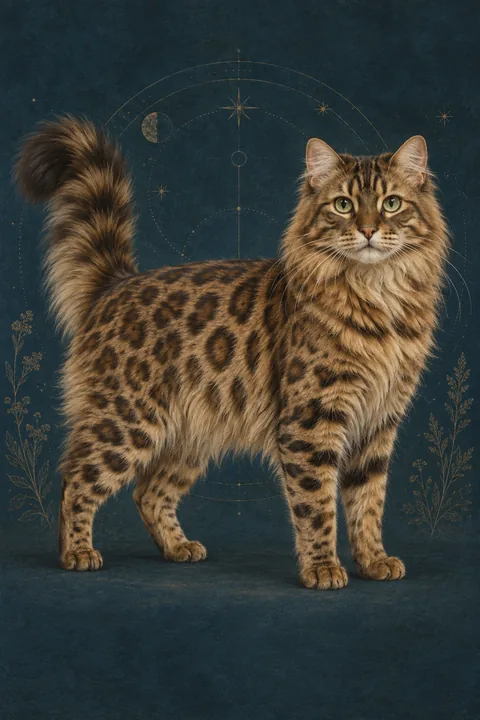
A Bengal has a long, muscular body, slightly raised hindquarters and somewhat longer rear legs. Its rounded, broad wedge-shaped head carries a wide nose and prominent whisker pads. Large, broadly rounded eyes sit wide apart beneath small-to-medium, broad-based ears with rounded tips. The medium-length tail is thick and round-tipped. A close short coat displays contrasting rosettes or marbling, but appearance cannot confirm pedigree.
Bengals are often curious, athletic and interested in household activity, but sociability and vocal habits vary between individuals. Some enjoy water or simple training, while others do not. Regular play, access to quiet retreats and gradual introductions support a good relationship more reliably than expectations based on breed alone.
Brush weekly with a soft brush to remove loose hair; routine bathing is usually unnecessary. Provide sturdy climbing spaces, food puzzles and daily interactive play. Discuss appropriate health screening with a veterinarian: hypertrophic cardiomyopathy assessment may require echocardiography rather than genetic testing alone. Because of wild-hybrid ancestry, check local breed and generation restrictions before adoption, purchase or relocation.
Rosettes usually have a dark outline around a lighter center, with markings tending to flow horizontally. Marbling forms broader, irregular flowing bands rather than a conventional circular bull's-eye. Both are Bengal patterns, not breeds with separate ancestry, and neither pattern alone establishes a cat's pedigree.
No. The Bengal is a domestic cat breed with Asian leopard cat ancestry, not the wild species itself. Local rules may restrict ownership or movement according to hybrid generation or location. Check pedigree documentation and applicable regulations before acquiring one; a spotted appearance cannot establish generation or legal eligibility.
CFA information highlights hypertrophic cardiomyopathy screening in Bengal breeding cats, with assessment potentially requiring veterinary echocardiography. Genetic tests do not replace every cardiac examination. Ask about parental screening records and discuss an individual plan with your veterinarian; breed information and a single test result are neither a diagnosis nor a lifetime health guarantee.
Text is based on the association sources below. AI-assisted original illustrations depict one coat variety, not every individual. Health and care information is general and does not replace veterinary assessment.
Based on the association sources listed on each profile. Illustrations do not establish pedigree. Independently produced by miaomap, without association endorsement. Numbers are catalog IDs, not rarity ranks.
miaomap · Updated
Compare appearance and care needs to find a cat that fits your routine.
Breed comparisons ↗Use our illustration creator to choose fur colors, eyes and tails, then download your own cat.