miaomap.com · Breed atlas048 / LPSH
LaPerm Shorthair
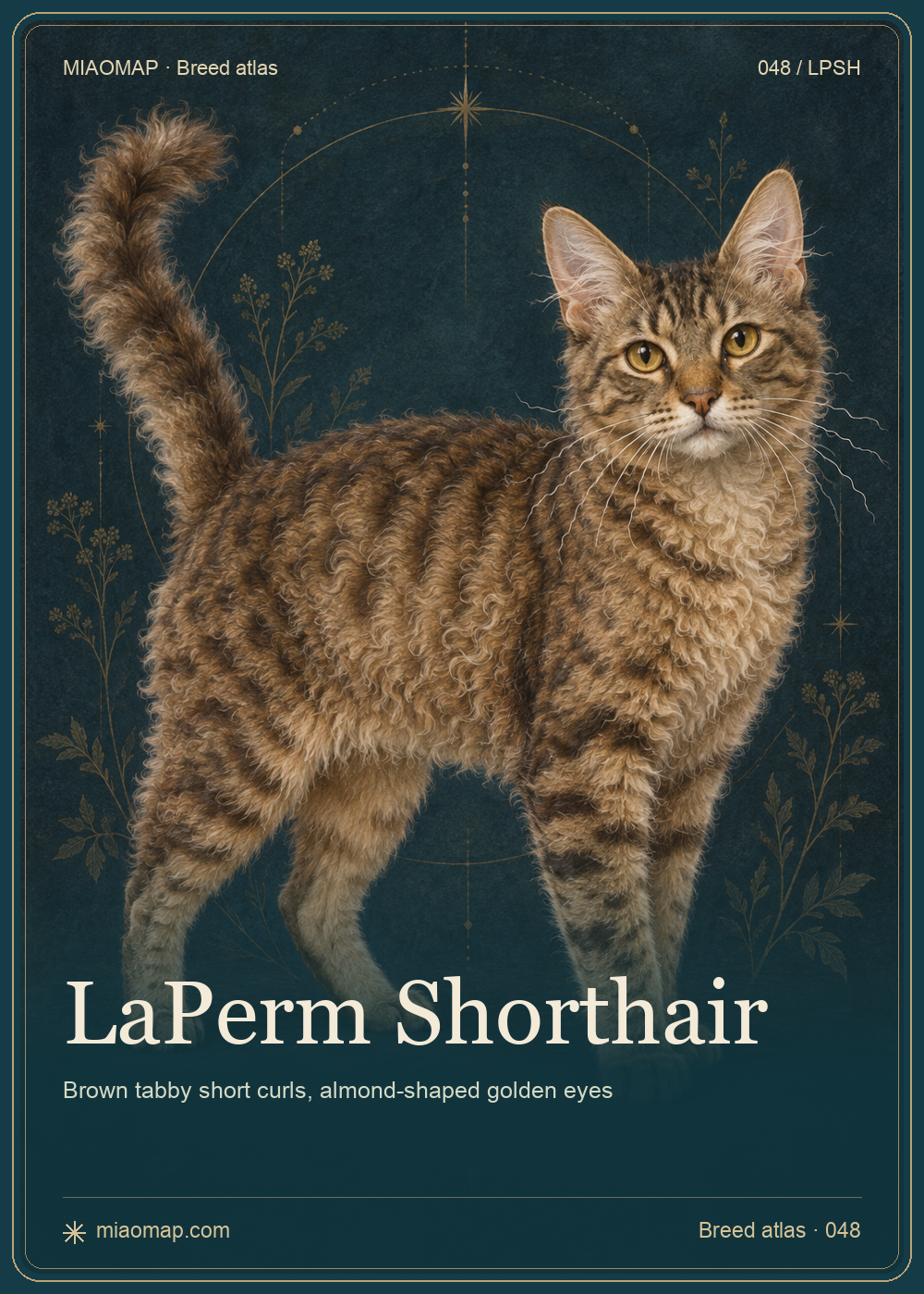
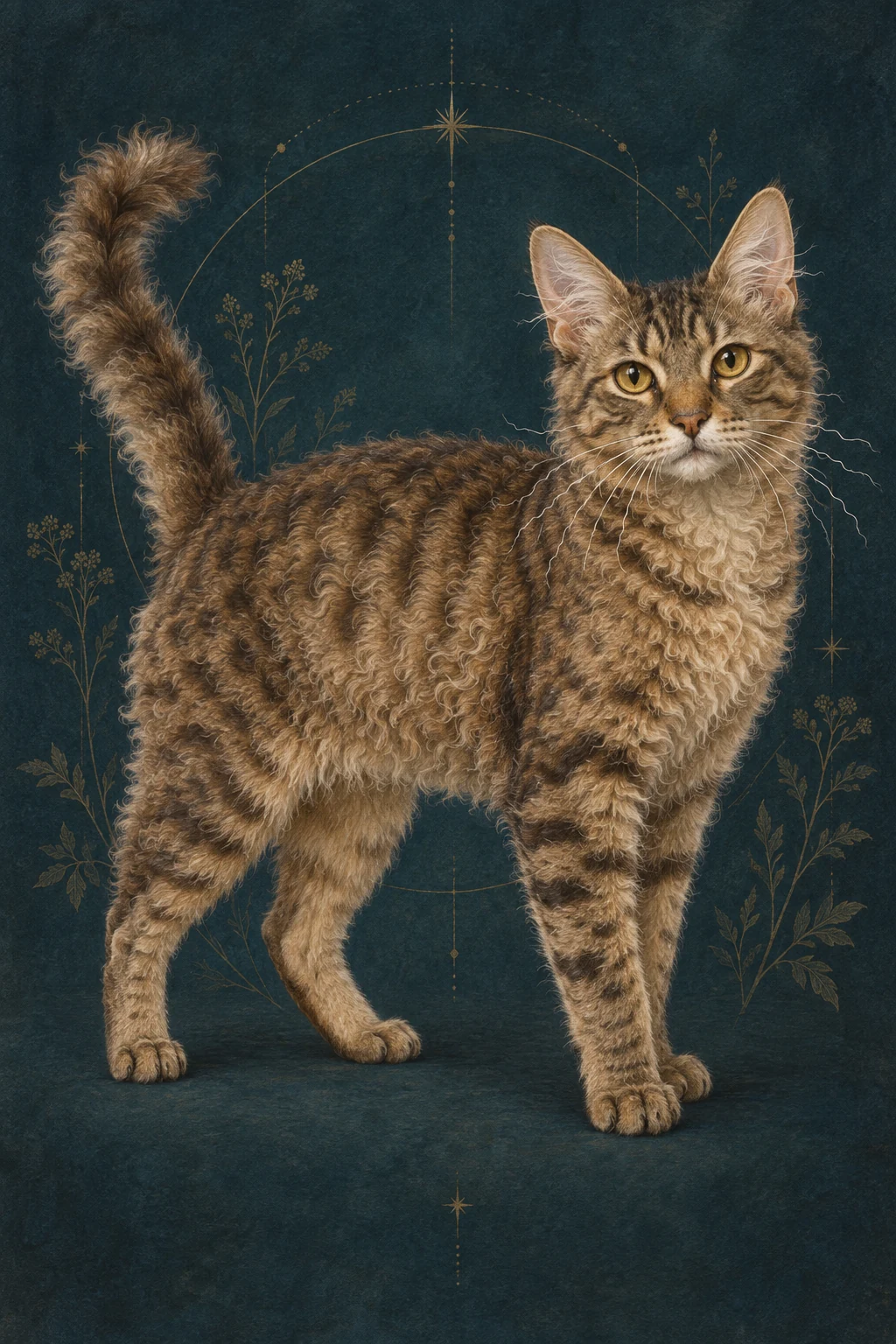
Brown tabby short curls, almond-shaped golden eyes
✳ miaomap.comBreed atlas · 048
Feline breed atlas · 048 / LPSH
The LaPerm Shorthair brings airy waves and curls to the short-coated variety of the LaPerm family.
Move your pointer for a subtle sheen; flip the card to read its profile.
Brown tabby short curls, almond-shaped golden eyes
The LaPerm Shorthair shares its Oregon farm origins with the longhair LaPerm. In 1982, a kitten born in Linda Koehl's barn initially lacked hair, then developed curls and was named Curly. Further curly-coated cats eventually inspired a breeding program. The name LaPerm evokes a loose permanent wave; short and long coats belong to one breed family, not separate origins.
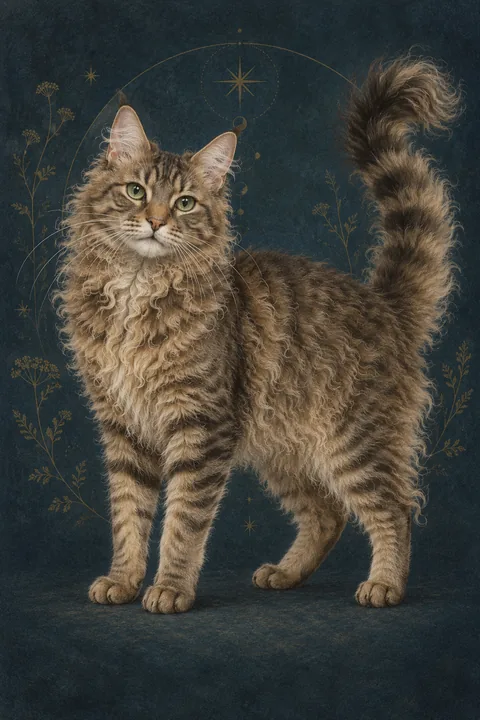
A LaPerm Shorthair has a medium-sized body, moderate boning, a softly rounded wedge-shaped head, medium-to-large ears, and almond-shaped eyes. The pictured cat retains brown tabby short curls and golden eyes. Its airy, springy coat often gives the tail a bottlebrush outline rather than a longhair's plume. Curled whiskers are characteristic; coat length and fullness vary with season and maturity.
LaPerms are often described as affectionate, inquisitive, active cats that enjoy joining human activities. They may use their paws to reach toys or request attention and follow people around the home. Offer interactive games, opportunities to explore, and quiet resting places. Breed tendencies do not guarantee individual temperament; respect each cat's contact preferences and introduce children or other pets gradually.
Gently use a metal comb to remove loose hair without pulling the curls. If bathing is needed, towel-dry; blow-drying can make the coat frizzy. Check ears, teeth, skin, and claws regularly. Offer complete balanced cat food and consult a veterinarian about portions and health care. Relatively low shedding does not mean no shedding or freedom from allergy risk.
They belong to the same breed family. Shorthairs have airy waves or curls and often bottlebrush tails; longhairs have fuller, curly plumes. Both can have curled whiskers and many colors and patterns, with coat fullness changing seasonally.
No. LaPerm kittens may initially be hairless or straight-coated, and some develop curls as they grow, while others remain straight-haired. These developmental changes mean a kitten's coat texture or photograph alone cannot reliably establish its breed identity.
No. LaPerms are described as relatively low-shedding, and their curls retain some loose hairs, but this does not remove allergy risk. Gentle combing helps clear retained hair. If someone has cat allergies, seek medical advice rather than choosing by coat type alone.
Text is based on the association sources below. AI-assisted original illustrations depict one coat variety, not every individual. Health and care information is general and does not replace veterinary assessment.
Based on the association sources listed on each profile. Illustrations do not establish pedigree. Independently produced by miaomap, without association endorsement. Numbers are catalog IDs, not rarity ranks.
miaomap · Updated
Use our illustration creator to choose fur colors, eyes and tails, then download your own cat.