miaomap.com · Breed atlas089 / TVAN
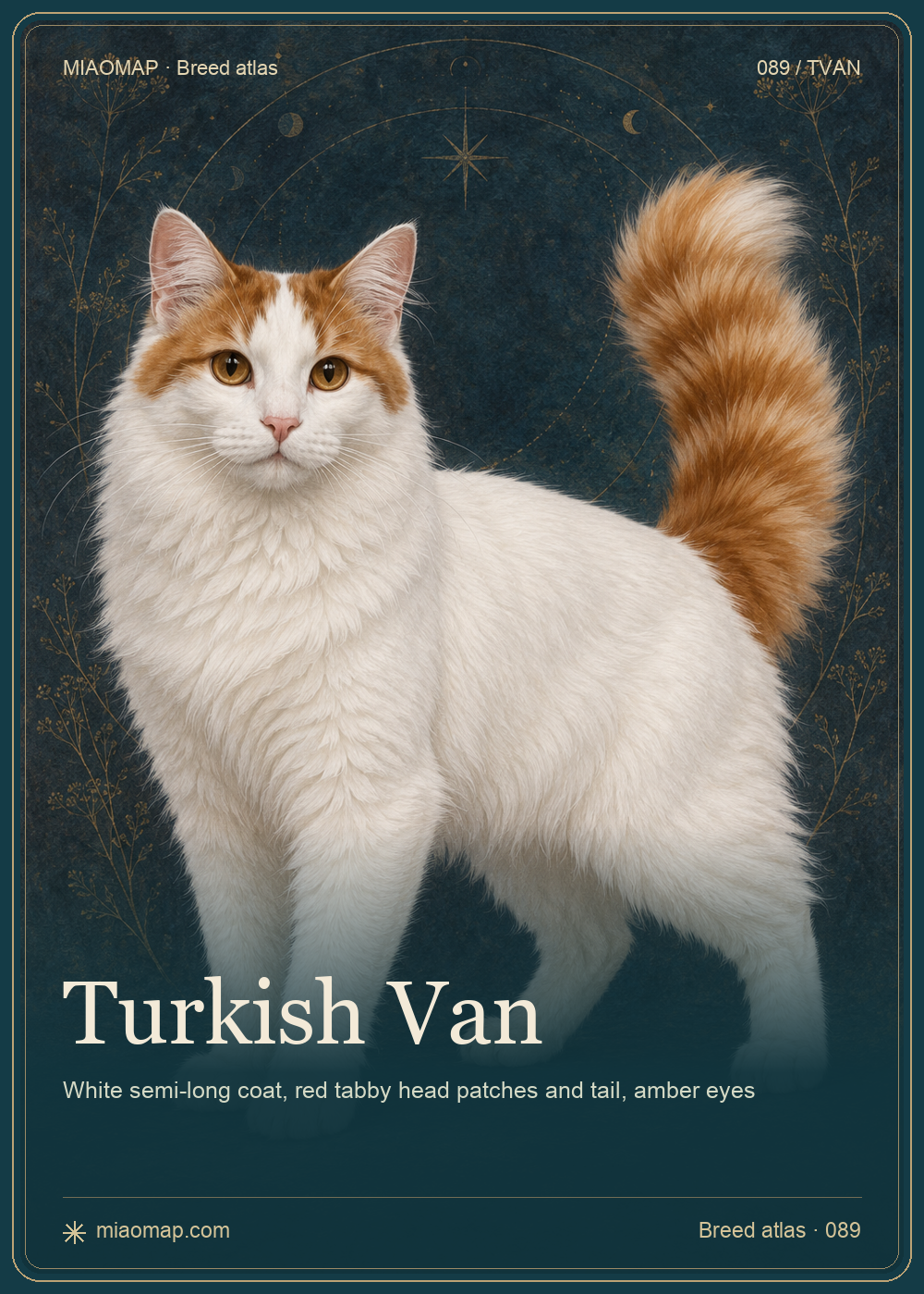
Turkish Van
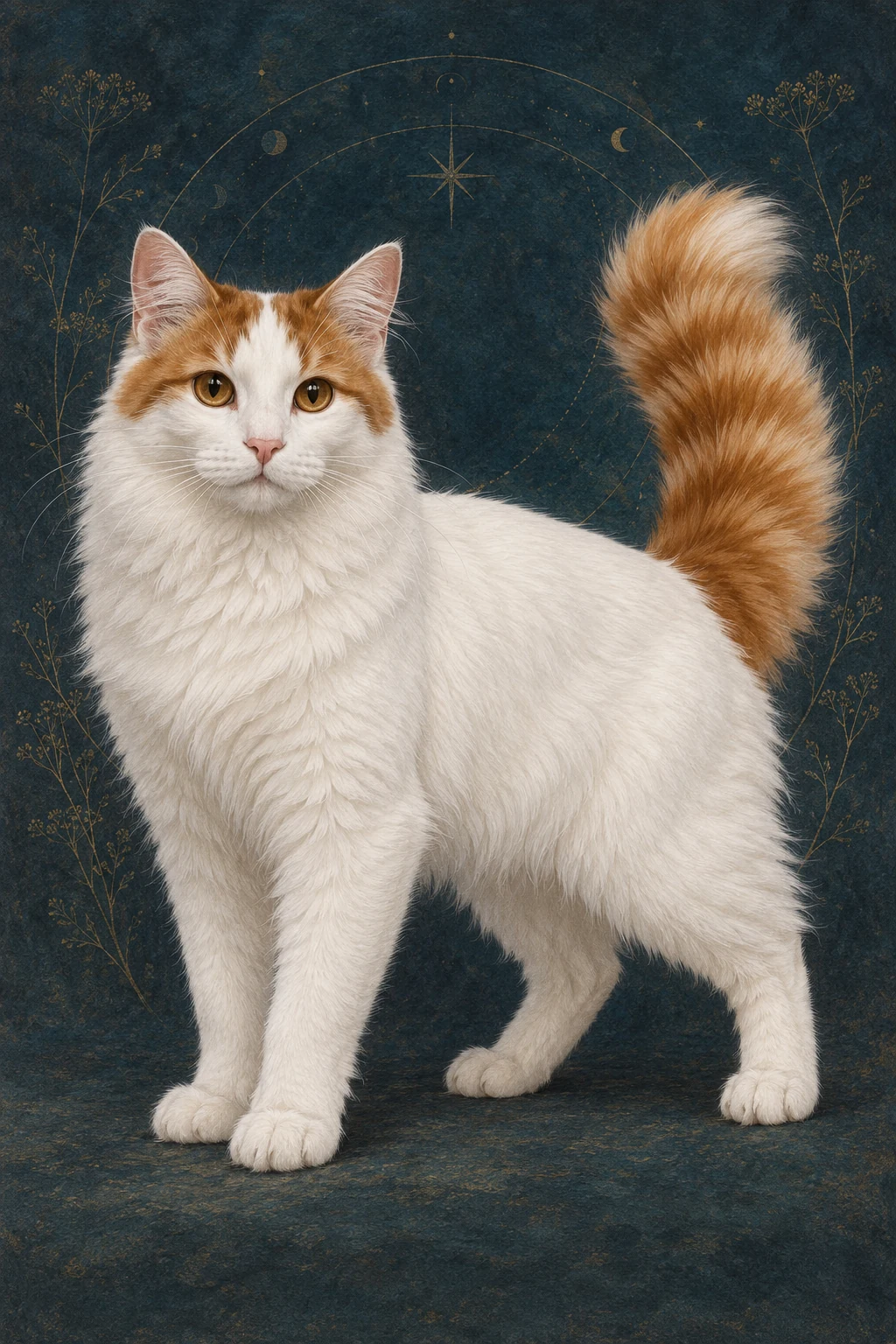
White semi-long coat, red tabby head patches and tail, amber eyes
✳ miaomap.comBreed atlas · 089
Feline breed atlas · 089 / TVAN
The Turkish Van pairs a strong, athletic build with striking colored head and tail markings on a white coat.
Move your pointer for a subtle sheen; flip the card to read its profile.
White semi-long coat, red tabby head patches and tail, amber eyes
The Turkish Van developed from cats of Turkey, particularly the southeast and Lake Van region. Modern breed development began in 1955, when two British photographers brought an unrelated pair to Britain. It is distinct from the Turkish Angora, not a color variant of it. Its semi-long coat changes seasonally, and full physical maturity usually takes three to five years.
Look for a sturdy, elongated body, broad chest, muscular legs and rounded paws. The head is a broad, softly contoured wedge with large, high-set, widely spaced ears and slightly slanted eyes. Soft semi-long fur lacks a evident woolly undercoat, and the tail is brush-like. The characteristic van pattern concentrates color on the head and tail, but appearance cannot confirm pedigree.
Turkish Vans are often described as alert, curious and energetic, enjoying climbing, exploration and interactive games. Many seek their family's company without welcoming prolonged carrying or lap time. Interest in water and tolerance of handling vary between individuals, so let the cat choose how to approach and interact.
Comb weekly, increasing frequency during shedding or when the winter coat thickens. Provide sturdy climbing spaces, daily interactive play and measured meals to support fitness and avoid excess weight. Support the body when lifting and respect reluctance to be held. Water interest does not require swimming; keep water access safe, and maintain routine veterinary checks and dental care.
They are distinct breeds associated with different regions of Turkey. The Van is generally sturdier and more muscular, with a broad chest and characteristic colored head and tail on white. The Angora is more refined and slender. Neither color nor body shape alone establishes pedigree; reliable ancestry records are needed.
The breed is known for water interest, and some individuals voluntarily play with it, but not every Van enjoys swimming. A somewhat water-resistant coat does not make every water setting safe. Never force immersion; supervise water play, provide an easy exit, and prevent contact with cleaning products.
No. Van pattern describes predominantly white coloring with color concentrated on the head and tail; other breeds and cats without pedigree records can share it. Turkish Vans also have characteristic structure and coat. Registry standards differ, with TICA allowing solid white individuals. Pedigree identification still requires documented ancestry.
Text is based on the association sources below. AI-assisted original illustrations depict one coat variety, not every individual. Health and care information is general and does not replace veterinary assessment.
Based on the association sources listed on each profile. Illustrations do not establish pedigree. Independently produced by miaomap, without association endorsement. Numbers are catalog IDs, not rarity ranks.
miaomap · Updated
Use our illustration creator to choose fur colors, eyes and tails, then download your own cat.